Nigeria is positioning itself to capture a larger share of Africa’s emerging artificial intelligence economy by expanding digital infrastructure, developing technical talent and introducing policy reforms aimed at moving the country from a technology consumer to a producer and exporter of AI solutions.
The push will take centre stage when GITEX NIGERIA returns from August 31 to September 3, bringing government officials, technology companies, investors and startups together across Abuja and Lagos.
The second edition of the event, organised by KAOUN International with support from the Federal Ministry of Communications, Innovation and Digital Economy and the National Information Technology Development Agency, comes as governments and businesses across Africa increase their focus on artificial intelligence and the infrastructure required to deploy it at scale.
The event is themed “Beyond Connectivity: The Bridge to Sovereign Innovation”, reflecting Nigeria’s attempt to broaden the digital economy conversation beyond internet access to areas such as computing capacity, technical skills, cybersecurity, data governance and locally developed technology.
Africa’s AI market could generate up to $1 trillion in additional economic value by 2035, according to an estimate cited by GITEX NIGERIA.
For Nigeria, which has one of Africa’s largest technology ecosystems and a large young population, the challenge is to convert that potential into businesses, jobs and exportable technology instead of remaining primarily a consumer of technology developed elsewhere.
The government has started developing some of the foundations needed for that transition.
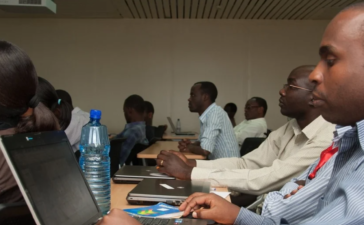
Under the 3 Million Technical Talent programme, known as 3MTT, Nigeria has recorded 1.87 million registrations across all 774 local government areas, according to GITEX NIGERIA organisers.
More than 135,000 Nigerians have been trained through three cohorts, while community resources have extended learning opportunities to more than 300,000 people and created 15,000 job and opportunity pathways.
The government is also advancing Project BRIDGE, a national digital infrastructure initiative designed to expand fibre connectivity and provide the backbone for wider digital services.
According to GITEX NIGERIA, the programme is expected to create up to 20,000 direct jobs and more than 150,000 indirect jobs, train 5,000 Nigerian youths, increase internet penetration beyond 70 per cent and extend high-speed connectivity to millions of households, businesses, schools and hospitality establishments in underserved communities.
The combination of connectivity and talent development is critical to Nigeria’s AI ambitions.
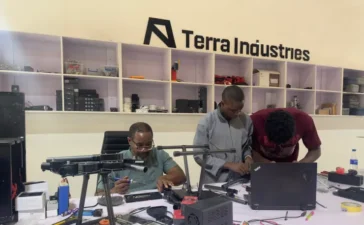
Artificial intelligence requires more than software and algorithms. Companies also need reliable networks, data centres, cloud capacity, cybersecurity systems and skilled workers capable of building and deploying AI technologies.
The Minister of Communications, Innovation and Digital Economy, Dr Bosun Tijani, said Nigeria’s digital infrastructure drive was intended to create the foundations for greater technological independence across Africa.
“Building on the momentum forged through the implementation of Project BRIDGE,” Tijani said, adding that Nigeria’s ambition was to strengthen the foundations for “digital sovereignty, technological self-determination, and a globally competitive AI-powered economy.”
He said Nigeria wanted to help move Africa from being primarily a consumer of digital technology to becoming a producer and exporter of digital technologies and AI solutions.
The focus on digital sovereignty reflects a broader shift in the global technology debate.
As AI systems become increasingly important to governments and businesses, countries are paying greater attention to where data is stored, who controls computing infrastructure and whether they have the technical capacity to develop critical digital systems domestically.
GITEX NIGERIA is positioning itself as a forum for these discussions, bringing policymakers, investors and technology companies together around digital public infrastructure, AI policy, data sovereignty, cybersecurity and the scalability of emerging technologies.
The Government Leadership and AI Summit will open the event in Abuja on August 31.
The Tech Expo, Future Economy Conference and Startup Festival will then take place in Lagos on September 2 and 3.
FDX NIGERIA by GITEX, which will focus on finance and digital assets, will also debut in Lagos on September 3.
The event is therefore positioned as more than an exhibition of new technologies.
Its commercial significance lies in connecting Nigerian and African companies with investors, technology providers and potential partners at a time when demand for digital infrastructure continues to grow.
The Director-General and Chief Executive Officer of the National Information Technology Development Agency, Inuwa Abdullahi, said Nigeria’s digital future would depend not only on adopting new technologies but also on developing the resilience, trust and governance systems needed to support them.
He said GITEX NIGERIA could provide a platform for discussions around responsible AI adoption, digital security and economic opportunities.
“The global expertise, investment, and partnerships forged through this event will help shape an AI ecosystem that is secure by design, inclusive by nature,” Abdullahi said.
Lagos, Nigeria’s commercial centre and one of Africa’s major technology hubs, will host the main technology expo and startup events.
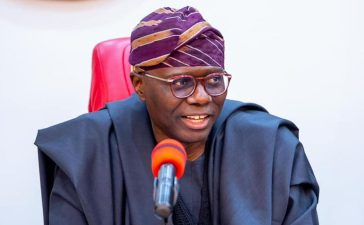
Lagos State Governor Babajide Sanwo-Olu said the state’s digital economy was closely connected to Africa’s broader technology ambitions, pointing to Lagos’ ability to attract talent, capital and innovation.
“Africa’s digital rise is deeply intertwined with that of Lagos State,” Sanwo-Olu said, adding that GITEX NIGERIA would support the state’s efforts to build a more connected and globally competitive economy.
For Lagos, hosting the event provides an opportunity to strengthen its position as a gateway for technology investment into Nigeria and the wider African market.
For the Federal Government, however, the larger objective is to translate its digital programmes into sustainable economic capacity.
Achieving that goal will require substantial private investment alongside government spending.
Building fibre networks, data centres and other digital infrastructure requires significant capital, while AI companies need access to financing, skilled workers and customers capable of adopting their products.
GITEX NIGERIA organisers say the event will seek to facilitate those connections by bringing global technology companies, investors, startups and public-sector leaders into the same forum.
GITEX CEO Trixie LohMirmand said the event was intended to help translate Nigeria’s technology ambitions into partnerships and scalable businesses.
“West Africa is open for business,” LohMirmand said, arguing that the region could turn technological ambition into economic growth and stronger global competitiveness.