Libya is seeking between $30 billion and $40 billion in investment to develop its oil and gas resources as the North African country attempts to restore its position as one of the continent’s leading crude oil producers.
The chairman of Libya’s National Oil Corporation (NOC), Masoud Suleman, said the country has significant untapped resources but lacks the capital required to develop them. He is targeting an increase in crude production from approximately 1.4 million barrels per day to 2 million barrels per day by 2030.
Libya has some of Africa’s largest proven oil reserves and remains heavily dependent on hydrocarbons for government revenue and exports. However, years of political instability, armed conflict and competing administrations have prevented the country from fully exploiting its energy potential.
More Than 60 Undeveloped Fields
According to Suleman, Libya has more than 60 discovered oil and gas fields that remain undeveloped.
Developing these resources would require substantial investment in exploration, drilling, infrastructure and production facilities.
The NOC is therefore seeking greater participation from international energy companies. Major companies including Eni, TotalEnergies, Chevron and ConocoPhillips already have interests in Libya, while other international oil companies have shown renewed interest in the country’s energy sector.
Political Instability Remains a Challenge
The investment drive comes despite continuing political divisions.
Libya remains divided between rival political and military power centres in the east and west. Many of the country’s major oilfields and export terminals are located in areas controlled by forces aligned with eastern strongman Khalifa Haftar, while the internationally recognised government operates from Tripoli.
This political fragmentation creates significant risks for international investors.
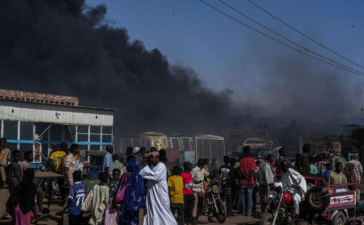
Recent drone attacks have also targeted energy infrastructure, including the Zawiya oil refinery in western Libya. Such incidents highlight the security challenges facing the country’s petroleum industry.
NOC Wants Greater Investor Participation
The National Oil Corporation is also considering changes to its traditional investment arrangements.
Under existing production-sharing agreements, the NOC is required to finance part of development costs. Suleman says funding shortages have delayed projects and that Libya may therefore consider concession-style agreements or revised production-sharing arrangements that require international investors to provide more upfront capital.
The NOC also plans to strengthen transparency by appointing external auditors, an effort aimed at rebuilding investor confidence.
Opportunity and Risk
If Libya succeeds in attracting the required investment, increasing production to 2 million barrels per day could significantly strengthen government revenues and support wider economic recovery.
However, achieving that goal will depend on more than capital.
Political stability, security, infrastructure, transparency and cooperation between Libya’s competing power centres will all be critical.
For international oil companies, Libya presents a potentially attractive opportunity because of its substantial reserves and proximity to European energy markets.
For Libya, the challenge is turning those natural resources into sustainable economic development while ensuring that oil wealth benefits the wider population.
The success or failure of the investment campaign could therefore have major implications for Libya’s economy and its position in Africa’s energy sector.