Ethiopia’s army chief has accused Sudan and Egypt of supporting armed opponents of Prime Minister Abiy Ahmed. The allegations add a regional dimension to renewed fighting in Tigray, where a fragile peace now faces another serious test.
Field Marshal Birhanu Jula said outside powers were helping groups seeking to remove the government. Sudan’s military rejected the allegation and issued its own accusations against Ethiopia, deepening a dispute between two countries already facing major security pressures.
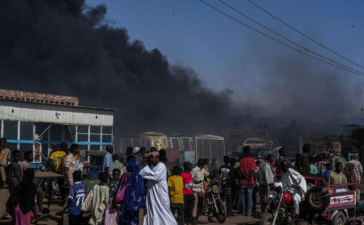
The claims come as fighting between federal troops and Tigrayan forces spreads beyond Tigray. For civilians, the immediate concerns include disrupted travel, access to essential supplies and the danger of another prolonged war.
Ethiopia’s accusations draw a Sudanese denial
Birhanu alleged that armed groups could not achieve their aims without foreign backing. He also accused Eritrea of linking Ethiopia’s opponents with external supporters.
However, he did not present evidence to substantiate the accusations, according to Euronews’ report on the interview. Allegations of outside involvement therefore remain claims by a party to the conflict.
Sudan’s military described Ethiopia’s accusation as baseless. It alleged that the Rapid Support Forces, which it is fighting in Sudan, receive assistance from Ethiopian territory. Sudan Tribune reported the denial and counterclaims.
Those competing accounts do not establish responsibility for foreign support. They do, however, show how developments in northern Ethiopia are becoming entangled with disputes elsewhere in the region.
A broader armed alliance raises the stakes
The Tigray People’s Liberation Front, known as the TPLF, has joined six other armed groups in an alliance opposing Abiy’s government. Its members say they want to remove the administration and establish a transitional authority.
The coalition includes groups with different constituencies and political histories. Their common opposition to the prime minister does not, by itself, explain how they would share power or settle competing demands.
Euronews reported that Tigrayan forces had seized airports and clashed with federal troops in neighbouring Amhara and Afar. These developments extend the crisis beyond a confrontation confined to one regional state.
An airport’s loss can affect both military operations and civilian movement. Similarly, fighting near major roads can interrupt trade even when transport facilities are not the direct target.
Civilians face travel and communication disruptions
Ethiopian Airlines suspended flights to Tigray after fighters took control of Mekelle airport, according to Associated Press reporting.
The same report described internet disruptions and residents’ accounts of road closures. AP said it could not independently verify the reported closures.
These distinctions matter in a fast-moving conflict. Communication problems can make it harder to confirm battlefield developments, contact relatives or establish whether a route is safe.
For households, cancelled transport also has consequences beyond an interrupted journey. It can delay family support, prevent reunions and complicate access to medical care. The scale of those effects will depend on how long restrictions and fighting continue.
The Pretoria agreement faces renewed pressure
The federal government and the TPLF signed a cessation of hostilities agreement in Pretoria on November 2, 2022. African Union mediation helped bring an end to their two-year war.
The African Union’s announcement described the agreement as a route towards restoring peace, security and stability in Tigray.
The current fighting threatens that foundation. It also shows why signing an agreement and maintaining peace are separate tasks. Political disputes, security arrangements and mistrust can continue after large-scale combat stops.
UN human rights chief Volker Türk has called for an urgent end to the renewed hostilities. His warning reflects concern that another escalation could expose civilians to a much wider conflict.
Regional tensions complicate efforts to calm the crisis
Ethiopia’s relations with Egypt and Sudan are also shaped by disagreements over the Grand Ethiopian Renaissance Dam. Eritrea’s relationship with Addis Ababa has deteriorated since the previous Tigray war, despite their earlier military cooperation.
Those disputes provide context for the latest accusations. They are not proof that any state is supplying the armed alliance.
The next developments to watch include whether fighting spreads further, whether civilian transport resumes and whether diplomatic contacts produce restraint. Clear evidence will also be needed to assess the competing claims of outside involvement.
For people in the affected regions, the most immediate measure of progress will be more practical: safe movement, reliable communication and an end to the fighting around their communities.