Iran has announced plans to establish a new restricted zone in the Gulf and release maps showing a new shipping corridor through the Strait of Hormuz, adding further uncertainty for international shipping operating in the region.
The announcement was made by Mohsen Rezaei, secretary of Iran’s Supreme National Security Council, who said the restricted zone would begin around the area of the U.S. naval blockade and extend into parts of the Gulf.
Ships entering the zone could face sanctions
Rezaei said vessels entering the planned restricted area would be identified and placed on a sanctions list. However, Iranian authorities have not yet provided full details about the exact boundaries of the zone or when the restrictions will formally take effect.
The announcement comes at a particularly sensitive time for maritime operators because commercial shipping through the Strait of Hormuz has already been severely disrupted by the continuing U.S.-Iran confrontation.
New shipping corridor planned
Iran also said that maps for a new international shipping corridor through the Strait of Hormuz would be approved in the coming days.
According to Rezaei, the proposed corridor would pass through Iranian and Omani waters, with Iran playing a management role. The plan is reportedly being developed in coordination with Oman.
The development could provide an alternative route for vessels attempting to navigate the strategically important waterway, although shipping companies are likely to closely assess the security and operational risks before using any newly designated route.
Shipping and oil markets affected
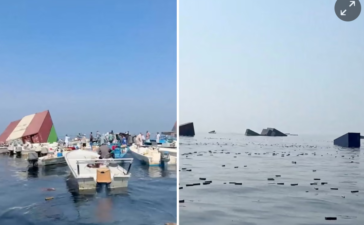
The latest announcement follows renewed attacks involving shipping in the Gulf. Tanker traffic through the Strait of Hormuz has fallen sharply, while oil prices have risen as traders worry about further disruptions to global energy supplies.
Reuters reported that Brent crude was trading close to $96 per barrel on Monday, after prices climbed sharply last week amid the renewed tensions.
The Strait of Hormuz is one of the world’s most important energy routes. Any prolonged disruption could therefore affect oil transportation, tanker operations, freight costs, insurance premiums and global energy prices.
What it means for maritime shipping
The proposed restricted zone could make operations more complicated for international shipping companies. Tanker operators may need to reconsider routes, security arrangements and insurance coverage if the restrictions are implemented.
For now, the situation remains fluid, with the exact boundaries and operating rules of the new zone yet to be fully announced.