Ghana’s Parliament has passed a bill that could impose prison sentences of up to 20 years on cocoa farmers who convert their farms to other uses without government approval.
According to a copy of the bill seen by the Associated Press, the legislation was passed on Thursday, although its contents were not made public until late Sunday. The bill is yet to be signed into law by President John Mahama.
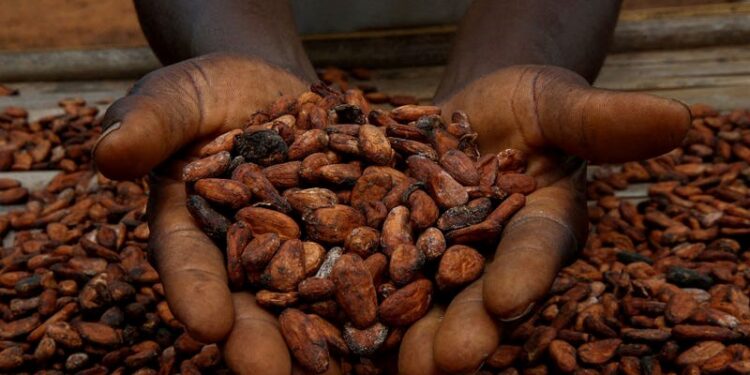
The proposed legislation would grant protected status to all cocoa farms across the country, making it a criminal offence to repurpose cocoa plantations without prior government authorisation.
The move has sparked concerns among cocoa farmers, who argue that the measure places heavy restrictions on landowners despite limited government support for cocoa production.
Moses Djan Asiedu, administrator of the Ghana Cooperative Cocoa Farmers and Marketing Association Limited, described the proposed law as unfair.
“If the law stands as it is now, it’s not fair,” Asiedu said.
He noted that many farmers invest their personal resources in acquiring land, clearing fields and maintaining cocoa farms for years before earning returns, while receiving minimal assistance from the government.
“If cocoa is a national asset, then the farmer should also be supported to cover some of the cost of production,” he added.
The legislation also introduces stricter penalties for illegal gold mining on cocoa farms, proposing prison terms of between 10 and 20 years alongside substantial fines for every cocoa tree affected.
Cocoa farming remains a major source of livelihood for hundreds of thousands of people across West Africa.
In neighbouring Côte d’Ivoire, cocoa exports account for about 40 per cent of total export earnings, while the crop contributes nearly 15 per cent of Ghana’s export revenue.
Under Ghana’s cocoa marketing system, government regulators set a fixed price for cocoa beans at the start of each planting season, with most of the produce sold through licensed buyers to protect farmers from fluctuations in global prices.
The proposed law comes after cocoa futures experienced significant volatility in 2024, rising above $12,000 per metric tonne—the highest level in decades—before falling to around $4,000 as global supply exceeded demand.