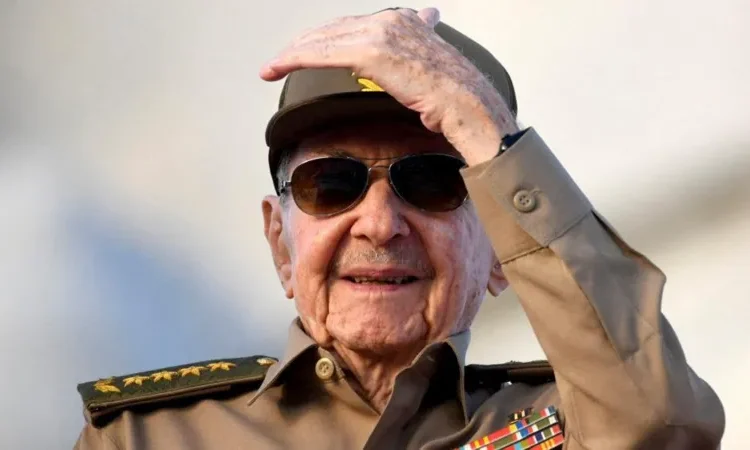
China has called on the United States to stop using “coercion” and “threats” against its ally Cuba after American authorities indicted former Cuban leader Raúl Castro on murder-related charges tied to the 1996 downing of two civilian aircraft.
The indictment, announced by U.S. federal prosecutors, accuses the 94-year-old former president and five others of conspiracy to kill U.S. nationals, destruction of aircraft, and multiple counts of murder over the shooting down of two planes operated by the Cuban-American exile group Brothers to the Rescue. Four people, including three U.S. citizens, were killed in the incident.
At the time of the incident, Castro was serving as Cuba’s defence minister and head of the country’s armed forces. The charges carry potential penalties ranging from life imprisonment to death.
Responding to the development, Chinese Foreign Ministry spokesman Guo Jiakun said Beijing firmly opposed external pressure on Cuba and criticised Washington’s actions.
“The United States should cease using sanctions and judicial apparatus as tools of coercion against Cuba and refrain from making threats of force at every turn,” Guo said during a briefing in Beijing.
He added that China “resolutely supports Cuba in safeguarding its national sovereignty and dignity” and opposes external interference in the island nation’s affairs.
Cuba’s current president, Miguel Díaz-Canel, dismissed the charges as politically motivated and lacking legal basis.
The indictment marks a significant escalation in tensions between Washington and Havana as President Donald Trump intensifies pressure on Cuba’s communist government.
The Trump administration has imposed fresh sanctions on Cuba, including restrictions targeting the country’s energy, defence, financial, and security sectors. The United States has also tightened an oil blockade on the island, contributing to worsening blackouts and food shortages.
Trump has openly discussed the possibility of political change in Cuba and recently suggested that the country was “ready to fall” following the arrest of former Venezuelan president Nicolás Maduro earlier this year.
China, one of Cuba’s closest international allies, has strengthened ties with Havana in recent years, particularly after Xi Jinping visited the island in 2014. Cuba later joined China’s Belt and Road Initiative in 2018, paving the way for major infrastructure investments and economic cooperation.