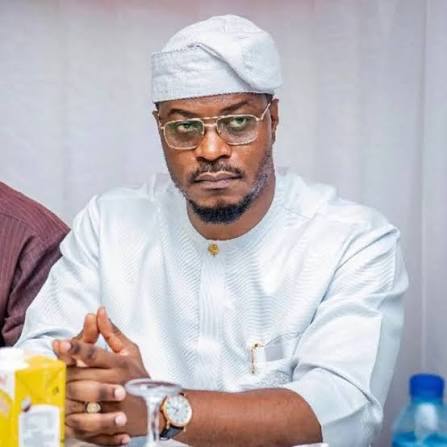
The Lagos State governorship candidate of the African Democratic Congress (ADC), Gbadebo Rhodes-Vivour, has outlined his proposed financing strategy for delivering 100,000 housing units to graduates if elected, arguing that government spending reforms and targeted property taxes could provide the resources required to implement the programme.
The proposal, which generated considerable debate among Lagos residents following the recent governorship debate, is designed to address housing affordability among young graduates and improve access to decent accommodation in Nigeria’s commercial capital.
Rhodes-Vivour had pledged to provide self-contained apartments for graduates until they are ready to get married, after which they would become eligible for two-bedroom apartments.
The proposal attracted mixed reactions, with supporters describing it as an intervention that could address the housing challenges facing young people, while critics questioned its financial feasibility, land availability and long-term sustainability.
Responding to questions about the programme’s implementation, the ADC candidate said there was sufficient land in Lagos East to accommodate more than the proposed 100,000 housing units.
On financing, he said his proposed administration would redirect more than ₦500 billion in government expenditure towards housing over three years by reducing corruption, eliminating waste and reviewing questionable spending patterns.
Rhodes-Vivour cited government expenditure of approximately ₦1.3 trillion on miscellaneous expenses and consulting fees between 2021 and the third quarter of 2025 as evidence of areas where public spending could be reviewed.
He also alleged that the Lagos State Government spent ₦19 billion on refreshments, entertainment, hospitality, honoraria and sitting allowances within the first six months of 2026.
The governorship candidate further questioned the composition of government spending, particularly the reported ₦601 billion expenditure on Special Duties Expenses between 2021 and 2024.
He clarified that this figure was separate from the ₦102 billion reportedly spent by the Ministry of Special Duties and Inter-governmental Relations between 2021 and the third quarter of 2025.
According to him, nearly ₦400 billion was also spent on professional fees and entertainment within the period under review, arguing that a reduction in such expenditure could release significant resources for social housing and other public development programmes.
Beyond expenditure rationalisation, Rhodes-Vivour proposed introducing a tax on luxury developments, which he estimated could generate approximately ₦100 billion over three years to support the housing initiative.
He also proposed taxing vacant properties, particularly in high-value locations such as Ikeja, Victoria Island, Ikoyi and Lekki.
The proposed vacancy tax, he explained, would encourage property owners to make unused buildings available for occupation or pay additional taxes that would be channelled directly into financing social housing.
The policy is intended to address the growing number of properties that remain unoccupied despite the high demand for affordable accommodation across Lagos.
Another component of his proposal involves strengthening the financing capacity of the Lagos State mortgage institution by providing guarantees that would improve liquidity and support affordable housing development.
He said increased government investment in housing would have benefits beyond accommodation, particularly through employment creation, construction activities and increased demand for building materials and related services.
The candidate argued that large-scale housing development could stimulate economic activities across the construction value chain while providing opportunities for artisans, engineers, architects, suppliers and other professionals.
Lagos continues to face significant housing affordability challenges, driven by rapid urbanisation, population growth, high land costs and the rising cost of construction materials.
The state’s housing deficit has also made home ownership increasingly difficult for low- and middle-income earners, particularly young professionals entering the labour market.
However, delivering 100,000 housing units would require substantial capital investment, transparent land allocation, reliable infrastructure, effective project management and a clearly defined eligibility framework.
The proposed luxury development and vacant property taxes would also require appropriate legal and administrative structures to ensure effective implementation and prevent unintended consequences for property owners and the wider real estate market.
While Rhodes-Vivour’s proposal has placed affordable housing at the centre of the Lagos governorship debate, its eventual feasibility would depend on the availability of funding, the accuracy of the expenditure figures cited and the ability of the proposed policies to generate sufficient resources.