Nigerian designers showcased the depth of local creativity and craftsmanship at Lagos Fashion Week 2026, with traditional textiles, experimental silhouettes and handcrafted accessories emerging as defining features of this year’s fashion presentations.
The event highlighted the growing intersection between indigenous fashion heritage and contemporary design, as designers explored new ways of incorporating traditional materials, cultural influences and artisanal techniques into modern clothing.
One of the standout materials was Akwete, the traditional handwoven fabric originating from Abia State, which featured prominently across several collections.
Designers incorporated the textile into suits, skirts and mixed-material outfits, demonstrating its versatility beyond conventional traditional clothing and highlighting its potential within contemporary fashion and luxury design.
The prominence of Akwete also reflected renewed interest in indigenous Nigerian textiles and the opportunities available to designers seeking to build distinctive fashion identities around locally produced materials.
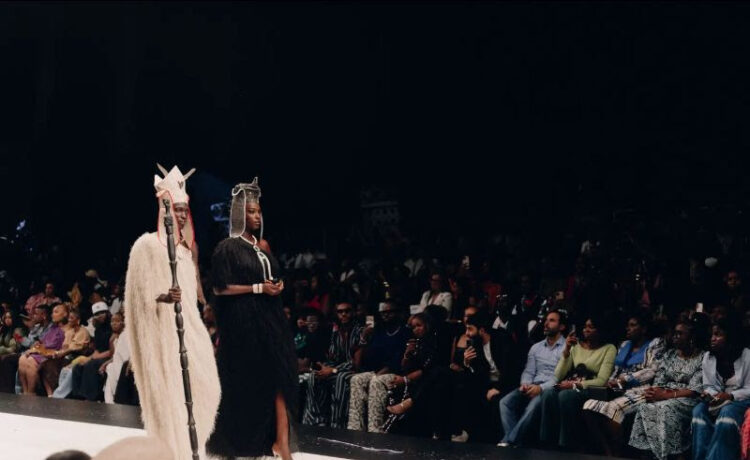
Fringe detailing was another noticeable feature across the collections, appearing on runway outfits and street-style ensembles. The decorative element added movement, texture and visual character to different designs, reinforcing the event’s emphasis on expressive fashion.
Accessories also moved away from conventional styling, with designers and fashion enthusiasts embracing sculptural and handcrafted pieces, including oversized rings, feathered hats and embellished hair clips.
Meanwhile, familiar wardrobe staples such as suits and skirts were reimagined through deconstruction, unconventional fabric combinations, exaggerated proportions and bold silhouettes.
Beyond the collections themselves, Lagos Fashion Week 2026 also demonstrated a shift towards more experimental presentation formats, with designers using installations, unconventional models and immersive experiences to communicate their creative concepts.
IAMISIGO presented an installation inspired by wetlands and material research, using the environment as a reference point for exploring textures, sustainability and the relationship between fashion and nature.
THISISUS adopted a community-centred approach by featuring members of the community as models, while Weizdhurm Franklyn experimented with human mannequins as part of its presentation.
These approaches challenged the conventional separation between runway fashion, art installations and community participation, allowing designers to communicate their ideas through experiences beyond traditional catwalk presentations.
The event also attracted international attention through cultural collaborations and appearances by global fashion personalities, including actress Yaya DaCosta, further connecting Nigerian designers with wider audiences.
The latest edition reinforces Lagos Fashion Week’s position as an important platform for promoting African fashion, encouraging creative exchange and expanding opportunities for local designers within the international fashion industry.
For Nigeria’s fashion sector, the growing use of indigenous fabrics such as Akwete also presents opportunities for textile producers, artisans and small-scale manufacturers to participate more actively in the fashion value chain.
As designers continue to experiment with traditional materials and contemporary techniques, the country’s cultural heritage is increasingly becoming a source of creative and commercial value.