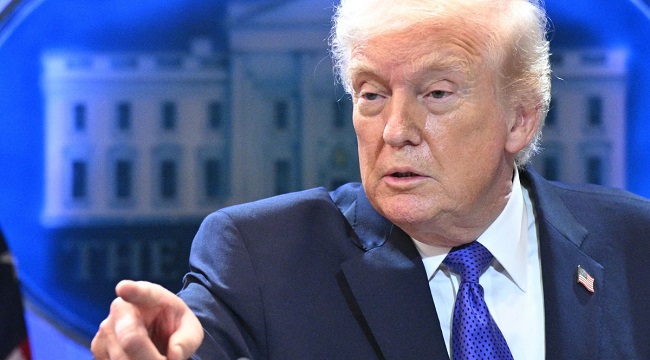
United States President Donald Trump has indicated that fresh military strikes against Iran are highly unlikely if diplomatic negotiations continue making progress, raising hopes that ongoing efforts could help reduce tensions in the Middle East.
Trump’s comments come amid continuing uncertainty surrounding relations between Washington and Tehran, with diplomatic discussions taking place against the background of military tensions and concerns over regional security.
According to a report by Radio Free Europe/Radio Liberty, Trump suggested that the possibility of further air strikes would depend on progress towards an agreement between the two countries.
The American president’s position indicates a preference for negotiations if they can produce an arrangement acceptable to Washington.
However, the situation remains uncertain because several major disagreements between the United States and Iran have yet to be resolved.
The latest diplomatic developments are particularly important because tensions involving Iran have consequences beyond the two countries.
The Middle East is a major global energy-producing region, and any military confrontation involving Iran could affect international oil supplies, shipping operations and energy prices.
One of the most important strategic locations in the dispute is the Strait of Hormuz.
The waterway connects the Persian Gulf with the Gulf of Oman and serves as a major route for international oil and gas transportation.
A significant proportion of the world’s seaborne oil trade passes through the area, making its security important to energy-importing countries across Europe, Asia and other regions.
Any disruption to shipping through the strait could increase transportation costs, create uncertainty in energy markets and place pressure on countries that depend heavily on imported petroleum products.
The latest reports also indicate that maritime security remains a serious concern.
Iran’s Islamic Revolutionary Guard Corps reportedly said two oil tankers had caught fire after striking mines in or near the Strait of Hormuz.
Such developments have increased concerns about the safety of commercial vessels operating in the region.
However, the circumstances surrounding the reported incidents and responsibility for them require careful verification.
Beyond maritime security, the diplomatic situation is complicated by disagreements over Iran’s nuclear programme and wider regional security concerns.
The United States has repeatedly expressed concerns about Iran’s nuclear activities, while Tehran has maintained that its nuclear programme is intended for peaceful purposes.
These disagreements have contributed to years of tension, sanctions and diplomatic negotiations.
A successful diplomatic arrangement could help reduce the risk of further military confrontation and provide greater stability to the international energy market.
However, negotiations could face difficulties if either side believes that the proposed conditions do not adequately protect its national interests.
For international investors, the possibility of renewed military action remains an important risk factor.
Oil prices are particularly sensitive to developments in the Middle East because uncertainty surrounding supply routes can influence market expectations.
Higher oil prices can increase transportation and production costs, contributing to inflation in countries that rely on imported energy.
Developing economies could face additional pressure if higher international crude prices translate into increased fuel and electricity costs.
African countries would also be affected by prolonged instability, although the impact would differ between oil-exporting and oil-importing economies.
Oil producers could benefit from stronger prices, while countries dependent on imported petroleum products could face higher import bills.
The diplomatic signals from Washington therefore carry considerable importance for the wider international community.
Although Trump’s latest comments suggest that the United States is willing to give negotiations an opportunity, they do not represent a final peace agreement or confirmation that military tensions have ended.
The coming days will be important in determining whether diplomatic efforts can produce meaningful progress.
For now, international attention remains focused on the negotiations, maritime security and the possibility of a wider reduction in Middle East tensions.