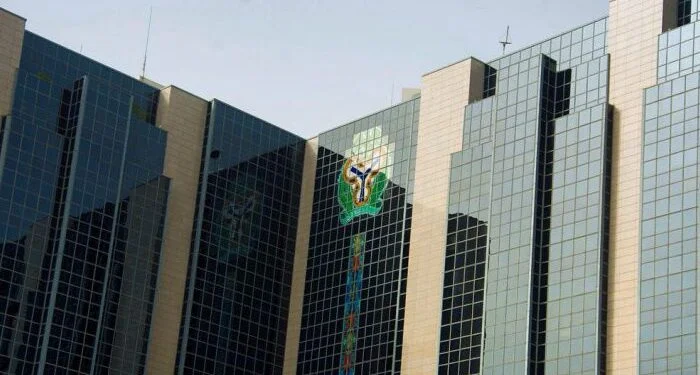
The Central Bank of Nigeria (CBN) has withdrawn approximately ₦3.46 trillion from the financial system through its latest Open Market Operations (OMO) and Treasury bills auctions, following strong demand from investors seeking opportunities in short-term government securities.
The development highlights the apex bank’s continued efforts to manage liquidity within the banking system while maintaining monetary conditions aimed at supporting its broader inflation-control objectives.
According to auction results reported by The Punch on November 6, the combined operations conducted on November 3 and 4 attracted subscriptions of approximately ₦5.57 trillion against total offers of ₦2.3 trillion.
The CBN eventually allotted ₦2.95 trillion through OMO instruments and ₦509.41 billion through Treasury bills.
The combined allotment brought the total amount absorbed from the financial system to approximately ₦3.46 trillion.
The figures indicate that investors submitted bids worth more than twice the amount initially offered by the central bank.
The strong demand also reflects continued interest in fixed-income investment opportunities amid changing liquidity conditions and expectations about interest rates.
OMO auction attracts strong investor demand
The November 3 OMO auction accounted for the largest share of the central bank’s latest liquidity withdrawal.
The CBN offered ₦1.5 trillion across three instruments with maturities of 119 days, 126 days and 133 days.
However, investors submitted bids worth approximately ₦3.52 trillion, representing about 2.35 times the advertised offer.
The central bank eventually allotted ₦2.95 trillion.
The 133-day instrument attracted the highest demand, receiving subscriptions of approximately ₦2.36 trillion.
This represented about 67 per cent of total subscriptions recorded during the OMO auction.
The stop rates for the three instruments were 17.77 per cent for the 119-day bill, 17.71 per cent for the 126-day bill and 17.67 per cent for the 133-day bill.
The substantial allotment represented an increase compared with the October 29 auction, when the central bank allotted approximately ₦244.93 billion despite receiving bids worth ₦2.28 trillion.
The difference between the two auctions demonstrates how the CBN can adjust the amount of liquidity absorbed depending on prevailing monetary and financial conditions.
Treasury bills auction records strong subscriptions
The Treasury bills auction conducted on November 4 also recorded considerable investor interest.
According to the reported results, subscriptions reached approximately ₦2.045 trillion against an offer of ₦800 billion.
However, the CBN allotted only ₦509.41 billion, leaving approximately ₦1.54 trillion in bids unaccepted.
The 364-day Treasury bill attracted the largest share of investor interest, receiving subscriptions of approximately ₦1.994 trillion.
The central bank allotted ₦461.84 billion through the instrument.
The 91-day bill attracted subscriptions of ₦25.01 billion, while the 182-day instrument received approximately ₦25.83 billion.
The CBN maintained its Treasury bills stop rates at their previous levels.
The 91-day instrument cleared at 15.40 per cent, while the 182-day and 364-day instruments settled at 15.79 per cent and 15.80 per cent respectively.
Despite the unchanged stop rates, investors submitted bids requesting higher yields on longer-dated securities.
For the 364-day instrument, some bids reached 18.18 per cent.
This suggests that investors were seeking higher returns to compensate for the risks associated with holding government securities over longer periods.
Why the CBN withdraws liquidity
Open Market Operations and Treasury bills are among the instruments used by the CBN to influence liquidity and monetary conditions.
When the central bank sells securities, investors pay for them, transferring funds from the banking system to the CBN.
This reduces the amount of immediately available liquidity in the financial system.
Liquidity management is important because excessive money available within the banking system can influence lending, investment and inflationary pressures.
However, liquidity withdrawal is not the same as a permanent removal of money from the economy.
Securities have maturity dates, and funds can return to the financial system when those instruments mature, depending on the central bank’s subsequent actions.
The latest operations came amid elevated banking-system liquidity.
Financial data cited in the Punch report indicated that banks had more than ₦7.72 trillion in the Standing Deposit Facility on November 3.
The Financial Markets Dealers Association had also reported increased banking-system liquidity in October.
It projected approximately ₦13.79 trillion in liquidity inflows during November, largely from OMO maturities, government allocations and Treasury bills repayments.
Implications for banks and investors
The latest auctions have important implications for banks, institutional investors and other participants in Nigeria’s financial markets.
For banks, changes in liquidity can influence short-term funding conditions and investment decisions.
For investors, the auction results provide information about the returns available on government securities and the level of competition for fixed-income investments.
High demand for Treasury bills may also indicate that investors are willing to commit funds to government-backed instruments rather than take on higher risks elsewhere.
However, investment decisions still depend on inflation expectations, interest rates, liquidity needs and individual risk preferences.
The CBN’s challenge will be to maintain an appropriate balance between liquidity management, financial stability and economic activity.