Nigeria has called for the establishment of a shared regional maritime surveillance network and sustainable funding for joint security operations across the Gulf of Guinea as part of efforts to strengthen maritime security and tackle growing threats to international shipping.
The Federal Government made the appeal during a high-level United Nations Security Council debate on emerging technologies and maritime security held on October 29, 2026, at the UN Headquarters in New York.
Nigeria was represented by the Permanent Secretary of the Ministry of Foreign Affairs, Ambassador Dunoma Umar Ahmed, who presented the country’s position on the growing security challenges confronting coastal nations in West and Central Africa.
During his address, Ahmed warned that criminal networks were increasingly exploiting modern technologies, including satellite communications and falsified vessel identification signals, to carry out piracy, kidnapping for ransom, crude oil theft and other maritime crimes.
He explained that although technology was providing criminals with new opportunities to evade security agencies, governments could also deploy advanced technological solutions to improve surveillance, intelligence gathering and responses to maritime threats.
Nigeria highlights Deep Blue Project
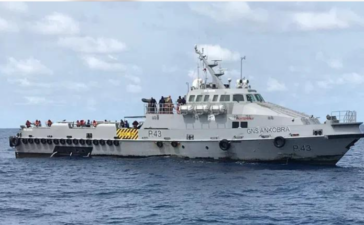
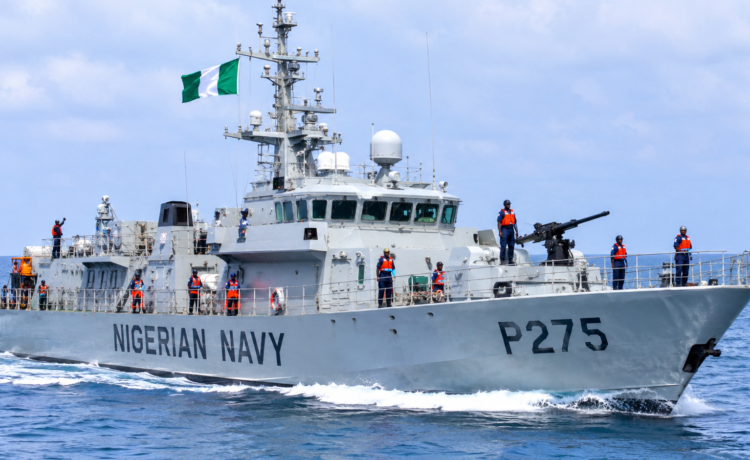
Highlighting Nigeria’s efforts to strengthen maritime security, Ahmed pointed to the Deep Blue Project as an important national initiative designed to improve surveillance and combat criminal activities within Nigerian waters and the wider Gulf of Guinea.
The project integrates unmanned aerial vehicles, maritime domain awareness systems and an advanced central command and control centre to monitor maritime activities and support security operations.
The initiative also brings together different security agencies to improve coordination and response capabilities across the country’s maritime environment.
Ahmed further highlighted Nigeria’s Suppression of Piracy and Other Maritime Offences Act, 2019, which provides a legal framework for investigating and prosecuting individuals involved in piracy and other maritime offences.
He stressed that technological investments must be supported by effective legislation, trained personnel and cooperation among relevant institutions to achieve lasting results.
Nigeria proposes regional surveillance network
As part of its recommendations, Nigeria called on the United Nations Security Council, the International Maritime Organization and other international partners to support the development of a shared regional maritime surveillance system.
The proposed arrangement would connect national surveillance systems and allow countries within the Gulf of Guinea to share information about suspicious vessels, criminal activities and other security threats.
Nigeria wants the initiative to build on the existing Yaoundé Architecture, which provides a framework for cooperation among West and Central African countries in addressing maritime insecurity.
According to Ahmed, stronger information-sharing would help participating countries develop a common understanding of activities taking place across their maritime territories and coordinate responses more effectively.
He also emphasised the importance of ensuring that developing coastal countries have fair and affordable access to modern surveillance technologies.
He noted that technological advancements should help reduce existing security gaps rather than widen the differences between countries with advanced maritime capabilities and those with limited resources.
Government seeks predictable funding for maritime operations
Beyond surveillance technology, Nigeria also called for sustainable and predictable financing to support regional maritime security operations.
Ahmed recalled that the African Union Peace and Security Council endorsed the operationalisation of a Combined Maritime Task Force for the Gulf of Guinea in April 2025, with Nigeria recommended to host its headquarters.
The proposed task force is expected to strengthen cooperation among participating countries and improve coordinated responses to piracy and other maritime crimes.
Nigeria urged the UN Security Council to consider the financing framework under Resolution 2719 (2023), which provides for sustainable funding of eligible African Union-led peace support operations, subject to the resolution’s requirements and Security Council authorisation.
The government believes that dependable financial support would help participating countries maintain surveillance systems, conduct joint operations and strengthen their operational capabilities.
The call also highlights the importance of shared responsibility among coastal countries and international partners in addressing maritime insecurity.
Implications for Nigeria’s maritime industry
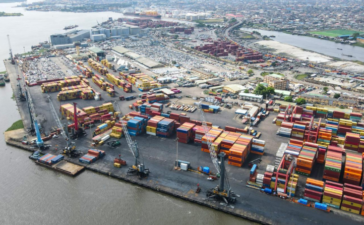
Improved maritime security remains important to Nigeria’s economy because a significant volume of international trade depends on safe and reliable shipping routes.
Piracy, armed robbery at sea, illegal fishing and crude oil theft can undermine commercial activities, threaten seafarers and increase the risks associated with maritime transportation.
Security challenges can also affect shipping insurance costs, investor confidence and the movement of goods through regional ports.
A stronger regional surveillance system could therefore improve the protection of commercial vessels, offshore facilities, fishing activities and other maritime assets.
Nigeria’s renewed call for cooperation also comes amid wider efforts by regional institutions to strengthen maritime information-sharing and operational coordination through the Yaoundé Architecture.
Ahmed reaffirmed Nigeria’s commitment to working with Gulf of Guinea countries, regional economic communities, the African Union and the United Nations Security Council to improve maritime security.
He stressed that emerging technologies should become instruments of collective security, helping to create safer waters for seafarers, coastal communities and international shipping.
The success of the proposed arrangements, however, will depend on sustained cooperation, adequate financing, access to technology and the commitment of participating countries to share intelligence and coordinate their maritime security activities.