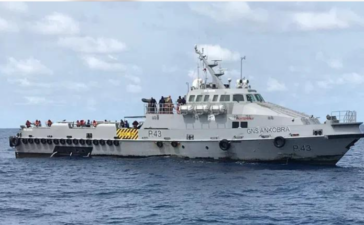
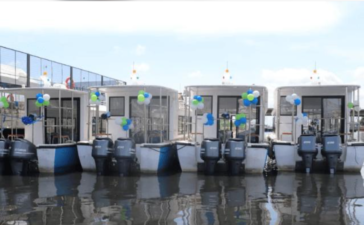
The Nigerian Maritime Administration and Safety Agency (NIMASA) has introduced advanced surveillance technology, including unmanned aerial vehicles, armoured vehicles and other tactical equipment, as part of efforts to strengthen maritime security and combat illegal activities within the country’s territorial waters.
The development forms part of the Federal Government’s ongoing efforts to improve security across Nigeria’s maritime domain through the Deep Blue Project, a security initiative designed to address threats affecting shipping, coastal communities and commercial activities at sea.
The new equipment was presented on Tuesday by Tal Spektor, Chief Executive Officer of HLS International, a technical partner to NIMASA under the Deep Blue Project. The presentation took place during the Africa International Defence Exhibition in Lagos.
Speaking at the event, Spektor explained that the project combines intelligence gathering, surveillance and coordinated enforcement operations to improve the country’s ability to respond to maritime threats.
He said the equipment would support the agency’s operations by providing improved monitoring capabilities and strengthening the coordination of security personnel responsible for protecting Nigerian waters.
The introduction of unmanned aerial vehicles is particularly important because drones can support surveillance activities across areas that may be difficult for conventional patrol teams to monitor continuously.
Armoured vehicles and other tactical equipment are also expected to strengthen operational support for personnel involved in maritime security activities.
Deep Blue Project and Nigeria’s Maritime Security
The Deep Blue Project operates under the supervision of the Federal Ministry of Marine and Blue Economy in collaboration with the Ministry of Defence.
The initiative was established to improve Nigeria’s response to maritime insecurity through a combination of sea, air and land-based security operations.
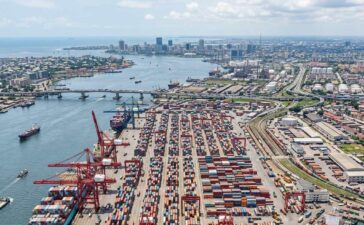
Nigeria’s maritime environment plays an important role in the country’s economy. The nation’s ports, shipping routes and offshore facilities support international trade, petroleum activities and the movement of goods.
Consequently, insecurity at sea can affect commercial operations, increase shipping risks and undermine confidence among international maritime operators.
Threats such as piracy, sea robbery, illegal fishing, smuggling and other unlawful activities have historically created challenges for maritime authorities across the Gulf of Guinea.
Improving surveillance and enforcement capacity is therefore an important part of efforts to protect the country’s maritime interests.
The use of technology can also help security agencies identify suspicious activities and improve the flow of information between operational teams.
Importance to the Marine and Blue Economy
The Federal Government has continued to emphasise the importance of developing Nigeria’s marine and blue economy as a source of investment, employment and economic diversification.
However, the growth of the sector depends partly on the ability of authorities to provide a safe environment for vessels, seafarers, port operators and investors.
Stronger maritime security can improve confidence in Nigerian shipping operations and support the movement of cargo through the country’s ports.
It can also contribute to the protection of offshore infrastructure and coastal economic activities.
Although the introduction of new equipment represents an important development, its effectiveness will depend on proper maintenance, trained personnel, operational coordination and consistent deployment.
Authorities will also need to ensure that surveillance information is translated into timely enforcement action.
The latest development highlights the growing role of technology in Nigeria’s maritime security strategy.
As the country seeks to expand its maritime economy, strengthening the protection of its territorial waters remains an important responsibility for NIMASA and other security agencies.