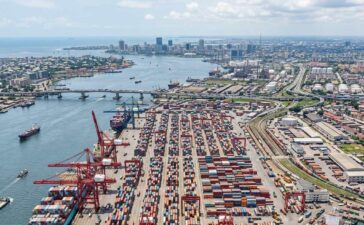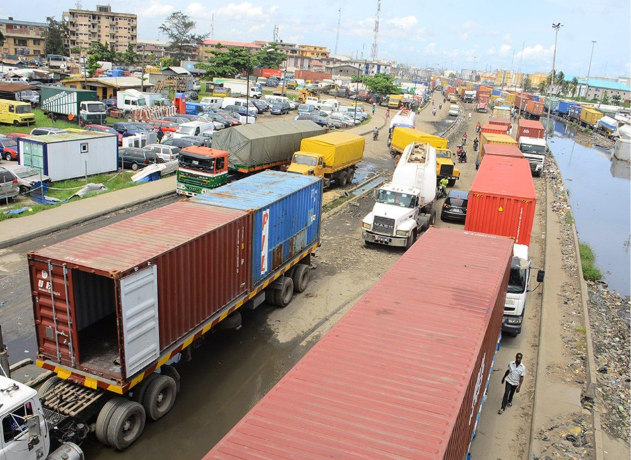
The Nigerian Ports Authority (NPA) has raised concerns over the heavy volume of trucks using the Apapa port access road in Lagos, saying the corridor handles more than 7,000 trucks daily despite being designed for approximately 2,400.
The figures were reported by Punch Newspapers on 29 October 2026, following remarks by NPA Managing Director Abubakar Dantsoho at the African Ports Conference in Casablanca, Morocco.
The reported traffic volume highlights the pressure placed on road infrastructure serving one of Nigeria’s most important maritime gateways. When truck movements exceed the capacity of access roads, the effects can extend beyond congestion to cargo delays, higher operating costs and uncertainty for importers and exporters.
Apapa and Tin Can Island are central to Nigeria’s maritime trade. Their performance affects the movement of imported goods into the country and the shipment of Nigerian products to international markets.
The NPA’s comments underline the need to coordinate port operations, road transport, cargo handling and digital information systems rather than treat congestion as a problem that can be resolved by expanding one road alone.
Congestion affects trade and logistics
Port congestion can create a chain of delays involving shipping lines, terminal operators, transport companies, customs agents and cargo owners.
When trucks cannot reach terminals efficiently, cargo collection and delivery schedules become harder to manage. Delays can increase vehicle operating expenses and disrupt the plans of businesses waiting for goods or containers to move.
Dantsoho recalled a period when cargo reportedly remained at Lagos ports for as long as three weeks. He used the comparison to explain the scale of the operational challenges that have faced the country’s ports.
The 7,000-truck figure is particularly significant because it is almost three times the stated daily design capacity of the access road. It indicates that the corridor is handling demand substantially beyond the level for which it was designed.
However, reducing congestion requires more than limiting the number of trucks entering the road. Authorities must also ensure that trucks arrive when terminals can receive them, cargo is processed efficiently and road traffic is coordinated with port operations.
Digital reforms form part of the response
According to the NPA, the electronic truck call-up system known as Eto helped address congestion along the port corridor by improving the scheduling of truck movements.
The authority has also introduced digital initiatives intended to improve coordination among the agencies and businesses involved in cargo clearance.
Dantsoho said Nigeria went live with the National Single Window in 2026 and launched a beta version of the Port Community System. These initiatives are intended to improve information exchange among customs authorities, terminals, shipping lines and regulators.
Digital platforms can reduce repeated paperwork, improve the visibility of cargo movements and make it easier for businesses to plan their operations. Their effectiveness, however, depends on accurate data, reliable connectivity, cybersecurity and participation by the relevant stakeholders.
The NPA chief also emphasised that digital infrastructure should be developed before artificial intelligence is expanded across port operations. Reliable data systems are necessary if automated tools are to support meaningful decisions.
Nigeria’s port performance
Dantsoho pointed to improvements in Nigeria’s performance in the World Bank’s Container Port Performance Index 2025.
According to his remarks as reported by Punch, Tin Can Island Port ranked 10th and Apapa Port 12th among the world’s most improved ports in the index released in June 2026.
He also said Nigeria’s cargo throughput increased by 24.8 per cent to 129.3 million metric tonnes in 2025.
These figures indicate progress in some areas of port activity, but the continuing pressure on Apapa’s access road shows that operational improvements do not remove every infrastructure challenge.
The performance of a port depends on multiple connected systems, including the road network, cargo handling, terminal efficiency, customs procedures and inland transport corridors.
Regional cooperation is also necessary
Dantsoho, who is also president of the Port Management Association of West and Central Africa, called for greater cooperation among ports in the region.
He identified priorities that included sharing cyber threat information, adopting common data standards, benchmarking port performance and strengthening professional training.
Regional cooperation matters because international shipping routes connect ports and inland markets across several countries. A delay at one port can affect vessel schedules and cargo movements elsewhere.
The Abidjan–Lagos corridor is one example of a regional route where transport and border coordination can influence trade flows.
What happens next?
The challenge facing Apapa is not simply the number of trucks using the road. It is the relationship between traffic capacity, terminal operations, cargo clearance and the coordination of transport services.
The NPA’s figures provide a basis for assessing the scale of the problem, while the authority’s digital initiatives represent part of its stated response.
For importers, exporters and logistics companies, the key issue will be whether these measures produce more predictable cargo movement and reduce the time and cost associated with port access.
Sustained progress will require coordinated action by port authorities, road agencies, security services, terminal operators, transport companies and government regulators.