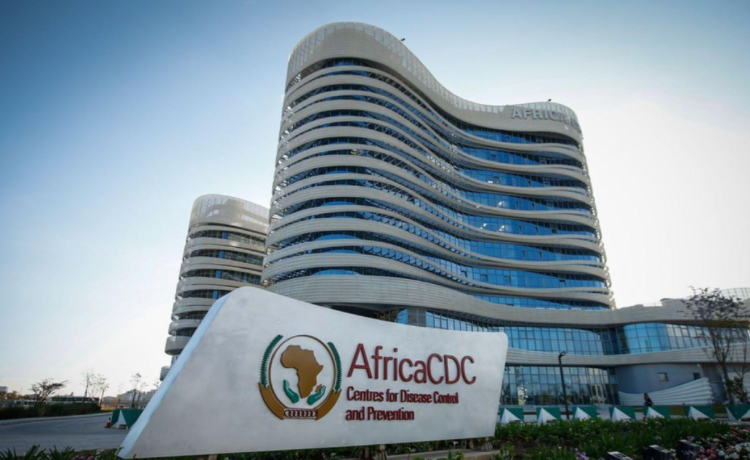
The Africa Centres for Disease Control and Prevention (Africa CDC) has intensified calls for a coordinated continental response to the ongoing Bundibugyo Ebola outbreak, which has spread across Central, Eastern and Western Africa.
As of October 27, 2026, the Democratic Republic of Congo (DRC) had recorded 10,060 infections and 4,887 deaths, according to figures reported by Reuters, citing the country’s public health institute. The wider outbreak total reported by health officials had reached approximately 10,091 cases.
Reuters+1
The outbreak has raised serious concerns among health authorities because cases have also been reported in Kenya and Nigeria. Officials are working to strengthen surveillance, improve preparedness and reduce the risk of further transmission across international borders.
In a statement dated October 21, Africa CDC announced that it would convene a high-level virtual meeting of African health ministers on October 28 to assess the outbreak and coordinate the response.
Africa CDC
A growing public health emergency
The outbreak is caused by the Bundibugyo virus, a type of Ebola virus that can cause severe illness and death.
The current epidemic began in the DRC and has developed into a major public health emergency. Africa CDC declared a Public Health Emergency of Continental Security on May 18, 2026, reflecting concerns about the scale of transmission and the risk to neighbouring countries.
The geographic spread of the outbreak has placed additional pressure on health authorities, particularly in areas where healthcare facilities have limited resources and medical workers face difficult working conditions.
Dr Jean Kaseya, Director General of Africa CDC, has urged African countries to strengthen cooperation and respond more quickly to the changing situation.
He has warned that no country should assume it is safe without appropriate preparedness measures. Health officials are concerned that delays in detecting infections, shortages of protective equipment and weaknesses in healthcare systems could make the outbreak harder to contain.
Cross-border transmission raises concern
The appearance of cases outside the DRC has increased the importance of coordinated action.
Reuters reported that Kenya recorded nine cases after a traveller who had passed through Uganda from the DRC died in Nairobi. Nigeria has also reported a case, while authorities have investigated additional suspected transmission events involving people with connections to affected areas.
Uganda previously reported cases linked to the outbreak but was declared Ebola-free by the World Health Organization in August. Its experience highlights the importance of monitoring travellers and maintaining surveillance even after transmission has apparently been interrupted.
Health authorities across the continent are being encouraged to improve screening where appropriate, strengthen laboratory testing and ensure suspected cases can be isolated and assessed promptly.
However, public health experts must balance border monitoring with the need to avoid unnecessary disruption to trade, travel and ordinary economic activity.
Challenges facing the response
The outbreak response has been complicated by several factors, including shortages of protective equipment, difficulties paying some healthcare workers and insecurity in parts of the DRC.
Mistrust of authorities and misinformation can also make it harder for health teams to investigate cases and encourage affected communities to follow public health advice.
When residents fear discrimination or do not trust medical teams, they may delay seeking care or avoid reporting symptoms. This can increase the risk of transmission and make contact tracing more difficult.
Funding is another major concern. Effective outbreak control requires laboratory capacity, trained medical personnel, protective supplies, treatment facilities, transport and public information campaigns.
Africa CDC has therefore called for stronger political commitment and greater support for frontline workers. Its approach also emphasises community engagement, surveillance and cooperation between neighbouring countries.
Treatment and vaccine research
The Bundibugyo virus presents additional medical challenges because there is no approved specific treatment for this strain, according to reporting published on October 28 by The Guardian. Vaccine trials are under way, with results expected over the following months.
Researchers are continuing to investigate potential preventive and therapeutic options, but public health authorities cannot rely on future developments alone. Immediate containment measures remain essential.
What happens next?
The October 28 meeting of African health ministers is intended to help coordinate national responses, strengthen cross-border support and identify areas requiring additional resources.
Countries are expected to review surveillance systems, preparedness arrangements, protection for healthcare workers and communication with affected communities.
For Nigeria and other countries reporting cases, the priorities include rapid identification of suspected infections, laboratory confirmation and appropriate isolation and treatment procedures.
The outbreak also demonstrates why regional health cooperation matters. Infectious diseases can cross borders quickly, meaning that progress in one country may be undermined if neighbouring states lack adequate resources.
Ultimately, containing the outbreak will require sustained funding, reliable information, public trust and cooperation between governments, health workers and international partners.