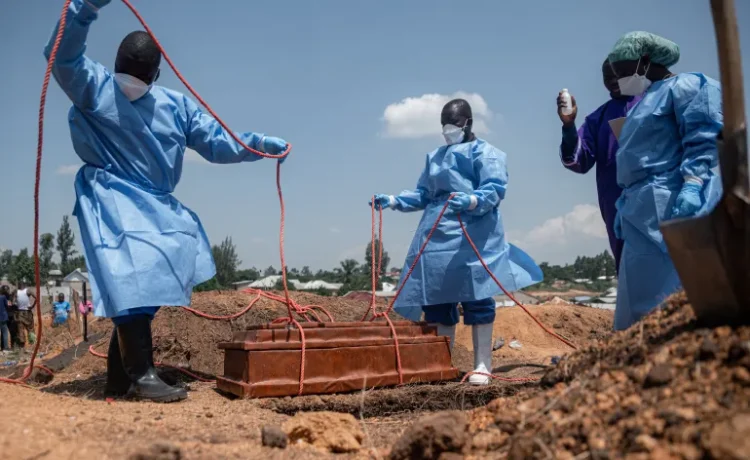
Escalating Outbreak in Eastern Provinces
The Democratic Republic of the Congo is facing an intensifying public health emergency as healthcare workers and global response teams fight to contain a severe Ebola virus outbreak across its eastern and northern provinces. Public health organizations have classified the situation as a primary regional priority, deploying specialized medical personnel, epidemiology units, and mobile laboratory infrastructure to support local authorities in tracking transmission chains.
The current outbreak involves a rare viral lineage that presents complex therapeutic challenges due to limited availability of targeted treatments. Transmission has expanded beyond initial cluster areas into neighboring provinces, driven by high population mobility, dense transport networks, and persistent regional security instability that complicates contact tracing operations. In response, adjacent nations have elevated border health surveillance, establishing thermal screening protocols and isolation facilities at high-volume crossing points to prevent cross-border escalation.
Community Engagement and Public Trust
International public health teams emphasize that community engagement remains the cornerstone of effective containment. Distrust of medical interventions, compounded by historical conflict and online misinformation regarding medical procedures, initially hampered early reporting and quarantine measures. To bridge this gap, response coordinators are partnering with traditional leaders, local youth organizations, and community radio stations to deliver accurate health guidance, promote safe burial practices, and encourage early symptom reporting.
Global health agencies warn that sustained financial and logistical support is crucial to avoid broader regional disruption. Despite operational hurdles, health authorities report that structured contact tracing networks, aggressive sanitation protocols in medical facilities, and rapid diagnostic deployments are showing positive results in containing localized urban clusters. Continued funding commitments from international donors remain essential to securing vaccine supplies, personal protective equipment, and field hospital operations over the coming months.
Strengthening Regional Health Security
The recurring nature of viral outbreaks in Central Africa highlights the critical need for permanent health infrastructure investments rather than temporary crisis management. Strengthening local healthcare systems involves training indigenous medical personnel, building resilient cold-chain storage networks for temperature-sensitive vaccines, and modernizing regional laboratory diagnostic capacity.
By integrating epidemiological surveillance into primary healthcare centers, local communities can identify and isolate infectious threats long before they escalate into national emergencies. Investing in resilient public health systems not only safeguards local populations but also fortifies global health security against potential pandemic threats originating from high-risk bio-zones.