Nigeria’s public education system is facing a major teacher-capacity crisis, with more than 31.8 million learners relying on just 592,077 teachers, according to fresh government education data.
The figures, contained in the Federal Ministry of Education’s Digital Nigeria Education Management Information System, show that the country has a national learner-teacher ratio of 53.8 to one. In practical terms, one teacher is responsible for nearly 54 learners on average.
The situation is considerably worse in some states.
Kano State recorded the highest learner-teacher ratio at 88 learners per teacher, while Katsina followed with 87.4 learners per teacher. Imo State recorded a ratio of 82.2 learners per teacher.
Other states facing ratios above 60 learners per teacher include Jigawa at 72.8, Kaduna at 72.7, Abia at 72, Bauchi at 69.7 and Kebbi at 63.5.
The figures highlight the uneven distribution of teachers across Nigeria’s public education system.
The education census recorded 108,016 public schools, although only 84,177 schools submitted data, representing a 77.9 per cent reporting rate.
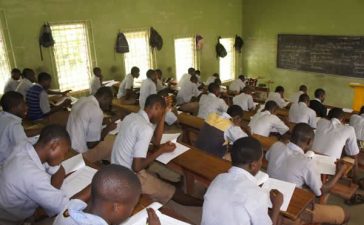
The shortage is not limited to teachers. Classroom availability is also placing enormous pressure on schools.
According to the data, the 592,077 teachers serve learners using 394,836 classrooms, producing a national learner-classroom ratio of 60.1 to one.
Some states are experiencing particularly severe classroom overcrowding.
Katsina recorded 107 learners per classroom, followed by Kano at 91.7, Borno at 84.7, Jigawa at 77.6 and Imo at 75.7.
The disparity is evident when these figures are compared with states recording substantially lower ratios. Enugu, for example, recorded 17.1 learners per teacher, while Ekiti recorded 18.4.
The Nigeria Union of Teachers has repeatedly raised concerns about the shortage of qualified teachers across the country.
The union has warned that some primary schools are operating with only one or two teachers, a situation that could undermine effective teaching and contribute to poor learning outcomes.
The latest data therefore raises questions about Nigeria’s ability to provide quality basic education as the country’s population continues to grow.
Large class sizes can make it difficult for teachers to provide individual attention, monitor students’ progress and effectively address learning gaps.
The problem could also place additional pressure on teachers, potentially contributing to burnout and reduced teaching effectiveness.
For policymakers, the challenge goes beyond recruiting more teachers. The distribution of teachers must also reflect the number of learners and the needs of individual communities.
Kano, Katsina, Kaduna, Jigawa and other states with exceptionally high ratios may require targeted recruitment and deployment programmes to address the most severe shortages.
Improving classroom infrastructure is equally important. Recruiting teachers without providing sufficient classrooms could simply shift the pressure from one part of the education system to another.
The figures provide a fresh warning that Nigeria’s education reforms must address both human resources and infrastructure if the country is to improve learning outcomes.
A stronger education system will require sustained investment in teacher recruitment, training, retention, classroom construction and equitable deployment.
With millions of Nigerian children depending on public schools for their education, resolving the teacher shortage remains critical to the country’s human-capital development and long-term economic future.