The Chairman of the Hospitality and Tourism Skills Council of Nigeria (HTSSCN), Mr. Nkereuwem Onung, has pledged to work closely with the Director-General of the Industrial Training Fund (ITF), Dr. Afiz Oluwatoyin Ogun, to strengthen industrial skills development within Nigeria’s tourism and hospitality sector.
Onung made the commitment during the official handover of Nigeria’s Sector Skills Councils from the National Board for Technical Education (NBTE) to the Industrial Training Fund (ITF). The ceremony, held at the ITF headquarters, Skills House, Maitama, Abuja, marked a significant milestone in Nigeria’s efforts to reform its national skills development system.
The event formally ended years of institutional disagreements between the NBTE and ITF over the administration of the country’s skills qualification framework. The reforms introduce a clearer division of responsibilities between the two agencies, paving the way for more coordinated workforce development.
The transition was facilitated by the Office of the Vice President through the National Council on Skills. Under the new arrangement, the ITF assumes responsibility for administering the Nigerian Skills Qualification Framework (NSQF), the Secretariat of the National Council on Skills and the Secretariat of WorldSkills Nigeria.
Meanwhile, the NBTE will focus exclusively on regulating formal technical and vocational education institutions, eliminating previous overlaps in their mandates.
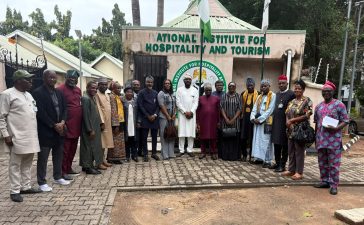
Onung attended the landmark ceremony alongside members of the management team of the National Institute for Hospitality and Tourism (NIHOTOUR). Their presence underscored the commitment of the hospitality and tourism sector to supporting the new framework for skills development.
The event attracted key stakeholders in Nigeria’s skills ecosystem, including ITF Director-General Dr. Afiz Oluwatoyin Ogun, NBTE Executive Secretary Prof. Idris Bugaje, Chairman of the Committee of Chairmen of Sector Skills Councils A. B. Nagode, and other industry leaders.
Speaking during the ceremony, Prof. Bugaje confirmed that both institutions had reached an agreement that clearly defines their respective responsibilities.
He stated that the long-standing disagreement over the regulation of the Nigerian Skills Qualification Framework had been resolved, adding that the ITF would now oversee the framework while the NBTE would concentrate on education and educational institutions.
According to him, the agreement provides a clear structure that eliminates duplication of responsibilities and strengthens the country’s skills development architecture.
The Sector Skills Councils play a critical role in providing industry leadership by developing occupational standards, identifying workforce needs and ensuring that skills training aligns with labour market demands. The councils are expected to support employers with competent professionals while enhancing national productivity and economic growth.
For the hospitality and tourism industry, the transition is expected to create stronger collaboration between government agencies and industry stakeholders. It also provides an opportunity to improve workforce competence, promote internationally recognised certifications and strengthen Nigeria’s tourism value chain.
The HTSSCN, chaired by Onung, was recently inaugurated by the Director-General of NIHOTOUR, Aare Abisoye Fagade, to drive competency standards, curriculum development, accreditation systems, labour market intelligence and globally aligned certification frameworks for the hospitality and tourism sector.
With the new arrangement now in place, Onung reaffirmed the council’s commitment to working with the ITF to build a skilled workforce capable of supporting the growth and competitiveness of Nigeria’s tourism industry.