The National Institute for Hospitality and Tourism, NIHOTOUR, and the Federation of Tourism Associations of Nigeria, FTAN, have moved to ease tensions over the implementation of the NIHOTOUR Act 2022, agreeing to establish a joint committee to address areas of disagreement and strengthen collaboration between government and the organised tourism private sector.
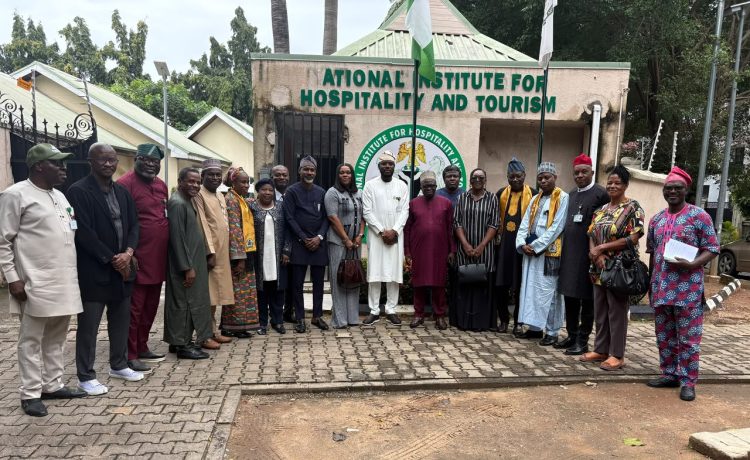
The agreement followed a strategic meeting between the leadership of both organisations in Abuja on Wednesday, September 9, 2026, during which they discussed concerns surrounding the legislation, professional standards and the wider development of Nigeria’s hospitality, tourism and travel industry.
In a joint statement signed by NIHOTOUR Director-General, Dr Abisoye Fagade, and FTAN President, Dr Aliyu Badaki, the organisations said outstanding disagreements would be better addressed through dialogue, mutual respect, evidence-based engagement and constructive collaboration.
Significantly, both parties also agreed that pending litigation relating to the implementation of the NIHOTOUR Act would be addressed amicably through dialogue and due process.
The development represents a significant de-escalation in the disagreement surrounding the legislation and signals a shift towards negotiations over how its provisions should operate within the tourism industry.
Joint Committee to Examine NIHOTOUR Act
Central to the agreement is the establishment of a joint committee comprising representatives of NIHOTOUR and FTAN.
The committee will examine issues raised by industry stakeholders, identify provisions of the NIHOTOUR Act 2022 requiring clarification and develop practical recommendations towards a mutually acceptable way forward.
It will also serve as a structured platform for continued consultation between the government institute and the organised private sector.
The move is particularly important given the debate within Nigeria’s tourism industry over the appropriate relationship between government institutions responsible for training and professional development and private businesses and associations operating within the sector.
Rather than allowing those disagreements to remain primarily confrontational, NIHOTOUR and FTAN are now proposing an institutional mechanism through which the issues can be examined.
The eventual recommendations of the committee could therefore determine whether the latest rapprochement produces a lasting resolution.
Pending Court Cases to Be Addressed Through Dialogue
Another important element of the agreement concerns existing legal disputes connected with implementation of the 2022 Act.
NIHOTOUR and FTAN said pending litigation would be addressed amicably through dialogue and due process in the interest of industry unity.
The statement does not indicate that the cases have already been withdrawn or discontinued. Instead, it establishes a commitment by the parties to pursue an amicable resolution.
That distinction will remain important until formal legal steps are taken in the relevant proceedings.
The agreement nevertheless represents a notable change in tone and could reduce the institutional friction that has accompanied disagreements over the legislation.
NIHOTOUR Defends Professional Standards Mandate
NIHOTOUR reaffirmed that its responsibilities are intended to promote professional standards, competence, accountability and orderly development across the hospitality and tourism industry.
At the same time, the institute acknowledged FTAN’s position as the umbrella body representing the organised tourism private sector and the role businesses and industry associations play in building a commercially sustainable tourism economy.
FTAN, for its part, committed to constructive engagement with NIHOTOUR while continuing to represent the interests of tourism businesses, professionals and practitioners.
Finding common ground between those positions is likely to be central to the work of the proposed committee.
Professionalisation can improve service standards and workforce competence, but industry operators also typically seek regulatory frameworks that are clear, predictable and do not create unnecessary duplication or costs.
The new dialogue offers both sides an opportunity to address those concerns directly.
Partnership Targets Jobs, Skills and Investment
Beyond the disagreement over legislation, the organisations identified a broader set of objectives around which they intend to cooperate.
NIHOTOUR and FTAN agreed to strengthen professional standards across hospitality, tourism and travel; support skills development and employment opportunities for Nigerians; address industry concerns through sustained consultation; and promote a more predictable, investment-friendly business environment.
They said Nigeria’s tourism industry has significant potential to contribute to employment, investment, economic diversification, skills development, cultural preservation and national development.
Unlocking that potential, they argued, would require government institutions and private-sector operators to function as partners rather than pursuing competing agendas.
The organisations said the partnership would also support the Federal Government’s Renewed Hope Agenda.
A Shift From Confrontation to Consultation
The rapprochement comes against the backdrop of wider debate within the tourism industry about the country’s institutional and regulatory framework.
FTAN has previously advocated a review of aspects of the NIHOTOUR Act 2022, maintaining that its position is directed at improving the industry’s legal framework rather than opposing NIHOTOUR as an institution or targeting individuals.
The latest agreement therefore provides a possible route for moving that debate from public disagreement and litigation towards structured consultation.
For NIHOTOUR, the process offers an opportunity to clarify how its professionalisation mandate should operate in practice. For FTAN, it provides formal representation for organised private-sector concerns as implementation issues are considered.
Whether the agreement permanently resolves the dispute will depend on the work of the joint committee, the treatment of outstanding litigation and the willingness of both sides to translate the new conciliatory tone into mutually acceptable decisions.
Industry Unity Takes Centre Stage
Fagade and Badaki described the Abuja engagement as the beginning of a new phase of partnership and shared responsibility.
“We are united in the belief that the success of Nigeria’s tourism industry is bigger than any individual institution or association,” the joint statement said.
“Together, we will continue to engage, collaborate and forge ahead in building the tourism industry that Nigeria deserves.”
The immediate significance of the agreement is therefore not that every disagreement surrounding the NIHOTOUR Act has been resolved, but that the two major parties have established a mechanism for attempting to resolve them.
For an industry seeking greater investment, stronger standards and increased economic relevance, reducing prolonged institutional conflict could allow greater attention to shift towards tourism development, workforce capacity and commercially viable products.
The effectiveness of the accord will ultimately be measured by whether the proposed committee produces concrete recommendations, pending disputes are resolved and the renewed relationship translates into a clearer and more predictable operating environment for Nigeria’s tourism industry.