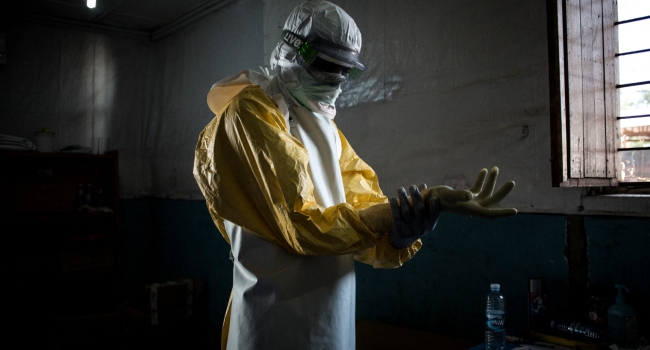
Nigeria has confirmed an imported case of Ebola Bundibugyo virus disease in the Federal Capital Territory, Abuja, prompting renewed public health surveillance and contact-tracing efforts.
The confirmation was announced on 20 October 2026 by health authorities. The World Health Organization’s Regional Office for Africa reported that laboratory testing confirmed the infection in a woman with a recent travel history involving Uganda.
According to the WHO, the patient’s symptoms began on 7 October, and she sought treatment at a private health facility in Abuja on 11 October. Laboratory confirmation followed on 20 October.
The patient was reported to be in isolation and receiving medical care. Authorities have identified 44 contacts who are being monitored as part of efforts to determine whether anyone else may have been exposed.
The development is significant because Nigeria is Africa’s most populous country, with extensive domestic and international travel connections. Public health officials must therefore respond quickly to imported infections to reduce the possibility of further transmission.
However, confirmation of a single case does not automatically mean that a widespread outbreak has begun in Nigeria. The public health response will depend on contact tracing, early detection, infection prevention and the findings of continuing investigations.
Authorities investigate the source of infection
The patient’s travel history has become an important part of the investigation. Although she had recently travelled through Uganda, that fact alone does not establish where she contracted the virus.
Reuters reported that Uganda’s health authorities clarified that the patient had transited through the country after visiting the eastern Democratic Republic of the Congo. Uganda stated that it had no confirmed active Ebola cases at the time of the report.
Investigators are working to reconstruct the patient’s travel and exposure history to identify the most likely source of infection. Such investigations help public health agencies determine whether additional contacts may need monitoring and whether any particular location requires enhanced surveillance.
The distinction is important because Ebola response measures must be based on evidence rather than assumptions about a traveller’s route.
The WHO has identified the case as involving the Bundibugyo strain of Ebola virus. Different Ebola virus species exist, and the response must reflect the particular strain involved, its transmission characteristics and the available medical countermeasures.
Contact tracing is central to containment
The identification of 44 contacts represents an important stage in Nigeria’s response.
Contact tracing involves identifying people who may have had relevant exposure to an infected individual, assessing their level of risk and monitoring them for symptoms during the period specified by public health authorities.
Health officials may also interview contacts, review movements and identify other people who could have been exposed. If a contact develops symptoms, the individual can be assessed promptly and appropriate infection-control measures can be introduced.
The process requires cooperation from the public, healthcare workers, laboratories and emergency-response teams. Accurate information about travel, symptoms and possible exposure can help authorities intervene before additional transmission occurs.
Healthcare facilities must also maintain appropriate infection-prevention procedures when assessing patients who may have Ebola. This includes following official guidance on protective equipment, isolation, specimen handling and referral procedures.
Members of the public should seek medical advice if they develop concerning symptoms after a relevant exposure. They should contact health authorities or medical providers for instructions rather than visiting multiple facilities without notifying staff about their possible exposure.
Regional outbreak increases concern
The case comes amid a wider Ebola Bundibugyo outbreak associated with the Democratic Republic of the Congo. The WHO said Nigeria had become the fifth country to detect the virus since the outbreak was declared in the DRC on 15 May 2026.
Kenya has also reported cases linked to the wider outbreak, according to international reports. The spread across several countries highlights the importance of regional cooperation, surveillance and rapid communication between health agencies.
The WHO and Africa’s public health institutions play important roles in coordinating technical support, sharing information and helping countries strengthen their response capabilities.
Nigeria has experience responding to Ebola. During the 2014 outbreak in West Africa, the country successfully contained transmission following the introduction of the virus by an infected traveller. That experience offers useful lessons, although each outbreak presents its own operational challenges.
Public information and preparedness
Clear communication is essential during a public health emergency. Authorities need to provide accurate updates about confirmed cases, contact tracing and protective measures without disclosing private information about patients.
The public should rely on official announcements from the Federal Ministry of Health, the Nigeria Centre for Disease Control and Prevention, and the WHO.
People should avoid spreading unverified claims on social media or treating travel through a particular country as proof of where infection occurred.
Ebola is a serious disease, but a prompt, coordinated response can help reduce the risk of wider transmission. Isolation of confirmed cases, monitoring of contacts, safe clinical care and transparent communication are central to that effort.
Outlook
Nigeria’s immediate priority is to establish the extent of possible exposure, monitor identified contacts and ensure that healthcare workers can safely assess suspected cases.
The number of contacts identified may change as the investigation progresses. Authorities must also continue surveillance for additional cases and coordinate with regional and international health organisations.
The confirmation of the Abuja case is a serious development, but the outcome will depend heavily on how quickly the response identifies potential transmission chains and acts on the findings.
For now, the public is advised to follow official health guidance, avoid rumours and seek appropriate medical advice when necessary.
Hashtags: #Ebola #NigeriaNews #PublicHealth #AfricaCDC
3. Africa Strengthens Regional Ebola Response as Outbreak Spreads Across Borders
Category: Africa / Health | Date: 21 October 2026
Tagline: The detection of Ebola Bundibugyo in additional countries is testing regional preparedness and reinforcing the importance of coordinated public health action.
Meta description: Africa’s Ebola response is intensifying after Nigeria confirmed an imported case, highlighting the need for surveillance, contact tracing and regional cooperation.
SEO slug: africa-regional-ebola-response-october-2026
Source: World Health Organization Regional Office for Africa; Reuters; Associated Press.
Regional health agencies face a wider challenge
Public health authorities across Africa are strengthening their response to Ebola Bundibugyo following the confirmation of a case in Nigeria and reports of infections in other countries connected to the wider outbreak.
The World Health Organization reported on 20 October that Nigeria had confirmed an imported case in Abuja. The case was detected during an outbreak that began in the Democratic Republic of the Congo and has since affected multiple countries.
The development has increased the importance of coordination among national health ministries, laboratories, surveillance teams and international health organisations.
An infectious disease outbreak that crosses national borders cannot be managed effectively through isolated action alone. Countries need to exchange timely information, identify potential exposure routes and maintain communication between health facilities and border health teams.
The latest case also demonstrates why countries must remain alert even when an infection is initially detected in a traveller rather than through sustained local transmission.
Nigeria begins contact monitoring
Nigeria’s confirmation of an imported case has prompted efforts to identify and monitor people who may have been exposed.
The WHO reported that 44 contacts had been identified at the time of its announcement. The patient was receiving care in isolation, while investigators worked to establish the likely source of infection and reconstruct the patient’s travel and exposure history.
These activities are central to containing an infectious disease. A confirmed case can trigger a wider investigation that includes identifying close contacts, reviewing healthcare visits and assessing whether additional individuals require monitoring.
The process can be demanding, particularly in large cities where people travel frequently and may interact with numerous individuals during daily activities.
Public health authorities therefore need trained teams, reliable reporting systems, laboratory capacity and clear procedures for managing suspected infections.
The response must also protect the privacy of patients and contacts. Public communication should provide sufficient information to support public safety without revealing unnecessary personal details.
Cross-border cooperation is essential
The WHO’s report identifies Nigeria as the fifth country to detect Ebola Bundibugyo since the outbreak was declared in the Democratic Republic of the Congo on 15 May 2026.
This geographic spread illustrates the need for regional information-sharing. When a suspected or confirmed case involves international travel, health authorities may need to coordinate with counterparts in other countries to review potential exposure and assess whether additional public health action is required.
The investigation into Nigeria’s case highlights the importance of distinguishing between a travel route and the actual location of infection. Although the patient had travelled through Uganda, officials had not established that the infection was acquired there.
Accurate epidemiological investigations are necessary to prevent countries or communities from being wrongly blamed and to ensure that resources are directed towards genuine risks.
International health agencies can support national authorities with technical guidance, laboratory coordination, training and emergency planning. Regional cooperation also helps countries share lessons from previous outbreaks and improve the consistency of their response.
Lessons from previous Ebola emergencies
Africa has faced several serious Ebola outbreaks, including the 2014–2016 West African epidemic. That emergency demonstrated how delays in detection, weak health systems and gaps in public communication can allow infections to spread.
It also showed the value of trained community health workers, rapid laboratory testing, safe treatment procedures and effective contact tracing.
Nigeria successfully contained its 2014 Ebola outbreak after an imported case triggered an emergency response. The experience remains an important example of the benefits of early action and coordinated public health management.
However, past success cannot replace current preparedness. Different Ebola virus species may require different medical approaches, and public health teams must follow guidance specific to the strain involved.
Preparedness also involves ensuring that health workers have appropriate protective equipment, that hospitals can isolate suspected cases safely and that emergency teams have access to reliable transport and communications.
Public trust matters
During an outbreak, misinformation can undermine public health measures. False claims about where an infection originated, how it spreads or which groups are responsible can create unnecessary fear and discourage people from seeking care.
Authorities must provide clear, regular updates and explain why certain measures are necessary. Communication should be understandable, culturally appropriate and available through channels that communities use.
People who believe they may have been exposed should follow official instructions and seek medical advice promptly if symptoms develop. They should not rely on unverified home remedies or social media posts as substitutes for professional care.
Healthcare workers also need the support of communities. Respectful treatment, confidentiality and transparent communication can help people cooperate with contact-tracing teams.
The role of preparedness and investment
The latest developments raise broader questions about the resources available to African health systems.
Effective outbreak response requires sustained investment in surveillance, laboratories, workforce training and emergency supplies. These systems must be maintained before an emergency begins rather than assembled only after cases are confirmed.
Countries also need to ensure that routine healthcare services continue during an outbreak. When attention and resources shift towards emergency response, patients requiring treatment for other illnesses may face delays.
Regional institutions can help countries identify gaps, coordinate assistance and promote common standards, while national governments remain responsible for implementing public health measures within their territories.
Outlook
The immediate objective is to prevent additional transmission by identifying contacts, detecting potential cases early and ensuring safe medical care.
Nigeria’s investigation remains particularly important because the confirmed case has been identified in a country with a large population and extensive transport links.
The wider regional response will depend on accurate reporting, cooperation between governments and public confidence in health authorities.
Although the latest developments are concerning, coordinated action and early detection remain essential tools for controlling outbreaks and reducing their impact on communities.
Hashtags: #AfricaCDC #EbolaResponse #GlobalHealth #AfricaNews
4. Gambia to Use Recovered US Property Proceeds to Compensate Victims of Yahya Jammeh’s Regime
Category: Africa / Governance | Date: 21 October 2026
Tagline: Money recovered from the sale of a former Gambian ruler’s United States property is being directed towards reparations for people affected by abuses under his government.
Meta description: The Gambia has received proceeds from the sale of a property linked to former president Yahya Jammeh, with funds designated for victims’ reparations.
SEO slug: gambia-jammeh-property-sale-victims-reparations-2026
Source: Associated Press; The Gambia News Agency.
Recovered property proceeds directed towards victims
The Gambian government has received money recovered from the sale of a mansion in Potomac, Maryland, in the United States, with the proceeds designated to support victims of abuses committed under former president Yahya Jammeh.
The Associated Press reported on 20 October 2026 that the authorities had received approximately $2.57 million from the property sale. The funds were transferred to the Reparations Fund held at the Central Bank of The Gambia and are intended to compensate victims of Jammeh’s rule.
The development represents a further step in efforts to address the legacy of human rights abuses during Jammeh’s more than two decades in power.
Jammeh ruled The Gambia from 1994 until 2017. His government was accused by victims and human rights organisations of serious abuses, including arbitrary detention, enforced disappearances and executions.
The recovered funds are significant because they provide a financial resource that can be directed towards people who experienced harm under the former government.
However, reparations are about more than the amount recovered. Their effectiveness will depend on how the money is distributed, whether victims can access the process fairly and how the government and relevant institutions ensure transparency.
How the property became part of the recovery effort
The mansion at the centre of the case was located in Potomac, Maryland. According to the Associated Press, United States authorities pursued civil forfeiture proceedings involving the property in 2022.
The proceedings concerned allegations that the property had been acquired using proceeds linked to corruption and routed through a trust established by Jammeh’s wife.
Civil forfeiture can allow authorities to pursue assets alleged to be connected to unlawful activity, subject to the applicable legal process. It is distinct from simply transferring property to another government without legal proceedings.
The subsequent sale generated funds that could be transferred for use in The Gambia’s reparations programme.
In September 2026, The Gambia News Agency reported that the Gambian and United States governments had signed an agreement for the transfer of recovered money to the Victims Reparation Fund. The agreement provided for the fund to be held at the Central Bank of The Gambia and administered by the Reparations Commission.
The October report by the Associated Press described the funds as having been received and deposited for the stated purpose.
The legacy of Jammeh’s rule
Jammeh came to power in a military coup in 1994 and remained president until he lost the 2016 election. He left The Gambia in 2017 after a political crisis that involved regional pressure for him to respect the election result.
During his rule, victims and human rights groups documented allegations of widespread abuses by security agencies and other state institutions.
The experiences of those affected varied, but included detention without due process, torture, disappearance and unlawful killing. Families of victims have also sought answers about the fate of relatives and accountability for those responsible.
Addressing such a legacy is a long-term process. It can involve investigations, public acknowledgment of wrongdoing, memorialisation, institutional reforms and financial compensation.
For victims who suffered physical injury, lost relatives or experienced economic hardship, reparations can provide some material support. However, money alone cannot reverse the damage caused by years of abuse.
The role of the Reparations Commission
The Gambia Reparations Commission was established to administer a programme for victims. Its responsibilities include managing the reparations process and ensuring that eligible people can receive support in accordance with the programme’s rules.
The commission’s work is important because the distribution of compensation must be fair and transparent. Victims need to know how decisions are made, what documentation may be required and how they can challenge decisions when necessary.
A credible process should also account for the different circumstances of victims. Some may have suffered direct physical harm, while others may have lost family members, livelihoods or years of freedom.
The amount available from a single asset sale may be insufficient to meet every claim. The commission must therefore operate within its mandate and explain how funds are allocated.
Clear financial reporting can help build confidence that recovered assets are reaching the intended beneficiaries rather than being absorbed into unrelated government expenditure.
Why the development matters
The transfer illustrates how international cooperation can support accountability beyond a country’s borders.
Assets allegedly connected to corruption may be located in foreign jurisdictions, making recovery dependent on legal cooperation between governments and judicial authorities. Where proceeds are ultimately returned for victims’ benefit, asset recovery can contribute to broader transitional justice efforts.
The case also demonstrates the importance of preserving records, conducting investigations and establishing procedures through which victims can seek redress.
For The Gambia, the challenge is to connect the recovery of assets with meaningful improvements in the lives of affected people.
Transparency will determine public confidence
The next stage involves ensuring that the funds are distributed in line with the agreement and the reparations programme.
Public reporting on the total amount received, eligibility criteria and disbursement procedures can help prevent confusion and demonstrate that the money is being used as intended.
Victims and civil society groups will have a strong interest in monitoring the process, particularly given the painful history behind the programme.
The recovery of money from the United States property sale does not resolve all outstanding claims or remove the need for accountability. It does, however, provide an additional resource for a process intended to recognise harm and provide practical assistance.
Outlook
The Gambia’s reparations programme faces the continuing task of addressing the consequences of past abuses while strengthening trust in public institutions.
The recovered proceeds offer a concrete source of funding for that effort. Their long-term significance will depend on whether the programme distributes them fairly, communicates its decisions clearly and continues to recognise the needs of victims.
For survivors and affected families, the central question is whether the promised reparations translate into meaningful support and recognition.
Hashtags: #Gambia #YahyaJammeh #HumanRights #AfricaNews
GLOBAL NEWS
1. Japan’s Sanae Takaichi Faces Growing Political Pressure After First Year in Office
Category: Global / Politics | Date: 21 October 2026
Tagline: Japan’s first female prime minister has maintained strong public visibility, but cabinet controversy, economic concerns and questions about political alliances are testing her leadership.
Meta description: Japan’s Prime Minister Sanae Takaichi faces political and economic challenges as she marks one year in office, with public approval and party support under scrutiny.
SEO slug: japan-sanae-takaichi-leadership-challenges-2026
Source: The Guardian, 21 October 2026.
Takaichi marks a year in power
Japan’s Prime Minister Sanae Takaichi is facing a more difficult political period as she approaches the end of her first year in office, with questions emerging about her administration’s economic plans, cabinet discipline and relationships within her own party.
Takaichi made history in October 2025 when she became Japan’s first female prime minister. Her leadership has attracted attention both domestically and internationally, particularly because of her conservative political outlook, direct communication style and approach to relations with major powers.
According to a report published by The Guardian on 21 October 2026, Takaichi has survived early doubts about her political longevity and led her Liberal Democratic Party to a significant electoral victory.
Her public profile has remained strong, with social media providing an important channel through which she communicates policy positions and connects with supporters.
However, the same report describes a growing set of challenges that could affect her ability to maintain political support.
Cabinet controversy creates fresh pressure
One of the immediate difficulties facing the prime minister is a cabinet controversy involving agricultural minister Kazuo Yana.
The Guardian reported that Yana faced criticism over remarks about reducing road funding in municipalities that did not support him. Takaichi initially defended the minister but later described the reported comments as unacceptable if accurately reported.
Yana resigned on 14 October, becoming the first cabinet minister in Takaichi’s government to leave office.
The episode has raised questions about the prime minister’s judgment and how quickly her administration responds when members of the cabinet become embroiled in controversy.
For a prime minister, cabinet discipline is important because individual ministers’ statements can affect public confidence in the government. Delayed responses may also create the impression that political loyalty is being prioritised over accountability.
The incident does not necessarily determine the future of the administration, but it provides an early test of how Takaichi handles pressure from the public, opposition politicians and colleagues within the ruling party.
Economic concerns remain important
The cost of living is another challenge confronting the government.
Takaichi has discussed reducing Japan’s consumption tax on food and drinks from 8% to 1% for two years, alongside cash payments to households facing financial pressure.
Such measures could provide relief to consumers by reducing the tax burden on eligible purchases. However, they would also affect government revenue and require a credible funding plan.
The Guardian reported that Takaichi had insisted the proposal would not require additional borrowing, but questions remained about how the measures would be financed.
Japan already carries a substantial public debt burden relative to the size of its economy. Investors and policymakers therefore pay close attention to proposals that could reduce government income or increase expenditure.
The government’s challenge is to address household financial pressures while maintaining confidence in the country’s public finances.
A clear explanation of the proposed tax changes, their duration and their funding would help businesses and consumers understand what to expect.
Foreign policy and relations with China
Takaichi’s foreign policy has also attracted attention, particularly her approach to relations with China and the United States.
The Guardian reported that her refusal to retreat during a diplomatic dispute with China over Taiwan has won support among some voters. Her relationship with US President Donald Trump has also been a prominent feature of her international engagement.
Japan’s strategic position in East Asia makes relations with both countries important. China is a major trading partner, while the United States remains central to Japan’s security arrangements.
A difficult diplomatic relationship with China could have implications for trade, tourism, investment and regional security. At the same time, close cooperation with Washington can help Japan pursue its defence and economic priorities.
The government must therefore balance domestic political expectations with the practical need to maintain stable international relationships.
Leadership style and party relationships
Takaichi’s personal approach to leadership has attracted both support and criticism.
Her supporters appreciate her direct communication and willingness to articulate policy positions. However, critics have questioned whether her limited informal engagement with colleagues could weaken the relationships needed to manage a complex parliamentary system.
The Guardian reported that she has held fewer dinners with political allies than some predecessors and has relied heavily on her own judgment.
Political alliances matter in Japan because governments depend on cooperation within the ruling party and with coalition partners. Even a popular prime minister can encounter difficulties if colleagues feel excluded from important decisions.
The prime minister must also manage relations with the media, civil servants and business leaders, whose information and advice can influence policy implementation.
Outlook for Japan
Takaichi’s future will depend on whether she can maintain public confidence while addressing economic pressures and managing political controversies.
Her government will need to explain how its proposed cost-of-living measures can be funded, strengthen cabinet accountability and preserve relationships within the ruling coalition.
Foreign policy will remain another important test, particularly as Japan navigates its relationships with China and the United States.
Her first year has demonstrated that she can overcome early doubts and establish a strong public profile. The coming months will test whether that political standing can be converted into sustained policy achievements.
Hashtags: #JapanNews #SanaeTakaichi #WorldPolitics #GlobalNews
2. Brent Crude Surges Above $111 as Energy Market Fears Deepen
Category: Global / Energy | Date: 21 October 2026
Tagline: Rising geopolitical tensions and concerns over oil supply disruptions have pushed crude prices higher, increasing uncertainty for consumers, governments and energy-importing economies.
Meta description: Brent crude rose above $111 a barrel on 20 October 2026 as Middle East tensions raised concerns over supply disruptions and the outlook for global energy markets.
SEO slug: brent-crude-oil-price-111-energy-market-crisis-2026
Source: Punch Newspapers; Investors’ Business Daily.
Oil prices climb amid supply concerns
Global oil markets have experienced renewed volatility after Brent crude prices rose above $111 per barrel on Tuesday, 20 October 2026, as escalating geopolitical tensions increased concerns about the security of international energy supplies.
The price movement has drawn attention to the vulnerability of oil markets to conflict, shipping disruptions and uncertainty over future production and deliveries.
According to Punch Newspapers, Brent crude later retreated to around $109 per barrel after rising above $111. The movement demonstrates how quickly oil prices can change as traders react to new information and reassess the risks facing the market.
The price increase came amid concerns about a possible escalation in tensions involving the United States and Iran. Reports also highlighted risks to shipping and energy infrastructure in the wider Middle East.
Oil prices are influenced by both actual supply disruptions and expectations about future availability. Even before a major interruption occurs, the possibility of reduced deliveries can encourage traders to bid prices higher.
Why the Middle East matters to oil markets
The Middle East remains central to global energy supply because several major producers operate in the region and significant volumes of crude oil pass through important maritime routes.
The Strait of Hormuz is particularly important because it connects the Persian Gulf with international shipping routes. Disruptions in or around the strait can affect the movement of oil and other energy products to markets worldwide.
Investors’ Business Daily reported that geopolitical tensions and attacks on tankers had contributed to the recent rise in prices. Its report described Brent crude futures reaching levels above $111 per barrel and West Texas Intermediate, the US benchmark, briefly moving above $110.
Such developments can create concern among importers, refiners and transport companies that depend on predictable deliveries.
If shipping becomes more expensive or vessels are forced to take alternative routes, the additional costs may eventually affect the prices paid by businesses and consumers.
However, the extent of any lasting impact depends on how long disruptions continue, whether alternative supplies are available and how producers respond.
International Energy Agency warns of prolonged uncertainty
The International Energy Agency has also warned that global energy markets may not return to normal conditions in 2027.
Punch reported that IEA Executive Director Fatih Birol expressed concern about the outlook, citing overlapping crises and continuing uncertainty in the Middle East.
Such warnings matter because energy markets operate on expectations as well as current production. If companies believe supply conditions will remain unstable, they may delay investments, increase inventory planning or pass higher costs through to customers.
A prolonged period of elevated oil prices could also influence inflation. Fuel costs affect road transport, aviation, shipping, agriculture and manufacturing. Higher energy costs can therefore spread beyond petrol stations and influence the prices of a wide range of goods and services.
Central banks may also have to consider the inflationary impact of energy prices when making monetary policy decisions.
Consequences for oil-importing countries
Countries that rely heavily on imported petroleum products are particularly exposed to rising crude prices.
Higher international prices can increase the cost of importing refined fuels and place pressure on foreign-exchange reserves. Governments may face difficult decisions about fuel pricing, subsidies and support for vulnerable households.
Businesses can also experience rising operating expenses, especially in sectors where fuel is a major input. Transport companies may pay more to move goods, airlines may face higher fuel bills, and manufacturers may have to absorb or pass on additional costs.
Consumers can feel the effects through higher transport fares, delivery charges and prices for goods that require energy-intensive production.
The impact varies from country to country depending on exchange rates, domestic refining capacity, tax policies and the availability of alternative energy sources.
What higher prices mean for oil producers
Higher crude prices can provide increased revenue for oil-producing countries, particularly when production volumes remain stable and the additional income is collected by governments or energy companies.
However, the benefit is not automatic. Producers may face higher insurance costs, security risks, financing expenses or difficulties transporting their output.
For countries with substantial oil exports, stronger prices can improve export earnings and government revenue. Yet rising domestic fuel costs can still affect households and businesses, especially where imported refined products remain important.
Nigeria, for example, must consider both its position as an oil producer and the cost of meeting domestic energy needs.
The relationship between international crude prices and domestic fuel prices is not always immediate or uniform. Exchange rates, refining arrangements, distribution costs and local market conditions also influence what consumers pay.
Market outlook remains uncertain
Oil markets are likely to remain sensitive to geopolitical developments, production decisions and reports about shipping security.
If tensions ease and supply routes remain open, prices could retreat as fears of shortages decline. If disruptions intensify or last longer than expected, traders may continue to price in a greater risk of constrained supply.
The warning from the IEA highlights the difficulty of predicting a quick return to stable conditions.
For businesses and governments, the immediate priority is to prepare for volatility rather than assume that a brief price increase will quickly disappear.
Conclusion
Brent crude’s rise above $111 per barrel underlines the close relationship between geopolitical risk and global energy prices.
The next phase of the market will depend on developments in the Middle East, the reliability of international shipping routes and the ability of producers and consumers to adjust to changing conditions.
For households and businesses, sustained high oil prices could mean additional financial pressure. For producers, the same conditions may create opportunities for higher revenue, although operational risks remain.
The outlook will become clearer as more information emerges about supply conditions and diplomatic developments.
Hashtags: #CrudeOil #EnergyMarkets #OilPrices #GlobalBusiness
3. Brazil’s Poultry Export Market Faces Fresh Disruption After Newcastle Disease Detection
Category: Global / Agriculture | Date: 21 October 2026
Tagline: Temporary trade restrictions following a Newcastle disease outbreak at a Brazilian poultry facility have raised concerns about export revenues, supply chains and international food trade.
Meta description: Brazil faces new poultry trade restrictions after Newcastle disease was detected at a turkey facility in Santa Catarina, prompting precautionary action by several trading partners.
SEO slug: brazil-poultry-exports-newcastle-disease-outbreak-2026
Source: Reuters; Brazil’s Ministry of Agriculture and Livestock.
Disease detection raises trade concerns
Brazil’s poultry export industry is facing fresh uncertainty after authorities confirmed an outbreak of Newcastle disease at a commercial turkey facility in the southern state of Santa Catarina.
The development has prompted temporary trade restrictions from several international markets and raised questions about the possible effect on one of the world’s largest poultry-exporting industries.
Reuters reported on 20 October 2026 that Mexico had suspended imports of Brazilian poultry products, while Brazil had voluntarily suspended shipments from Santa Catarina to China pending further decisions. Other countries have also introduced restrictions affecting products from the state.
Brazil’s Ministry of Agriculture and Livestock said the restrictions followed confirmation of Newcastle disease at a commercial turkey farm in Nova Itaberaba, Santa Catarina.
The disease affects birds and can cause respiratory and neurological problems. It can spread rapidly among susceptible poultry populations, making prompt detection and containment important for protecting commercial flocks.
For an export-oriented industry, even a localised outbreak can have international consequences because trading partners may impose restrictions while seeking assurances about disease control.
Brazil’s position in the global poultry market
Brazil is a major supplier of chicken meat to international markets. Its poultry sector supports farmers, processing plants, logistics providers and businesses involved in feed production, packaging and shipping.
Export revenue is therefore important not only to poultry companies but also to communities and workers connected to the wider agricultural supply chain.
When an importing country suspends shipments, exporters may need to redirect products to other markets, adjust production schedules or store goods while negotiations continue.
The financial impact depends on the scope of the restrictions. A nationwide suspension can be more disruptive than a measure limited to a specific state or production area.
Reuters reported that analysts believed the long-term impact could remain limited if the outbreak was contained quickly. However, the duration of restrictions imposed by major buyers remains an important factor.
China is particularly significant because it accounts for a substantial share of Brazil’s poultry exports. Prolonged restrictions affecting that market could place greater pressure on exporters than temporary measures adopted by smaller buyers.
Different countries adopt different restrictions
The Brazilian authorities’ 20 October update outlined restrictions imposed by trading partners.
Mexico suspended imports of a broad range of poultry products from across Brazil. Other countries introduced restrictions affecting products originating in Santa Catarina, the state where the outbreak was detected.
Such differences reflect the sanitary protocols that countries apply when responding to animal-disease outbreaks.
Some markets may restrict imports from an entire country, while others may accept products from unaffected regions if the exporting country can demonstrate effective disease control and traceability.
The rules can also differ according to product type, including live birds, meat, eggs and other poultry products.
For exporters, understanding these requirements is essential. Shipments must comply with the specific restrictions in force in the destination market, and companies need reliable documentation showing where birds were raised and processed.
Containment will determine the economic impact
The immediate priority for Brazilian authorities is to contain the outbreak and provide reliable information to trading partners.
Measures can include veterinary investigations, movement controls, monitoring of nearby farms and other actions required under national and international animal-health procedures.
Accurate surveillance is important because authorities must determine whether the infection remains confined to the affected facility or has spread to other flocks.
The speed and effectiveness of the response will influence the confidence of importing countries.
If the outbreak is contained and surveillance demonstrates that other production areas remain unaffected, some trading partners may consider narrowing or lifting restrictions in accordance with their rules.
If further cases are detected, the response may become more complicated and trade disruptions could last longer.
Possible effects on food prices and supply chains
The impact on global food prices is not necessarily immediate. Poultry products may be redirected to other buyers, and importers can seek alternative suppliers.
Nevertheless, restrictions involving a major exporting country can affect shipping schedules, contracts and regional market balances.
Importing businesses may need to adjust purchasing arrangements or pay more if alternative supplies are limited. Brazilian exporters may also face additional costs associated with storage, redirected shipments and compliance procedures.
The effect on retail prices depends on how much supply is affected, the availability of substitutes and the duration of the restrictions.
Consumers should not assume that every poultry product is unsafe because of a reported outbreak. Food-safety advice should come from the relevant authorities, and products should be handled and cooked in accordance with established guidance.
Newcastle disease is principally an animal-health concern. The detection of the disease at a poultry facility does not, by itself, mean that properly handled and cooked poultry meat presents a serious risk to human health.
Implications for the wider agricultural industry
The incident highlights the importance of biosecurity in international food production.
Commercial farms need systems to limit the introduction and spread of disease, while veterinary authorities require sufficient resources to investigate suspected outbreaks quickly.
Exporters must also maintain traceability systems that allow authorities to identify the origin of products and determine which shipments may be affected by restrictions.
These measures protect animal health while helping to maintain confidence in international trade.
For other agricultural exporters, the episode serves as a reminder that disease surveillance and transparent communication can have direct commercial consequences.
Outlook
Brazil’s poultry industry now faces the task of demonstrating that the outbreak has been contained and providing the evidence required by importing countries.
The length of the disruption will depend on the outcome of veterinary investigations, the effectiveness of containment and the decisions of individual trading partners.
If restrictions are lifted quickly, the impact may be temporary. If major markets maintain broad suspensions, exporters could face greater financial pressure.
The situation reinforces the connection between animal-health protection and global food trade, particularly for countries that depend heavily on agricultural exports.
Hashtags: #BrazilAgriculture #PoultryIndustry #FoodTrade #GlobalNews
BUSINESS NEWS
1. JPMorgan Deposits ₦50 Billion with CBN as It Moves Closer to Nigerian Merchant Banking Licence
Category: Business / Banking | Date: 21 October 2026
Tagline: The American banking giant has reportedly met a key capital requirement for a proposed merchant banking operation in Nigeria, although final regulatory approval is still pending.
Meta description: JPMorgan Chase has deposited ₦50 billion with the CBN as it seeks a Nigerian merchant banking licence, potentially expanding its corporate finance and investment banking operations.
SEO slug: jpmorgan-50-billion-cbn-merchant-banking-licence-nigeria
Source: Punch Newspapers; Premium Times; THISDAY.
JPMorgan advances Nigerian banking plans
JPMorgan Chase & Co. has reportedly deposited ₦50 billion with the Central Bank of Nigeria as it moves closer to securing a merchant banking licence, according to reports published on 20 and 21 October 2026.
The deposit represents an important step in the American financial group’s application to establish a locally licensed merchant banking operation in Africa’s largest economy.
Punch Newspapers reported that the amount is equivalent to approximately $38 million and meets a key requirement in the application process.
However, the deposit should not be interpreted as confirmation that the licence has been granted. The CBN still needs to make its final regulatory decision, and JPMorgan must satisfy the applicable requirements before commencing business under the proposed licence.
The development is significant because JPMorgan has maintained a presence in Nigeria through financial advisory and other activities, including work involving government and corporate financing. A locally licensed merchant banking operation could expand the range of services it is permitted to provide.
The reported move also reflects the importance of Nigeria’s financial market to international banks seeking opportunities in corporate finance, investment banking and trade-related services.
What is merchant banking?
Merchant banking generally focuses on corporate and institutional financial services rather than the everyday retail banking services commonly used by individuals.
Depending on the scope of its licence and applicable regulations, a merchant bank may provide services involving corporate finance, investment advice, treasury operations, capital raising and other wholesale financial activities.
These services can be important for large businesses seeking funds to expand operations, acquire assets, refinance obligations or enter new markets.
Companies raising money internationally may also require advice on bond issuance, transaction structuring and relationships with institutional investors.
For Nigeria, the entry of another major international financial institution into the licensed merchant banking market could expand the range of providers available to large companies and institutions.
Nevertheless, the precise services JPMorgan would be permitted to offer would depend on the licence granted by the CBN and the regulatory framework governing its operations.
Why the ₦50 billion deposit matters
The reported deposit addresses a key capital requirement for the proposed operation.
According to THISDAY, nationally authorised merchant banks are required to maintain minimum paid-up capital of ₦50 billion under the applicable CBN framework.
Capital requirements are designed to ensure that financial institutions have an adequate financial foundation to support their permitted activities and meet regulatory obligations.
For a bank seeking to establish a new operation, satisfying the capital requirement demonstrates that it has taken a significant step towards meeting the regulator’s expectations.
However, capital is only one part of the licensing process. Regulators also assess other requirements relevant to the proposed institution, its governance, risk management and ability to operate within the law.
JPMorgan’s reported deposit therefore signals progress, but the outcome remains subject to the CBN’s decision.
Potential benefits for Nigerian businesses
If the licence is approved, JPMorgan could expand its participation in Nigeria’s wholesale banking market.
Large companies may benefit from access to additional international financing relationships, corporate advisory services and expertise in complex financial transactions.
Businesses seeking to raise funds abroad could potentially benefit from a wider range of institutional connections and capital-market services.
The presence of another international bank may also encourage competition among financial service providers seeking to serve major corporate clients.
However, the benefits would not necessarily be distributed equally across the economy. Merchant banking primarily serves corporate, institutional and sophisticated financial clients rather than ordinary retail customers.
Small businesses and individual consumers would not automatically gain access to new everyday banking products simply because a merchant banking licence is issued.
The wider economic effect would depend on the bank’s strategy, the services it introduces and the extent to which Nigerian businesses use them.
Implications for Nigeria’s financial sector
Nigeria’s banking industry has been undergoing regulatory changes intended to strengthen financial institutions and improve their capacity to support economic activity.
Capital adequacy is an important element of that process, especially for institutions involved in large transactions that may expose them to substantial financial risks.
JPMorgan’s proposed entry would also demonstrate continuing interest from international financial groups in Nigeria’s corporate and investment banking opportunities.
At the same time, a major international bank’s presence does not guarantee an immediate increase in lending or investment. Business decisions will depend on market conditions, regulatory requirements, credit risk and demand for financial services.
Nigerian institutions will continue to compete by offering products and services suited to local companies, investors and other customers.
What happens next?
The immediate next step is the CBN’s regulatory decision.
Reports have indicated that JPMorgan hopes to secure approval by the end of 2026 or in early 2027, subject to the outcome of the application process.
Until formal approval is announced, the bank’s proposed merchant banking operation should be treated as a development in progress rather than an established new licence.
The CBN’s decision will determine whether JPMorgan can move from meeting the reported capital requirement to operating under the proposed arrangement.
Conclusion
JPMorgan’s reported ₦50 billion deposit marks an important stage in its effort to establish a licensed merchant banking presence in Nigeria.
The move could widen the options available to major businesses seeking corporate financial services and reinforce Nigeria’s role in international finance.
However, the licence has not been confirmed as granted. Regulatory approval remains essential before the proposed operation can proceed.
For Nigeria’s financial sector, the development will be worth watching as the CBN considers the application and the bank prepares for its next steps.
Hashtags: #JPMorgan #CBN #NigeriaBanking #BusinessNews
2. Federal Government to Revoke Idle Oil Blocks as Nigeria Tightens Upstream Petroleum Oversight
Category: Business / Energy | Date: 21 October 2026
Tagline: Nigeria’s upstream petroleum regulator says operators who fail to develop their licensed assets within stipulated timelines could lose the rights to retain them.
Meta description: Nigeria plans to begin revoking idle oil blocks next week as the NUPRC targets licence holders who have failed to undertake required development activities.
SEO slug: nigeria-revoke-idle-oil-blocks-nuprc-october-2026
Source: Punch Newspapers, 21 October 2026.
Government targets undeveloped oil assets
The Federal Government is preparing to begin a mass revocation of idle oil blocks next week, according to the Nigerian Upstream Petroleum Regulatory Commission.
The move is intended to address a longstanding challenge in the petroleum sector: licensed assets that remain undeveloped even when their holders have had opportunities to begin the activities required under their agreements.
Punch Newspapers reported on 21 October that NUPRC Chief Executive Oritsemeyiwa Eyesan announced the planned action during a two-day onboarding workshop in Lagos for holders of Petroleum Prospecting Licences awarded in the 2022/2023 and 2024 licensing rounds.
The commission said it had directed that blocks held by operators who had failed to undertake activities within the stipulated periods should be recovered.
The proposed revocation programme signals a stronger emphasis on ensuring that petroleum licences lead to practical exploration and development rather than remaining inactive indefinitely.
For Nigeria, the issue matters because petroleum production remains an important source of export earnings, government revenue and foreign exchange.
Why oil blocks are licensed
Oil blocks are areas in which companies may receive rights to explore for and, where the relevant approvals and commercial conditions are satisfied, develop petroleum resources.
Such rights are usually accompanied by obligations and timelines that operators must meet. These may involve technical assessments, exploration work, investment commitments and other activities required by the applicable licence or agreement.
A licence does not necessarily mean that commercially viable oil has already been discovered or that production can begin immediately.
Exploration can involve substantial financial risk. Companies may need to conduct geological studies, acquire seismic data, drill wells and evaluate whether a discovery can support commercial development.
Nevertheless, a licence holder is expected to comply with the conditions attached to the award. Where an operator fails to make required progress, the regulator may have grounds to initiate enforcement measures under the applicable rules.
The government says the latest action is intended to recover assets from operators who have failed to develop them within the required periods.
Why inactive licences concern regulators
An undeveloped oil block can represent a missed opportunity if an operator holds the rights without carrying out the necessary work.
When potentially promising assets remain inactive, other investors may be unable to pursue opportunities that could contribute to production, employment and government revenue.
However, the reasons for inactivity can vary. Some projects may face technical difficulties, financing constraints, commercial uncertainty or delays in securing approvals.
A fair regulatory process must therefore consider the relevant licence terms, the operator’s performance and any legitimate circumstances affecting development.
Revocation should be based on applicable legal requirements and the specific conditions governing each asset, rather than on the assumption that every undeveloped block has identical circumstances.
The regulator’s responsibility includes enforcing obligations while providing a clear framework that companies can understand and follow.
Implications for investors
The planned revocation programme could influence how domestic and international companies assess Nigeria’s upstream petroleum market.
A transparent system that enforces licence conditions can reassure investors that assets are not being held indefinitely without development activity.
It may also create opportunities for qualified operators who have the technical expertise and financial capacity to invest in exploration and production.
However, investors will want clarity on the criteria used to identify idle blocks, the legal process for revocation and the arrangements under which recovered assets might become available again.
Regulatory predictability matters in an industry where projects require substantial investment and may take years to generate returns.
Companies must be able to understand the obligations attached to licences and the consequences of failing to meet them.
Potential effect on production and revenue
The immediate impact of revoking a licence is not necessarily an increase in oil production.
If a block is inactive, recovering it does not automatically result in new wells, completed infrastructure or additional barrels entering the market.
A new operator may still need to conduct technical assessments, arrange financing, secure approvals and invest in development.
Nevertheless, reallocating assets to companies capable of meeting their obligations could improve the likelihood that suitable blocks progress towards exploration and production.
Additional development activity can create work for engineering firms, oilfield service providers, logistics companies and other businesses connected to the petroleum industry.
If projects eventually reach commercial production, they may contribute to exports and public revenue. These outcomes, however, depend on the characteristics of each asset and the success of subsequent investment.
Importance of the Petroleum Act and regulation
Nigeria’s petroleum sector operates under a legal and regulatory framework that defines the rights and responsibilities of licence holders and the powers of relevant authorities.
The Nigerian Upstream Petroleum Regulatory Commission plays a key role in overseeing upstream activities, including licensing, technical compliance and enforcement.
Effective regulation must balance the government’s interest in developing national resources with the need to maintain a stable environment for legitimate investors.
Clear procedures are particularly important when licences are revoked because companies may have invested money in technical studies, equipment or other project preparations.
The legal basis for each decision, the opportunity to address alleged non-compliance and the applicable review mechanisms can all influence confidence in the regulatory system.
What happens next?
The government has indicated that the revocation process will begin next week. The scope of the programme and the individual assets affected will become clearer as the regulator implements the directive.
Operators holding relevant licences will need to assess their compliance with licence conditions and respond to any formal notices issued by the commission.
Prospective investors will also be watching for information about recovered assets and the requirements that might apply to future awards.
The outcome will depend not only on the number of licences recovered but also on whether the process leads to genuine development activity.
Conclusion
Nigeria’s planned revocation of idle oil blocks represents an effort to strengthen compliance and ensure that petroleum rights are supported by meaningful activity.
If implemented transparently and consistently, the programme could improve asset utilisation and create opportunities for operators prepared to invest in development.
However, revocation alone will not guarantee higher production or greater revenue. The long-term impact will depend on the quality of subsequent investment, the viability of individual assets and the effectiveness of regulatory oversight.
Hashtags: #NUPRC #NigeriaOilAndGas #PetroleumIndustry #BusinessNews
3. Nigeria’s Cocoa Exports to the United States Jump 554% to $142 Million
Category: Business / Agriculture | Date: 21 October 2026
Tagline: The sharp increase in the reported value of Nigerian cocoa bean exports to the United States highlights the commodity’s foreign-exchange potential and the importance of developing domestic processing.
Meta description: Nigeria’s cocoa bean exports to the United States rose from $21.7 million in 2024 to $142 million in 2025, according to figures disclosed by the US Mission in Nigeria.
SEO slug: nigeria-cocoa-exports-us-142-million-2025
Source: Punch Newspapers; United States Mission in Nigeria.
Cocoa exports record major increase
Nigeria’s cocoa bean exports to the United States rose sharply to $142 million in 2025, up from $21.7 million in 2024, according to figures disclosed by the United States Mission in Nigeria.
The reported increase of 554 per cent highlights the growing value of Nigeria’s cocoa trade with the American market and the potential for agricultural commodities to contribute to export earnings.
Punch Newspapers reported the figures on 21 October 2026, citing information published by the US Mission.
The increase is significant for Nigeria’s agricultural sector, where cocoa supports farmers, buying agents, transport operators, exporters and other businesses involved in the movement of commodities from farms to international markets.
Cocoa is also an important raw material for the global chocolate and confectionery industries. Demand for the crop creates opportunities for producing countries to earn foreign exchange, although the final value captured by farmers and domestic businesses depends on production costs, market prices and the structure of the supply chain.
The reported figures cover exports to the United States alone. They should not be interpreted as Nigeria’s total cocoa export earnings across all international markets.
What the export figures indicate
The increase from $21.7 million to $142 million represents a substantial rise in the reported value of cocoa bean exports to the United States.
Such growth can reflect changes in the quantity exported, international prices, demand from buyers or a combination of these factors.
The reported figures do not, by themselves, establish how much of the increase came from higher export volumes and how much came from changes in prices.
That distinction matters because a rise in export value does not always mean farmers produced proportionately more cocoa or earned the same percentage increase in income.
Export values can increase even when quantities remain relatively stable if international prices rise. Conversely, higher volumes may produce greater earnings even if prices decline.
A detailed assessment would require data on export quantities, average prices, production levels and the costs incurred by farmers and exporters.
Nevertheless, the figures demonstrate that the US market represented a substantially more valuable destination for Nigerian cocoa beans in 2025 than it did in 2024.
Importance to Nigeria’s foreign-exchange earnings
Agricultural exports can help diversify Nigeria’s sources of foreign exchange.
Although petroleum remains central to the country’s export economy, commodities such as cocoa offer opportunities to generate international earnings from farming and agro-industrial activity.
Foreign-exchange receipts can support businesses that require imported equipment, packaging materials, processing technology and other inputs. They may also contribute to broader economic activity when exporters purchase goods and services locally.
However, the benefits depend on how much value remains within the domestic economy.
If most cocoa is exported in raw form, Nigeria may miss opportunities to develop additional stages of the value chain, including processing beans into cocoa butter, cocoa powder and other ingredients used in food manufacturing.
Expanding domestic processing could create additional jobs and allow Nigerian businesses to participate in higher-value activities.
Why local processing matters
Cocoa beans are an important raw material, but processing can generate additional commercial opportunities.
Cocoa butter and cocoa powder are used in chocolate, beverages, baked goods, cosmetics and other products. Businesses involved in these activities can create jobs in manufacturing, quality control, packaging, distribution and product development.
Developing such industries requires reliable supplies of good-quality beans, consistent electricity, access to finance, suitable processing equipment and dependable transport infrastructure.
Manufacturers also need to meet the quality and safety requirements of their customers and destination markets.
For Nigeria, the opportunity is to combine export growth with investment in domestic agro-processing.
That approach could allow the country to earn revenue from raw commodity exports while also developing products that command different prices and serve additional markets.
However, processing is not automatically more profitable in every circumstance. Businesses must consider capital costs, production efficiency, market access and the prices available for finished products.
Farmers remain central to export growth
Cocoa export performance ultimately depends on the farmers who grow the crop.
Their productivity can be influenced by access to improved planting materials, agricultural extension services, pest and disease management, suitable farming equipment and reliable market information.
Ageing trees, changing weather patterns and limited access to finance can create challenges for production.
Farmers may also struggle to obtain a fair share of international market value if they have limited bargaining power or depend on intermediaries to sell their harvests.
Improving farm productivity and market access can help ensure that rising export demand translates into stronger rural incomes.
Quality is another important factor. Buyers may require cocoa to meet specific standards concerning moisture, contamination, handling and storage.
Investment in post-harvest practices can reduce losses and improve the competitiveness of Nigerian produce.
Opportunities in the United States market
The United States is a major market for food ingredients and cocoa-related products. Nigerian exporters can potentially build stronger commercial relationships with buyers by supplying consistent quantities and meeting quality requirements.
The US Mission’s disclosure of the export figures also highlights the value of trade information in identifying commercial opportunities.
Exporters need to understand buyer requirements, customs procedures, documentation and the costs of shipping products internationally.
They also need to monitor changes in demand and competition from other cocoa-producing countries.
The reported growth should therefore be treated as an opportunity to investigate further rather than a guarantee that the same pace of expansion will continue.
Future export performance will depend on market demand, production conditions, international prices and the ability of Nigerian suppliers to maintain quality and reliability.
Conclusion
Nigeria’s cocoa bean exports to the United States rose from $21.7 million in 2024 to $142 million in 2025, according to figures reported by the US Mission.
The increase highlights cocoa’s potential to contribute to foreign-exchange earnings and support economic activity across the agricultural supply chain.
The next challenge is to ensure that export growth benefits farmers and encourages investment in local processing.
By improving productivity, strengthening quality standards and developing agro-industrial capacity, Nigeria could build on its export performance and capture more value from the cocoa sector.