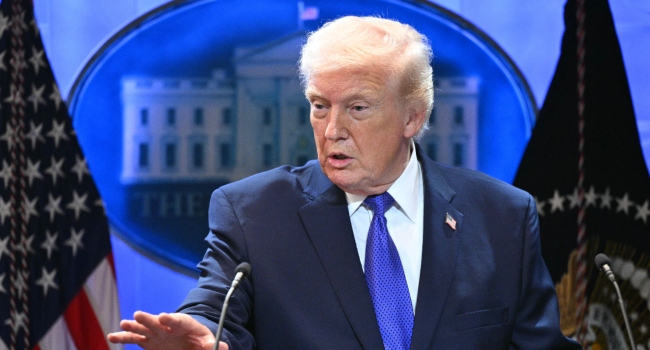
United States President Donald Trump has ordered the United States Navy to begin a blockade of the strategic Strait of Hormuz after nuclear talks between Washington and Tehran collapsed without agreement.
The announcement on Sunday dramatically escalated tensions in the Gulf region, with Iran’s elite Islamic Revolutionary Guard Corps warning that it maintains full control over traffic in the waterway and could trap any adversary “in a deadly vortex” if challenged.
In a lengthy post on his social media platform, Trump said the United States would prevent vessels from entering or leaving the strait until Iran stopped exploiting its position along the route.
“Effective immediately, the United States Navy, the Finest in the World, will begin the process of BLOCKADING any and all ships trying to enter, or leave, the Strait of Hormuz,” Trump wrote.
He added that the long-term objective was to clear mines allegedly laid by Iran and reopen the critical sea lane to global shipping.
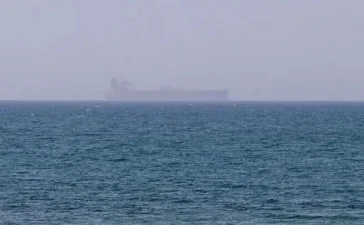
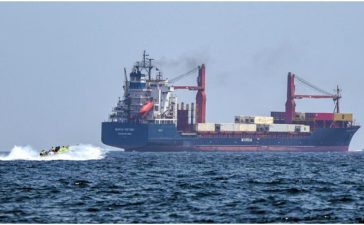
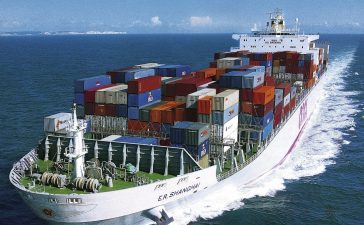
The strait is one of the world’s most vital maritime routes, through which large volumes of oil, gas, and fertiliser exports from the Gulf flow to international markets.
Tehran has reportedly been restricting traffic through the strait while allowing ships linked to friendly countries such as China to pass.
Trump accused Iran of attempting to profit from its control of the route, describing the move as “world extortion.” He also warned that vessels paying tolls to Iran could be intercepted in international waters.
Meanwhile, Iranian officials insisted the country had acted within its rights and accused Washington of escalating tensions in the region.
The latest confrontation follows the collapse of high-level negotiations held in Pakistan aimed at ending a six-week conflict between the two nations.
The war began after the United States and Israel launched strikes on Tehran that killed Iran’s supreme leader, Ali Khamenei.
The American delegation was led by Vice President JD Vance, alongside White House envoy Steve Witkoff and Trump’s son-in-law Jared Kushner.
Iran’s negotiating team was headed by parliamentary speaker Mohammad Bagher Ghalibaf.
Vance said Washington had presented Tehran with its “final and best offer,” but Iran refused to abandon its nuclear programme — which it says is for civilian purposes but Western governments believe could be aimed at developing nuclear weapons.
Trump reiterated his longstanding position, declaring that “Iran will never have a nuclear weapon.”
The breakdown in diplomacy has triggered concern among world leaders that fighting could resume in the Gulf.
Keir Starmer, the Prime Minister of the United Kingdom, held talks with Haitham bin Tariq, the Sultan of Oman, with both leaders urging all parties to avoid further escalation.
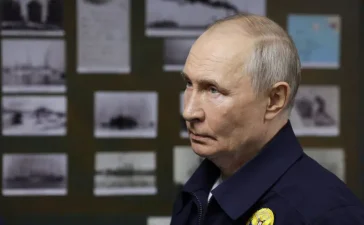
Russia’s President Vladimir Putin also spoke with Iranian President Masoud Pezeshkian, offering to help mediate a political settlement.
Pakistan’s Foreign Minister Ishaq Dar said his country would continue facilitating dialogue and called on both sides to maintain the temporary ceasefire.
Analysts warn that any military confrontation in the Strait of Hormuz could disrupt global energy supplies and push oil prices sharply higher.
Residents in Iran say the ongoing uncertainty has left many people fearful of renewed air strikes and a prolonged conflict.
“We feel despair and hopelessness. We are tired of this uncertainty,” a Tehran resident told AFP.
For now, the world is watching closely as naval forces prepare to enforce the blockade in one of the most sensitive geopolitical flashpoints on the planet.