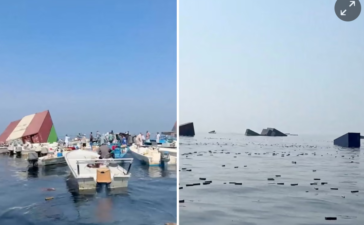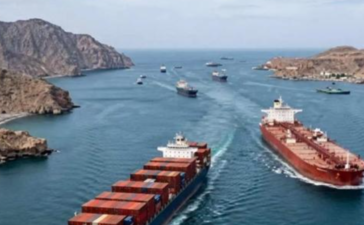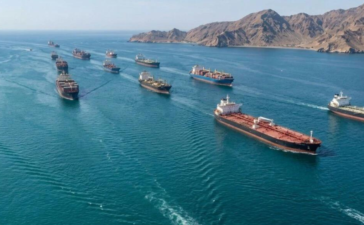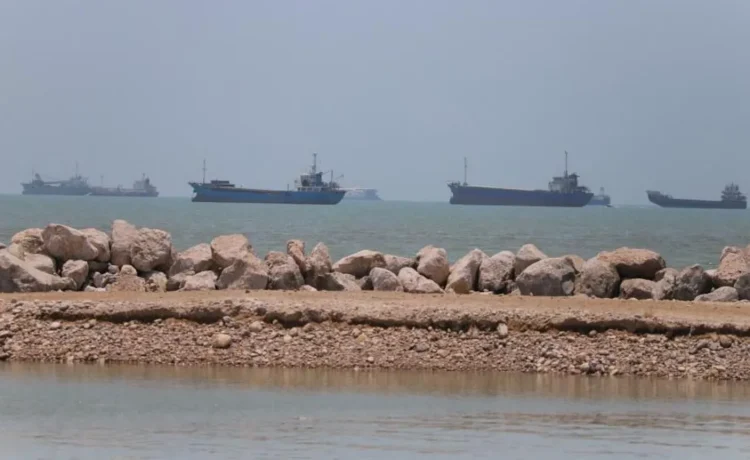
The United States Central Command has confirmed the lifting of a naval blockade in line with presidential directives, marking a key development in the implementation of the US-Iran agreement, while stating that some American vessels will remain in the general area for monitoring purposes.
The announcement came shortly after Iran’s Supreme Leader Mojtaba Khamenei publicly endorsed the agreement, saying he approved the deal despite holding a “different view,” following assurances from Iranian President Masoud Pezeshkian that national interests would be protected.
Khamenei described US President Donald Trump’s role in securing the agreement as driven by “desperation,” alleging that Washington used significant leverage to bring Tehran to the negotiating table.
He also indicated that future in-person negotiations between Iran and the United States would not signal acceptance of opposing positions, marking his first public response since the deal was reached.
The agreement follows months of heightened tensions in the region and is centred on 14 core provisions, including the reopening of the Strait of Hormuz, a firm commitment that Iran will not pursue nuclear weapons, and a proposed $300 billion reconstruction and economic development fund for Iran, which the United States is not obligated to finance.
The deal also outlines a 60-day timeline for achieving a comprehensive settlement, with provisions allowing for extension if both sides agree.
Although an official signing ceremony was initially scheduled in Switzerland, Pakistani mediators confirmed it was cancelled after the agreement was finalised remotely. However, US and Iranian officials are still expected to meet in Switzerland for further technical negotiations.
The White House confirmed that US Vice President JD Vance would not depart as planned, but stated that Washington remains committed to beginning technical discussions as soon as possible.
Speaking earlier, Vance said the agreement had already come into effect, triggering the negotiation phase, and confirmed he may travel to Switzerland once logistical arrangements are finalised.
He defended the deal against criticism from US lawmakers, including Republican Senator Bill Cassidy, who described it as a “major foreign policy mistake,” particularly over the proposed reconstruction fund.
Vance countered that Iran would not receive sanctions relief or financial benefits unless it fully complies with its obligations under the memorandum, which includes dismantling enriched uranium stockpiles and limiting support for regional proxy groups.
The agreement has also triggered political backlash in Washington and criticism from within Israel’s leadership circle. Vance urged Israeli officials to maintain cooperation with the United States, warning against undermining the diplomatic process.
Meanwhile, tensions in the region remain high, with continued exchanges of strikes between Israel and Hezbollah despite the agreement. Israel maintains its operations are separate from the US-Iran deal, while Hezbollah has rejected its terms.
US officials have emphasised that all parties must respect the emerging peace framework, even as concerns persist over the durability of the agreement and the timeline for full implementation.
The situation remains fluid as global attention turns to upcoming technical talks in Switzerland, which are expected to determine the next phase of the fragile diplomatic process.