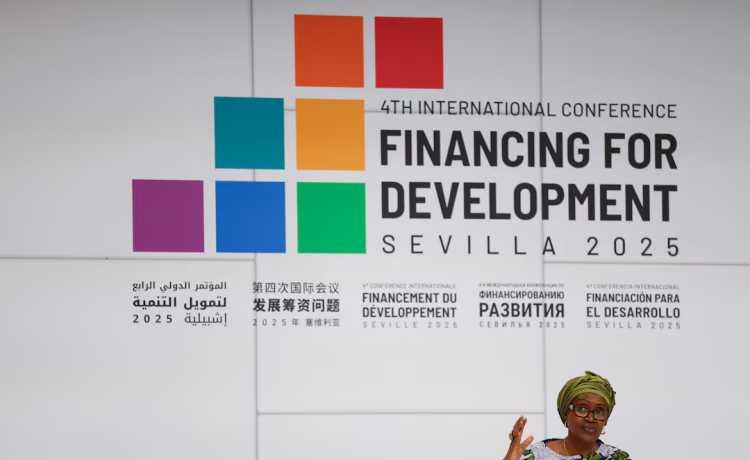
The Executive Director of UNAIDS, Winnie Byanyima, has urged the United States government to reconsider its decision to withdraw HIV/AIDS funding from South Africa, warning that the move could endanger lives and undermine years of progress in combating the disease.
Speaking during a United Nations briefing ahead of a high-level conference on HIV/AIDS, Byanyima expressed concern over the planned reduction of support through the President’s Emergency Plan for AIDS Relief (PEPFAR), a programme that has played a major role in global HIV response efforts.
“I’m sad about that,” Byanyima said when asked about the decision.
“Taking it away is taking away life-saving support from the most vulnerable people. So, that is sad. And I would ask the United States to reconsider their position.”
The comments came after the United States State Department confirmed plans to begin a phased withdrawal of PEPFAR support in South Africa.
In an official statement, the department said the decision followed South Africa’s failure to make what it described as demonstrable progress on policy requests made by the administration.
The State Department also argued that PEPFAR was never intended to be a permanent funding mechanism and noted that South Africa, as a middle-income country, possesses the capacity to finance its own health programmes.
Reports have suggested that the decision may also be linked to broader diplomatic disagreements between Washington and Pretoria.
According to media reports citing US officials and congressional aides, concerns raised by the United States include South Africa’s relationship with Iran, Black Economic Empowerment policies and political rhetoric associated with anti-apartheid movements.
The funding reduction forms part of a broader review of foreign aid programmes initiated by US President Donald Trump.
While some life-saving assistance programmes were later restored, several international aid initiatives continue to face reductions or restructuring.
Although South Africa does not depend on US funding for the purchase of HIV medication, PEPFAR has historically contributed more than $400 million annually to the country’s HIV response and has funded the salaries of approximately 15,000 healthcare workers.
Byanyima noted that South Africa has around eight million people living with HIV, the highest number in the world, and that PEPFAR previously accounted for up to 17 per cent of the country’s HIV funding.
She warned that abrupt funding withdrawals could have severe consequences for healthcare delivery and patient support systems.
“Please do not take money away because you are taking lives away. Have a planned transition,” she said.
The UNAIDS chief also expressed concern about a broader decline in development assistance from traditional donor countries across Europe and North America.
Despite significant progress in the global fight against HIV/AIDS, she cautioned that gains remain fragile and unevenly distributed.
According to UNAIDS data, approximately 32.1 million of the nearly 40 million people living with HIV worldwide are currently receiving treatment.
However, about nine million people still lack access to treatment, while 1.2 million new infections were recorded last year.
Byanyima said recent funding cuts are already affecting HIV prevention and treatment services in several countries.
She revealed that HIV testing rates in countries with high infection burdens have fallen by 22 per cent, while some nations have experienced up to a 90 per cent decline in condom distribution.
“We are seeing early signs of serious reversals in our progress,” she warned.
“The trend that has been going down may now reverse and start rising.”
Byanyima reiterated the global target of ending AIDS as a public health threat by 2030 and stressed the importance of sustained international cooperation and investment to achieve that goal.
Health experts have long argued that consistent funding, prevention programmes and access to treatment remain critical to reducing new infections and preventing setbacks in the global response to HIV/AIDS.
The future of international HIV financing is expected to feature prominently at upcoming global health discussions as governments and development partners seek ways to sustain progress amid shifting economic and political priorities.