The Vice President, Kashim Shettima, has reiterated the Federal Government’s commitment under President Bola Ahmed Tinubu to addressing humanitarian challenges across Nigeria through stronger collaboration with development partners.
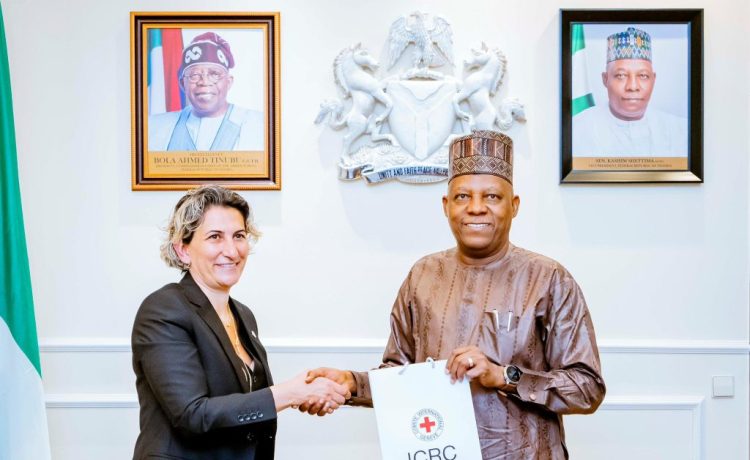
Shettima made the remarks on Tuesday at the Presidential Villa in Abuja while receiving a delegation from the International Committee of the Red Cross (ICRC), led by Ms Doris El Doueihy.
He said the administration would continue to deepen engagement with key stakeholders to address gaps in humanitarian response, particularly in conflict-affected areas.
“We can only address some of the grey areas in our humanitarian responses across the country through continuous engagement with organisations like the Red Cross,” he said.
The Vice President commended the ICRC for its professionalism and long-standing support in regions affected by armed conflict, displacement, and other crises. He also welcomed proposals for the establishment of a national humanitarian response mechanism to better manage the needs of affected populations.
Shettima assured the delegation that Nigeria’s security agencies would continue to operate in line with international humanitarian standards while maintaining professionalism in conflict management.
He also reaffirmed the government’s readiness to work closely with the ICRC in developing and operationalising a structured national framework for humanitarian intervention.
Earlier, Ms El Doueihy praised Nigeria for domesticating the Kampala Convention on Internally Displaced Persons, describing the country as a continental leader in humanitarian policy and response.
She noted that the ICRC values its partnership with Nigeria, highlighting its ongoing work in health services, water provision, and training of security personnel in conflict zones.
Also present at the meeting was the President of the Nigerian Red Cross Society, Prince Oluyemisi Adetayo Adeaga, alongside other officials.
The engagement underscores ongoing efforts by the Nigerian government and international partners to strengthen humanitarian coordination and improve support for vulnerable populations across the country.