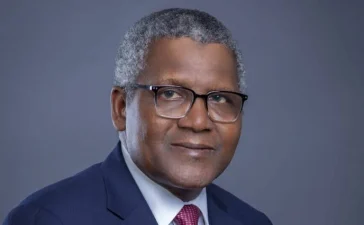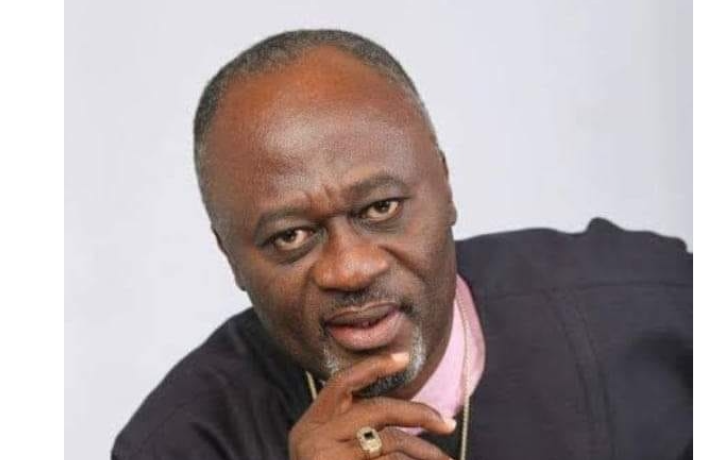
The General Overseer of City of Refuge, Lekki, Lagos State, Bishop Oscar Ossai, has said Nigeria cannot make meaningful progress if the Church fails to play its expected role in the development of the country.
Ossai made the statement in an interview with Church Times, where he expressed concern about what he described as disunity among church leaders and the lack of coordinated action within the Christian community.
According to the cleric, the Nigerian Church has the human resources, financial capacity and organisational structure needed to contribute significantly to national development.
He, however, said these resources were not being adequately used to address the challenges facing the country.
Ossai argued that some church leaders were more focused on building their individual ministries and expanding their organisations than working together to address wider national issues.
He said the desire of individual leaders to receive recognition for initiatives was one of the factors making it difficult for churches to unite around common causes.
“We want to take the credit. That is why we can’t get leaders to come together to push a particular cause,” he said.
The cleric also questioned why large churches with congregations running into tens or hundreds of thousands had not been able to create a greater impact at the grassroots.
He noted that the size and structure of the Nigerian Church could make it a significant force for positive change if properly coordinated.
Ossai also spoke about the relationship between the Church and politics.
He said the Church should be more deliberate about encouraging and supporting credible people who seek elective positions.
According to him, Christians should not wait until politicians are already in office before demanding good governance from them.
He argued that the Church could begin by identifying and supporting credible candidates at the grassroots and gradually building a stronger political base.
The bishop said the current approach often leaves the Church complaining about political leaders after elections despite not having provided meaningful support to candidates before they assumed office.
He explained that politicians who receive financial and political backing from other sponsors could eventually be more responsive to the interests of those sponsors.
“That is the tragedy we find ourselves in,” he said.
Ossai, who is also the Convener of the Centre for Values, Change and Initiatives, said the Church needed to better understand its responsibility as what Christianity describes as the “light of the world” and “salt of the earth.”
He criticised the idea that the primary responsibility of the Church was simply to perform miracles and give prophecies.
According to him, miracles and prophecies are not the central purpose for which the Church exists.
“Miracles and prophecies are just by the way,” he said, arguing that the Church should instead demonstrate values associated with the Kingdom of God, including peace, righteousness and joy.
The cleric said Christians should demonstrate their faith through their actions and contribution to society rather than limiting their activities to religious programmes.
He also expressed concern that the Church had not been sufficiently united in responding to national challenges.
For him, greater cooperation among Christian leaders could help the Church contribute more effectively to issues affecting Nigerians.
Ossai further called for greater attention to the grassroots, saying the process of influencing national development should begin from local communities and lower levels of political representation.
He maintained that the Church could groom people, support them at the grassroots and gradually help build leaders capable of making an impact in government.
His comments came ahead of Nigeria’s 2023 general elections, when conversations about the role of religious organisations and voters in determining the country’s political direction were prominent.
Ossai’s position was that the Church should move beyond discussing political problems and become more organised in contributing to solutions.
He said greater unity, political participation and community engagement could enable Christians to make better use of the influence and resources already available to them.
The bishop’s remarks therefore centred on the need for the Church to become more coordinated and socially engaged, particularly in areas of leadership, governance and grassroots development.