Senegalese authorities have continued search operations after a migrant boat capsized off the country’s Atlantic coast, leaving several people missing and raising fresh concerns about the growing number of dangerous migration journeys from West Africa to Europe.
The incident occurred near Yenne, a coastal community south of Dakar, on Wednesday, November 18, 2026, when a wooden migrant boat, commonly known as a pirogue, reportedly capsized during a journey towards Spain’s Canary Islands.
According to a report by Reuters published on Thursday, November 19, at least 50 people were believed to have been aboard the vessel when the accident occurred.
The boat reportedly struck a rock during a transfer involving smaller fishing boats, causing it to capsize. The circumstances surrounding the incident have prompted search efforts as authorities attempt to establish the number of people who survived and those still missing.
By Thursday, four bodies had reportedly been recovered, according to a local nonprofit leader cited by Reuters. Search operations were continuing as rescuers worked to locate additional survivors and victims.
An Associated Press report also confirmed the accident, although its account cited one body recovered directly by firefighters and two additional bodies found in nearby villages whose connection to the wreck had not been established. The difference in the reported figures highlights the need for caution as identification and recovery operations continue.
The latest tragedy comes amid growing concerns about irregular migration from West Africa, particularly departures from Senegal towards Spain’s Canary Islands.
The Atlantic migration route remains one of the most dangerous journeys undertaken by people seeking opportunities abroad. Migrants frequently travel in overcrowded and poorly equipped wooden boats, exposing themselves to rough seas, mechanical failures, inadequate food supplies and other life-threatening conditions.
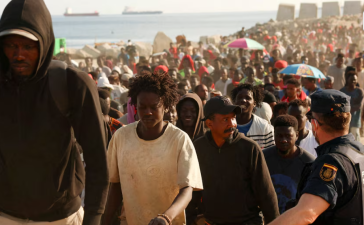
According to Reuters, more than 8,000 people arrived in the Canary Islands during the first 12 days of November. Nearly 1,500 people reportedly reached the islands on Saturday, representing the highest single-day arrival figure recorded since 2020.
The figures demonstrate the scale of migration movements across the Atlantic and the pressure facing authorities responsible for maritime security and border management.
Senegal’s navy has also reported rescuing more than 1,400 people attempting the crossing within 48 hours, reflecting the intensity of recent migration activity along the country’s coastline.
The Senegalese government has been working with international partners to strengthen maritime surveillance and prevent dangerous departures. Spain has also deployed a helicopter to support patrol operations with Senegalese forces.
However, migration organisations and activists have continued to argue that stronger enforcement alone cannot address the reasons people leave their communities.
Economic hardship, unemployment, limited opportunities and the desire for improved living conditions remain important factors influencing migration decisions among young people.
Senegalese President Bassirou Diomaye Faye has called for stronger coastal controls and measures to address the conditions encouraging irregular migration.
His proposed approach includes improving education, vocational training, employment opportunities and entrepreneurship, alongside greater economic empowerment for women.
The latest incident also follows another deadly migrant boat accident near Kébémer earlier in November, in which at least 39 people reportedly died.
The repeated tragedies have renewed calls for regional cooperation among West African countries to address irregular migration, human trafficking and the activities of networks organising dangerous journeys.
For many migrants, reaching Europe represents an opportunity to escape economic difficulties and build a better future. However, the risks associated with the journey remain significant, particularly when people depend on informal operators who use unsafe vessels.
Authorities face the challenge of protecting lives while addressing the wider economic and social factors behind migration.
The latest capsizing near Yenne demonstrates the human cost of irregular migration and the urgent need for stronger cooperation between governments, international organisations and coastal communities.
As search operations continue, the number of people missing and the full circumstances surrounding the accident remain matters for authorities to establish.