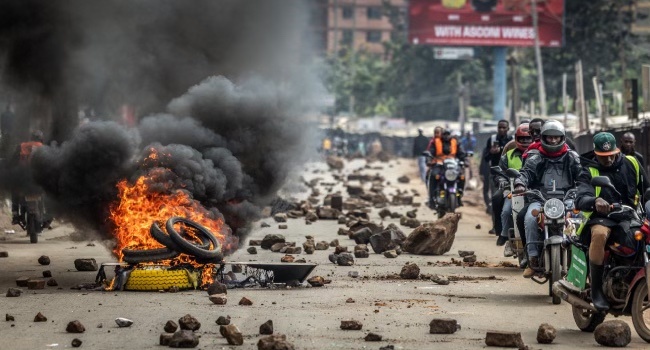
A nationwide transport strike in Kenya triggered by rising fuel prices linked to the Middle East conflict was suspended on Tuesday after causing four deaths and widespread economic disruption.
The strike, led largely by operators of Kenya’s popular “matatu” public transport buses, paralysed movement across major cities and disrupted businesses, schools, hospitals, and government services.
Authorities confirmed that the industrial action would be paused for one week to allow negotiations between the government and transport stakeholders.
Kenya, like many African countries, relies heavily on fuel imports from Gulf nations and has been affected by disruptions in global oil supply following tensions in the Middle East.
The country has increased petrol prices by 20 per cent and diesel prices by nearly 40 per cent since Iran disrupted traffic through the Strait of Hormuz, a critical global oil shipping route through which about one-fifth of the world’s oil supply normally passes.
Speaking to reporters on Tuesday, Kenya’s Interior Minister, Kipchumba Murkomen, announced the temporary suspension of the strike.
“The strike that is going on is suspended for a period of one week to provide an avenue for consultations and negotiations between the government and stakeholders,” Murkomen said.
The President of the Matatu Owners Association, Albert Karakacha, also confirmed the suspension.
However, some transport union representatives warned that protests could resume if negotiations with the government fail to produce meaningful outcomes.
Earlier on Tuesday, before the strike was suspended, the Chairman of the Rig Owners Association, Cornelius Chepsoi, insisted that transport operators would not accept what he described as insignificant reductions in diesel prices.
Analysts have warned that the unrest in Kenya could signal broader instability across Africa if global oil prices remain elevated.
Political analyst Jervin Naidoo said the protests may be an early indication of wider economic unrest on the continent.
“We think the unrest in Kenya is an early indicator of what could unfold elsewhere across the continent if elevated oil prices persist,” Naidoo warned.
“As the conflict in the Middle East enters its third month, the risk of further supply disruptions and sustained price increases remains high,” he added.
The strike severely affected daily life in the Kenyan capital, Nairobi, where roads and business districts were largely deserted.
A nurse identified only as Faith told reporters that she was forced to remain at Poplar Hospital for 24 hours because she could not find transportation home.
“I did not expect this. It’s really affecting patient care, big time,” she said.
Despite the disruption, she expressed support for the strike, arguing that the rising fuel prices were unsustainable for ordinary citizens.
Schools and embassies in Nairobi were also shut down due to the transport disruption.
The unrest comes days after protests linked to rising fuel prices erupted in Comoros, where demonstrations reportedly paralysed the country and resulted in one confirmed death.