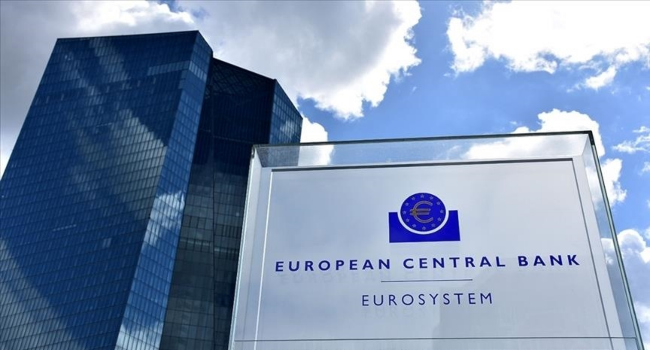
The European Central Bank (ECB) is expected to raise interest rates this week for the first time in two and a half years, as a sharp rise in energy prices linked to the Iran conflict fuels inflation across the eurozone.
The bank has kept borrowing costs unchanged for an extended period as inflation had previously stabilised close to its two percent target. However, renewed pressure from global energy markets has changed the outlook.
The US-Israeli conflict involving Iran and disruptions in the Strait of Hormuz have driven up global energy costs, feeding into higher consumer prices across Europe.
Inflation in the 21 countries using the euro rose to 3.2 percent in May, exceeding the ECB’s two percent target and increasing pressure on policymakers to act.
Analysts expect the ECB governing council to approve a 0.25 percentage point increase in its key deposit rate, taking it from 2.00 percent to 2.25 percent at its meeting on Thursday.
“Anything but a rate hike at the ECB meeting would be a big surprise,” said ING economist Carsten Brzeski.
If confirmed, the move would mark the first rate increase since September 2023, when the ECB was battling a major inflation surge triggered by Russia’s invasion of Ukraine.
After that period, the central bank implemented several rate cuts as inflation eased before pausing adjustments in mid-2025.
ECB officials have recently signalled a shift in tone, with chief economist Philip Lane indicating that inflation forecasts are likely to be revised upward at the upcoming meeting.
He noted that the Iran conflict has worsened the macroeconomic outlook, particularly through its impact on energy prices.
However, the expected hike has drawn criticism from some economists who argue it could further weaken an already sluggish eurozone economy by increasing borrowing costs for households and businesses.
Recent data showed the eurozone economy contracted by 0.2 percent in the first quarter, while the European Union has revised its growth forecast downward to 0.9 percent for 2026.
Allianz chief economist Ludovic Subran said the move may be aimed at reinforcing confidence in the ECB’s commitment to controlling inflation, even if economic conditions remain weak.
“This hike is not necessary; the ECB could wait, especially since the slowdown in growth is clear,” he said.
Despite concerns, analysts suggest the ECB may prefer to act now rather than risk being seen as slow to respond, following criticism over its handling of inflation in 2022.
Investors will closely watch ECB President Christine Lagarde’s remarks after the decision for guidance on future policy direction, though expectations are that she will remain cautious.
Economists generally believe the current cycle will not lead to aggressive tightening, with some predicting a possible final hike in July before a pause.
Capital Economics deputy chief eurozone economist Jack Allen-Reynolds said any tightening cycle is likely to be short-lived, as the inflation impact of higher energy prices may prove limited.