The Waterfront Boat Owners and Transporters Association of Nigeria (WABOTAN) has commended the National Inland Waterways Authority (NIWA) and the Lagos State Waterways Authority (LASWA) for their continued collaboration in improving safety and regulation across Nigeria’s inland waterways.
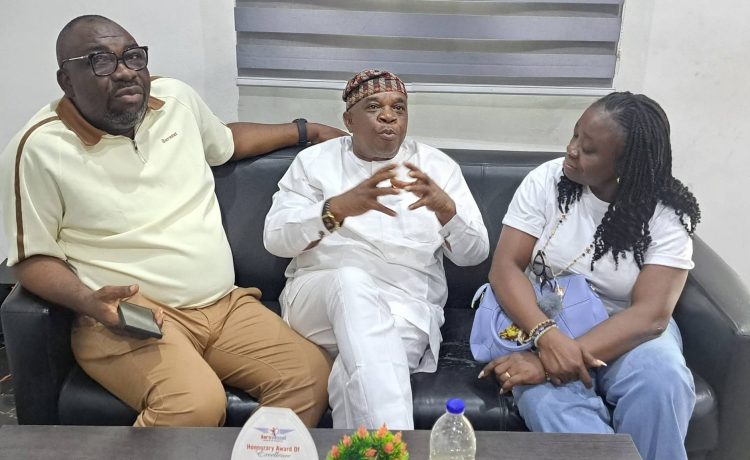
The association’s President, Mr Tope Fajemirokun, gave the commendation during an interview on Villa Square, a programme on Mainland 98.3 FM Lagos, where he highlighted ongoing efforts to strengthen safety awareness among boat operators and passengers ahead of the rainy season.
Fajemirokun said WABOTAN has intensified sensitisation campaigns and safety training programmes for its members, including induction exercises designed to reduce accidents on the waterways.
“Since the beginning of the year, we have been educating our members on safety measures. We have conducted two safety induction programmes this year and are currently planning another one before August,” he said.
He added that collaboration with stakeholders, including regulatory agencies and the media, remains central to the association’s safety drive.
The WABOTAN president praised LASWA for its intervention in clearing water hyacinth from Lagos waterways, describing the effort as critical to improving navigation and reducing hazards.
“Water hyacinth is a fast-growing aquatic plant that obstructs navigation and poses safety risks on waterways,” he noted.
Fajemirokun said WABOTAN enjoys strong working relationships with both NIWA and LASWA, but expressed concern over rising operational challenges, particularly the impact of fuel price increases on boat operators.
According to him, higher fuel costs and broader economic pressures have made it difficult for operators to expand their fleets or invest in new vessels.
“When you are in business, you must continue to improve and invest in it despite the challenges,” he said.
He also raised concerns about safety conditions in some parts of the country, particularly Rivers and Bayelsa States, where he said waterway incidents tend to increase during the rainy season due to their coastal geography.
Fajemirokun called for stronger government support to phase out unsafe banana and wooden boats, urging authorities to provide financial assistance to enable operators acquire safer, modern vessels.
“The government needs to come to our aid, just as the Lagos State Government has been doing. Eliminating banana and wooden boats will be easier if government provides the necessary support and investment,” he said.
He further advocated for increased state participation in water transport development, arguing that improved infrastructure and subsidies could make water travel more affordable and attractive to commuters.
Fajemirokun cited high transport costs as a major barrier, noting that a trip from Badagry to CMS in Lagos can cost about ₦5,000 per journey, making daily commuting expensive for passengers.
He urged governments at all levels to invest more in the sector to ease pressure on road networks and unlock opportunities in the blue economy.
Veteran maritime journalist Frank Meke, who also featured on the programme, echoed calls for greater investment in water transportation, stressing that Nigeria’s waterways remain underutilised despite their economic potential.
He noted that improved water transport infrastructure could help ease congestion in major cities like Lagos, where traffic gridlock remains a persistent challenge.
“Our roads are heavily congested. As we speak, Apapa remains gridlocked. Imagine the impact if government invested more in water transportation,” he said.
Meke also called for soft loans for boat operators, enhanced training for operators and passengers, and stronger emergency preparedness ahead of the rainy season.
He emphasised the need for a coordinated national strategy to develop the blue economy and reduce dependence on road transport.
He further highlighted the potential of waterways in agricultural states such as Kwara, Niger, Benue, and Taraba, noting that improved river transport could help farmers move produce more efficiently to markets.
Fajemirokun concluded by reiterating the importance of safety compliance, urging operators and passengers to always wear life jackets regardless of travel distance.
“Safety must always come first. Boat operators and passengers should never neglect the use of life jackets,” he said.
Industry stakeholders say sustained collaboration between regulators and private operators will be key to improving safety standards and expanding Nigeria’s inland water transport system.