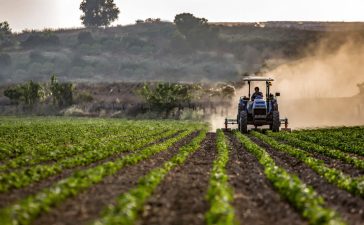
The Federal Government has approved ₦550 billion for the Bank of Agriculture (BoA) to strengthen agricultural financing, support smallholder farmers and help stabilise food prices across Nigeria.
The intervention is divided into two major components.
About ₦250 billion will be used to finance smallholder farmers through technology-driven agricultural financing systems, while another ₦300 billion has been allocated to the Guaranteed Minimum Price (GMP) Programme.
The initiative is expected to improve farmers’ access to productive capital while creating a mechanism for managing agricultural supplies and reducing excessive fluctuations in food prices.
₦250bn Targeted at Smallholder Farmers
Under the financing component, the Bank of Agriculture will use digital systems to support smallholder farmers across the country.
Rather than providing loans directly to millions of individual farmers, the bank plans to work through farmer aggregation companies.
Among the aggregation companies identified are AFEX, ThriveAgric and Arziki Noma.
The model is designed to improve the efficiency of agricultural lending by bringing farmers together within organised value chains.
The Bank of Agriculture has also been developing digital systems to improve farmer identification, disbursement and loan recovery.
According to the bank, technology can help address the challenge of identifying and monitoring large numbers of smallholder farmers.
₦300bn Guaranteed Minimum Price Programme
The second component of the intervention is the ₦300 billion Guaranteed Minimum Price Programme.
Under the scheme, the Bank of Agriculture can purchase agricultural produce from farmers during harvest periods and release the commodities into the market when necessary.
The objective is to provide farmers with a more predictable market while helping prevent excessive food-price increases caused by shortages.
The programme could also help reduce the pressure farmers face when large quantities of produce enter the market simultaneously during harvest.
Tackling Food Inflation
Nigeria has been battling persistent food-price pressures, making agricultural production and market stability major priorities for policymakers.
Increasing production is only one part of the challenge.
Farmers also need access to affordable financing, storage facilities, transportation, processing infrastructure and reliable markets.
Without these supporting systems, farmers can experience significant losses even when harvests are strong.
The new BoA intervention therefore combines financing with mechanisms designed to improve the movement of agricultural commodities through the value chain.
Technology at the Centre
The programme also reflects the growing role of technology in Nigeria’s agricultural financing system.
The Bank of Agriculture has introduced digital banking infrastructure and technology-driven systems for financing farmers.
The bank has also been using artificial intelligence-based systems to automate aspects of farmer verification, payment and transaction monitoring.
Such systems could improve transparency and reduce some of the challenges associated with traditional agricultural lending.
Opportunity for Farmers and Agribusinesses
The intervention could create opportunities for smallholder farmers, cooperatives, aggregators and other agricultural businesses.
Access to financing can enable farmers to purchase quality inputs, expand cultivated areas and improve productivity.
For agribusinesses, stronger agricultural financing could also support aggregation, processing, storage and market access.
However, the effectiveness of the programme will ultimately depend on implementation.
Farmers will need clear information about eligibility, participating aggregation companies and how they can access the available support.
Beyond Short-Term Intervention
Agricultural stakeholders have continued to emphasise that financing must be accompanied by investment in infrastructure and technology.
Roads, irrigation, storage facilities, research, mechanisation and agro-processing remain essential to building a productive agricultural economy.
The ₦550 billion intervention therefore represents an important opportunity, but its long-term impact will depend on whether it contributes to stronger agricultural value chains rather than simply providing temporary financial support.
If effectively implemented, the programme could improve farmers’ access to capital, strengthen food supply chains and contribute to greater stability in Nigeria’s food market.
For a country seeking to reduce food insecurity and strengthen domestic production, ensuring that agricultural financing reaches productive farmers will remain critical.