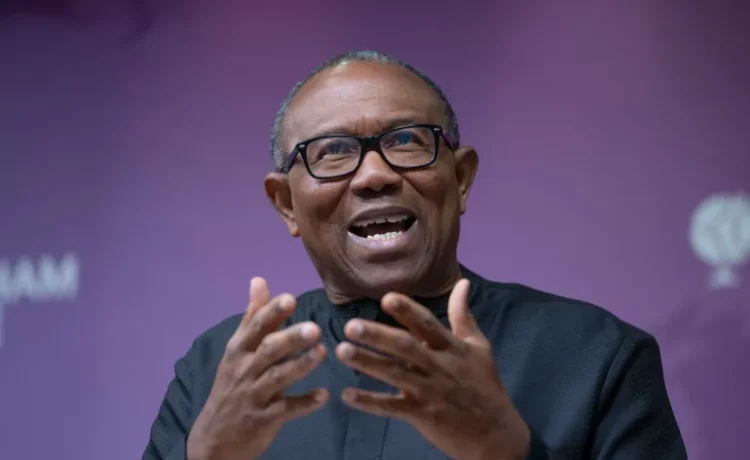
Peter Obi Blames Politicians for Nigeria’s Challenges
Presidential candidate of the National Democratic Congress, Peter Obi, has said politicians and poor leadership remain at the centre of Nigeria’s many challenges, arguing that the country itself is not the problem.
Obi said Nigeria has enormous human and material resources but has continued to struggle because of the way public affairs are managed.
The former Anambra State governor made the remarks during a visit to Koinonia Global, a ministry led by Apostle Joshua Selman.
He urged Nigerians to continue praying for political leaders, saying those entrusted with public responsibility must develop the commitment to use public resources for the benefit of the people.
Obi’s comments have renewed the conversation around leadership, accountability and the management of public resources in Africa’s most populous country.
The former governor argued that Nigeria’s difficulties should not be blamed on the country’s population or lack of potential.
Instead, he maintained that the conduct and decisions of political leaders remain central to the nation’s development challenges.
‘Nigeria Is Not the Problem’
Obi’s central argument is that Nigeria possesses the resources and potential required for development.
However, he said the country has struggled to translate those advantages into improved living conditions for a large section of its population.
The politician called on Nigerians to continue holding leaders to high standards while also praying for those occupying positions of authority.
According to the report, Obi told the gathering that politicians should be remembered in prayers because of the enormous responsibility associated with managing public resources and making decisions that affect millions of citizens.
He argued that Nigeria’s challenges are rooted largely in the quality of leadership and the choices made by those entrusted with political power.
The comments reflect a long-running debate about governance in Nigeria, where citizens have repeatedly called for greater accountability, improved public services and more effective management of national resources.
Call for Public Money to Serve the Public
A major part of Obi’s message centred on the use of public funds.
He urged political leaders to recognise that public resources should be used primarily to improve the lives of citizens and support national development.
The issue of how public money is managed remains one of the most important conversations in Nigerian politics.
Citizens continue to demand better roads, stronger schools, improved healthcare, reliable electricity and greater investment in job creation.
For Obi, the question is not simply whether Nigeria has resources.
The more important question, he suggested, is how effectively those resources are deployed.
He maintained that politicians have a responsibility to ensure that public funds deliver measurable benefits to ordinary Nigerians.
This includes making decisions that prioritise development over personal or political interests.
The former governor’s position places the debate squarely on political accountability.
It also reinforces his long-standing argument that Nigeria requires a leadership culture focused on productivity, fiscal responsibility and public service.
Leadership Debate Takes Centre Stage
Obi’s remarks come at a period when political discussions are increasingly focusing on the future direction of Nigeria.
Issues surrounding the economy, insecurity, unemployment, infrastructure and the rising cost of living have continued to dominate public conversations.
The role of political leadership in addressing these challenges has also become a major subject of debate.
For many Nigerians, the performance of political leaders will remain an important factor in determining public confidence in government institutions.
Obi’s comments are therefore likely to resonate beyond the religious gathering where he spoke.
They raise broader questions about the standards expected from elected officials and public office holders.
The challenge for Nigeria, according to the wider argument, is not merely to produce leaders who can win elections.
It is also to build a political culture in which those leaders are accountable for the decisions they make after assuming office.
Prayer and Accountability
While calling for prayers for politicians, Obi also highlighted the need for responsibility among public office holders.
His remarks suggest that the enormous influence political leaders have over public institutions should be matched by a strong commitment to ethical conduct and public accountability.
Political leaders make decisions on budgets, infrastructure, education, security and economic policy.
These decisions can directly affect the quality of life of millions of citizens.
The need for responsible leadership has become increasingly important as Nigeria continues to pursue economic growth and social development.
Public confidence can be strengthened when citizens believe that leaders are acting in the national interest.
Conversely, confidence can weaken when public institutions fail to meet expectations.
Obi’s comments therefore reflect both a moral and political message.
He is calling for a change in the way political leaders approach public office and public resources.
What the Remarks Mean for Nigeria’s Political Future
As political activities continue to intensify ahead of future elections, leadership is expected to remain a major campaign issue.
Political parties and candidates will face growing pressure to explain how they intend to address Nigeria’s most pressing problems.
Obi’s latest comments reinforce his argument that governance should focus on people and productivity.
The former governor has consistently promoted the idea that public resources should be managed more efficiently.
His statement that politicians are Nigeria’s problem is also a direct challenge to those in positions of power.
It suggests that political leaders must look inward and accept responsibility for the country’s shortcomings.
For voters, the message may also serve as a reminder of the importance of demanding accountability from elected representatives.
Nigeria’s democratic system gives citizens the power to evaluate political leaders through elections.
However, public engagement and accountability must continue beyond election periods.
A Call for Better Governance
The latest remarks by Obi have once again placed the spotlight on the question of leadership in Nigeria.
The country remains one of Africa’s most important economies, with a large population, abundant natural resources and significant entrepreneurial potential.
Yet, translating these advantages into broad-based prosperity remains a major challenge.
Obi believes the answer lies partly in changing the quality and character of political leadership.
His message is that Nigeria does not lack potential.
What it needs, he argues, is a stronger commitment by those in authority to manage public resources in the interest of the people.
Whether Nigerians agree with Obi’s assessment or not, his comments have added fresh energy to the continuing debate about leadership and national development.
As Nigeria’s political future continues to take shape, the demand for greater accountability, responsible governance and people-focused policies is likely to remain at the centre of public discourse.
For now, Obi’s message is clear: Nigeria’s problems cannot be separated from the actions of those entrusted with political power, and meaningful progress will depend on leaders who place the public interest above personal and political considerations.