Nigeria’s opposition political parties are converging in Abuja today, Monday, August 31, 2026, for a summit aimed at exploring greater cooperation and building a stronger political front ahead of the 2027 general elections.
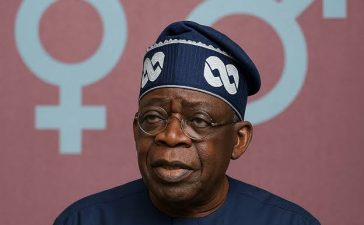
The summit, organised by the G-100 political pressure group, is focused on developing a framework through which opposition parties can work together to challenge President Bola Tinubu and the ruling All Progressives Congress (APC) in the next presidential election.
The gathering is taking place at a time when Nigeria’s opposition remains divided among several political platforms, with different parties and prominent politicians pursuing separate political ambitions.
The G-100 has argued that this division could make it difficult for opposition parties to defeat an incumbent political party with significant organisational and financial advantages.
The group, led by former Director-General of the Progressives Governors Forum, Salihu Lukman, has repeatedly called on opposition leaders to put aside their differences and consider cooperation in the interest of the country.
Summit focuses on cooperation
The organisers have made it clear that the meeting is not necessarily expected to immediately produce a single opposition presidential candidate.
Instead, the immediate objective is to establish a structure through which participating parties can negotiate and coordinate their activities ahead of the 2027 election.
The G-100 has proposed the creation of mechanisms and specialised working groups to handle different areas of cooperation between opposition parties.
According to the group, political parties do not have to surrender their identities or individual ambitions in order to cooperate.
The organisation has maintained that parties can retain their separate structures while working together in areas where their interests overlap.
This approach is intended to prevent the disagreements that contributed to the collapse or weakening of previous attempts to unite major opposition figures.
SDP and PRP confirm participation
The Social Democratic Party (SDP) has confirmed that its national leadership and presidential candidate, Prince Adewole Adebayo, will participate in the summit.
The Peoples Redemption Party (PRP) has also confirmed its attendance.
The participation of these parties gives the meeting a broader opposition representation, although questions remain about how far the discussions can go and whether all major opposition parties will eventually join the process.
The Peoples Democratic Party (PDP), however, has rejected the summit and said it is not involved in the planned gathering.
The party’s spokesman, Jungudo Mohammed, said the PDP was not aware of the meeting as an official opposition gathering and warned that any opposition discussion held without the party would not produce a meaningful alliance.
Atiku, Obi and other opposition figures
The wider opposition movement includes prominent political figures such as former Vice President Atiku Abubakar and former Anambra State Governor Peter Obi.
Both politicians have previously been involved in discussions about building a broad opposition coalition ahead of 2027.
However, the opposition landscape has become complicated by the emergence of different political platforms and competing presidential ambitions.
The challenge for the latest initiative is therefore not simply bringing opposition politicians together. The bigger question is whether they can eventually agree on a common strategy and, possibly, a consensus candidate.
This issue has been one of the biggest obstacles to previous attempts at opposition unity.
The challenge of choosing a candidate
Political observers believe the question of who eventually becomes the opposition’s presidential candidate could determine whether the coalition succeeds.
Several prominent politicians are interested in the 2027 presidential contest, and convincing them to withdraw their individual ambitions in favour of another candidate could prove difficult.
The G-100 has acknowledged that disagreements and competing ambitions are natural in politics. However, it believes opposition leaders must be willing to make compromises if they genuinely want to create an alternative to the ruling APC.
The group has also pointed to previous elections as evidence that a divided opposition can split votes and make it easier for an incumbent party to retain power.
APC dismisses opposition alliance
The proposed alliance has also attracted criticism from members of the ruling APC.
Some APC figures have argued that the opposition coalition will not succeed because of the differences among the various parties and politicians involved.
Minister of the Federal Capital Territory, Nyesom Wike, has also expressed confidence in President Tinubu’s chances in the 2027 election, arguing that removing an incumbent requires a strong and well-organised opposition built over time.
What the summit could mean for 2027
The Abuja meeting represents another significant attempt to reshape Nigeria’s political landscape ahead of the 2027 election.
If the opposition parties succeed in developing a practical framework for cooperation, the process could eventually lead to stronger coordination, joint campaigns or even a consensus presidential candidate.
However, if the parties fail to resolve disagreements over leadership, party structures and presidential ambitions, the latest unity effort could face the same problems that affected previous coalition attempts.
For now, the focus of the Abuja summit is on creating a structure for dialogue and cooperation.
Whether that structure will eventually produce a united opposition capable of mounting a serious challenge to President Tinubu remains one of the major political questions ahead of the 2027 general elections.