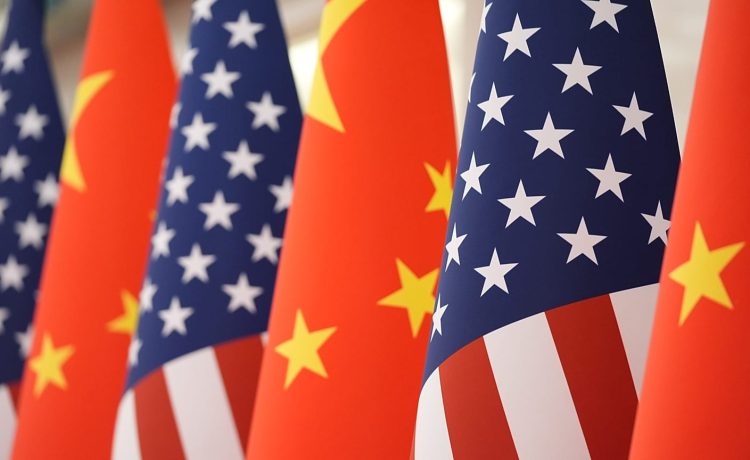
China has imposed export controls on 10 United States companies involved in defence and rare earths mining, escalating tensions with Washington following its recent blacklist expansion targeting Chinese firms.
The announcement was made on Monday by Beijing, which said the move was a direct response to what it described as the United States’ “egregious act” of adding Chinese companies to its so-called military-linked blacklist.
The latest US restrictions, issued earlier this month, included around 80 companies and subsidiaries accused of supporting China’s military development. Among those affected were major technology firms such as Alibaba and Baidu, as well as electric vehicle manufacturer BYD.
In response, China said it was acting to “safeguard national security” and would impose immediate restrictions on exports of dual-use goods to the affected US entities.
Among the companies listed by Beijing are Aveox, which holds aerospace defence contracts with the US military, Oshkosh Defense, known for producing military vehicle fleets, and rare earths producers MP Materials and USA Rare Earth.
China’s commerce ministry stated that exporters are now prohibited from supplying dual-use items to the listed companies. It added that all ongoing export activities must cease immediately, signalling a sharp tightening of trade restrictions.
The ban also extends beyond domestic enforcement, covering “organisations or individuals in any country or region” that transfer or supply Chinese-origin dual-use goods to the affected firms.
In a parallel move, China’s finance ministry announced restrictions on public procurement, banning government agencies from purchasing products from 46 US companies, including major defence contractors such as Lockheed Martin, Raytheon, and Boeing’s defence division.
Additional firms affected include units of General Dynamics and defence technology company Anduril Industries, alongside several aerospace manufacturers.
However, companies with US investments operating within China are exempted from the procurement ban, according to the finance ministry.
The measures follow a period of fluctuating tensions between the two global powers, despite recent diplomatic engagement between US President Donald Trump and Chinese President Xi Jinping aimed at stabilising relations.
Although both sides had agreed to work towards easing tariff pressures, competition in technology, defence, and strategic resources has continued to intensify.
Tensions have also been fuelled by US arms sales to Taiwan, which China considers part of its territory. Beijing has repeatedly opposed Washington’s military support for Taipei and has previously sanctioned companies linked to those sales.
The latest escalation comes as US Secretary of State Marco Rubio indicated that a proposed $14 billion arms package for Taiwan is currently under review.
Despite recent diplomatic interactions, including a meeting between Trump and Xi in May, both countries continue to adopt increasingly restrictive measures targeting each other’s strategic industries, raising concerns about prolonged economic and geopolitical friction.