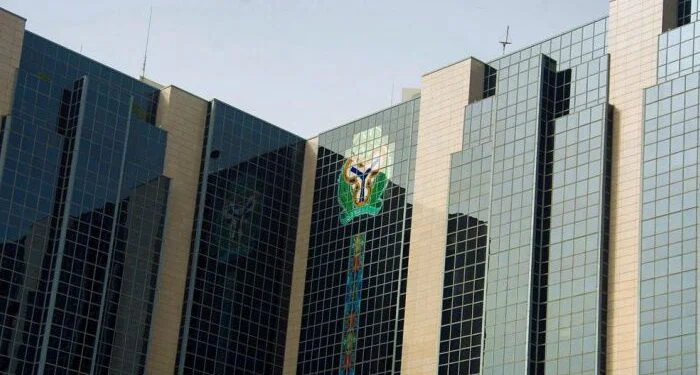
The Central Bank of Nigeria (CBN) says its foreign-exchange reforms and banking-sector recapitalisation programme have strengthened Nigeria’s financial system and improved stability in the financial markets.
The CBN Deputy Governor, Corporate Services, Dr Muhammad Sani Abdullahi, disclosed this on Tuesday, September 29, 2026, at the 38th Seminar for Finance Correspondents and Business Editors in Abuja.
According to the apex bank, 33 banks have raised a combined ₦4.65 trillion under the two-year banking-sector recapitalisation programme. The CBN said stronger capital buffers should enable banks to finance infrastructure, industrial expansion, international trade and other productive activities.
Abdullahi said the success of recapitalisation should not be measured only by the amount of money raised but also by how banks use the additional capital to support businesses and the wider economy.
He urged banks to increase productive lending while maintaining strong corporate governance, internal controls and risk-management systems.
The CBN also highlighted developments in the foreign-exchange market. Abdullahi said the average gap between Nigeria’s official and parallel exchange rates had fallen from 68.2 per cent between January and May 2023 to less than two per cent currently.
The apex bank attributed the improvement to reforms introduced since 2023, including the consolidation of foreign-exchange windows, improved FX trading rules, the Electronic Foreign Exchange Matching System and the Nigeria FX Code.
The CBN said foreign-exchange inflows had also become more diversified. In July 2026, total FX inflows stood at about $10.8 billion, with autonomous sources accounting for a significant portion. Remittances through international money-transfer operators reached about $950 million in July, according to the deputy governor.
The CBN further reported that gross external reserves stood at $55.6 billion as of September 11, 2026, while inflation had moderated to 15.43 per cent in July 2026, from its peak of 34.8 per cent in December 2024.
However, the CBN acknowledged that improvements in the financial system have not eliminated economic pressures facing households and businesses.
The apex bank therefore called on financial institutions to ensure that the benefits of stronger balance sheets reach small businesses, rural communities, women and young entrepreneurs.
Abdullahi also stressed the importance of cybersecurity, data protection and business continuity as Nigerian banks expand their digital financial services.
He said the CBN would continue monitoring banks’ governance, asset quality, liquidity and large exposures to ensure that stronger capital positions translate into a more resilient banking system.