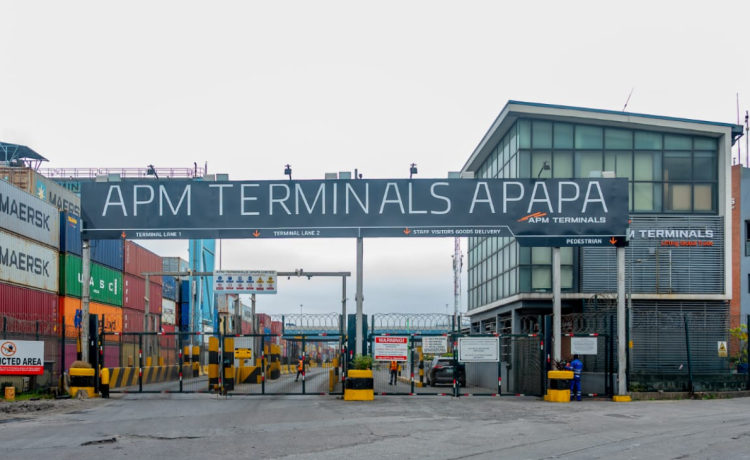
APM Terminals Apapa has recorded a 6 per cent increase in export volumes during the first half of 2026, reinforcing the terminal’s role in supporting Nigeria’s non-oil export sector and connecting Nigerian businesses with international markets.
The development was disclosed by the terminal’s Managing Director, Kamal Alhraishat, in a statement made available to the News Agency of Nigeria in Lagos. The increase is being viewed as a positive development for Nigeria’s efforts to expand exports beyond crude oil and strengthen its position in international trade.
APM Terminals Apapa is Nigeria’s largest container terminal and plays an important role in the movement of goods into and out of the country. The growth in export volumes indicates that Nigerian exporters are increasingly using the terminal to move products to international destinations.
According to the terminal, the increase reflects the resilience of Nigerian exporters as well as improvements introduced to make export processes more efficient. These measures are aimed at reducing difficulties faced by businesses when moving goods from production locations to the port.
Rail connectivity supports export movement
One of the developments supporting cargo movement is improved rail connectivity.
The Lagos-Moniya rail service provides exporters with an alternative to road transportation and operates several times a week. Increased use of rail can help reduce pressure on roads and limit the effect of traffic congestion around Apapa and other major transport routes.
Efficient movement of goods is particularly important for agricultural exporters. Agricultural products can lose quality when they spend too much time waiting for transportation or clearance.
APM Terminals has therefore continued to emphasise the importance of improving the wider logistics chain connecting Nigerian producers to ports.
Non-oil exports remain a major priority
The increase in export volumes comes as the Nigerian government continues to promote non-oil exports as part of efforts to diversify the economy.
Agricultural products, solid minerals and manufactured goods are among the products that can help Nigeria earn more foreign exchange and reduce its dependence on crude oil.
For exporters, however, producing goods for international markets is only one part of the process. The cost and speed of transporting those goods to the port can determine whether they remain competitive in the international market.
This makes efficient port operations increasingly important to Nigeria’s economic ambitions.
More investment needed
Although the 6 per cent increase is encouraging, industry stakeholders say sustained export growth will require improvements across the entire supply chain.
Issues such as road congestion, transportation costs, customs procedures, storage facilities and access to finance can affect exporters even when port operations are efficient.
APM Terminals has continued to invest in infrastructure and operational improvements at Apapa. The company has also previously announced plans for further investment in the terminal and surrounding logistics infrastructure.
The terminal’s export performance therefore provides an indication of the opportunities available within Nigeria’s non-oil trade sector.
If improvements in port operations are combined with better roads, rail services, customs processes and production capacity, Nigerian businesses could become more competitive in international markets.
Outlook
The 6 per cent increase in export volumes recorded by APM Terminals Apapa in the first half of 2026 represents a positive development for Nigeria’s maritime and export sectors.
It also highlights the growing importance of efficient ports to the country’s economic diversification agenda.
For Nigeria to sustain this momentum, stakeholders will need to continue investing in infrastructure and making the movement of goods from farms and factories to ports faster, cheaper and more reliable.
With stronger logistics systems and continued growth in non-oil production, Nigeria’s ports could play an even greater role in expanding the country’s presence in global and regional markets.