
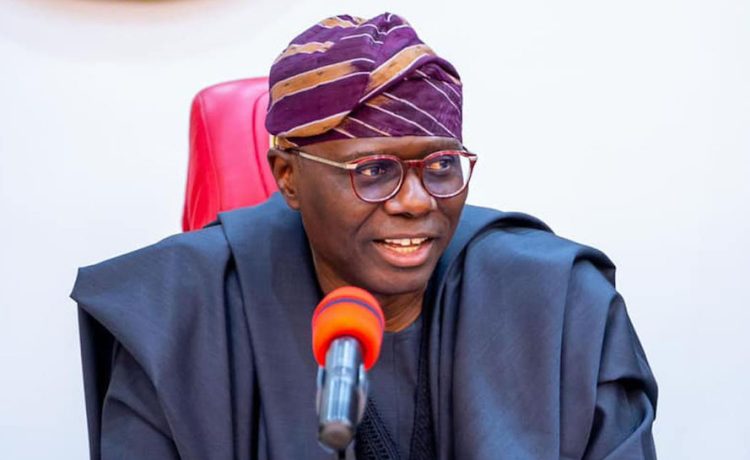
Lagos State Governor, Babajide Sanwo-Olu, has said the transformation of Lagos into one of Africa’s leading megacities is the outcome of decades of leadership, institutional development and the contributions of residents, stressing that the state’s progress cannot be attributed to a single administration.
Sanwo-Olu made the observation on Tuesday, November 24, at the presentation of Lagos: The Making of Africa’s Megacity, a 32-chapter publication and the third volume of the Eminent Nigerians Series, held in Victoria Island, Lagos.
The publication examines the historical evolution of Lagos, the policy choices and leadership decisions that have shaped its development, as well as lessons other rapidly expanding cities could draw from the state’s experience.
The governor acknowledged the contributions of former civilian governors Lateef Jakande, Bola Tinubu, Babatunde Fashola and Akinwunmi Ambode, noting that each administration built on foundations established by its predecessors.
He said the book was intended to document the collective contributions of successive governments rather than celebrate a particular administration or glorify an individual.
According to Sanwo-Olu, the development of Lagos has required successive leaders to respond to the changing demands of a growing population, while sustaining investments in infrastructure, public services and economic development.
He identified transportation, housing, healthcare, education, security and access to economic opportunities as major pressures confronting the state, adding that addressing them requires long-term planning, strong institutions, difficult policy choices and consistency in implementation.
The governor said his administration’s THEMES and THEMES+ development agendas were designed to advance inclusive growth through investments in infrastructure, rail transportation, water connectivity, healthcare, education, housing, food security and technology.
He also commended President Bola Tinubu’s leadership at the national level and expressed confidence in the continuation of the Federal Government’s policies and programmes.
On the political implications of continuity in Lagos, Sanwo-Olu reiterated his endorsement of Deputy Governor Obafemi Hamzat, the All Progressives Congress governorship candidate, as his preferred successor. He argued that continuity in leadership and policy implementation was important to sustaining the state’s development plans.
Hamzat, who also spoke at the event, described Lagos as a product of the contributions of successive leaders and the determination of people from different backgrounds.
He said the state’s development depended on preserving the foundations established over the years and ensuring that future leaders understood its history, institutional structure and distinctive challenges.
Earlier, the founder of the Eminent Nigerians Series, Prince Bimbo Folayan, said the book was produced through independent research and assessments involving Nigerian and international authors and editors.
He disclosed that the research team visited several public projects across Lagos, including the Tolu School Complex in Ajegunle, the 300-bed Ojo General Hospital, housing schemes in Igando and Ikorodu, food hubs in Mushin and Agege, and the Lagos Blue Line rail service.
Folayan said the publication went beyond documenting infrastructure projects to examine the human impact of governance, particularly the opportunities created for vulnerable communities and young people.
He added that the project would be supported by a documentary intended for international distribution and a youth development programme known as the Sanwo-Olu Legacy Initiative for Development, or SOLID.
The initiative is designed to provide young people with skills development, mentorship, enterprise support and access to employment opportunities. Folayan said its pilot programme was scheduled to begin in 2027, targeting at least 10 participants from each of Lagos State’s 20 local government areas and 37 Local Council Development Areas.
The book was reviewed by Professor Maryam Quadri, a political scientist at the University of Lagos.
The publication and proposed youth initiative place emphasis on documenting Lagos’ development experience while extending the discussion to the next generation of residents who will participate in the state’s economic and social future.