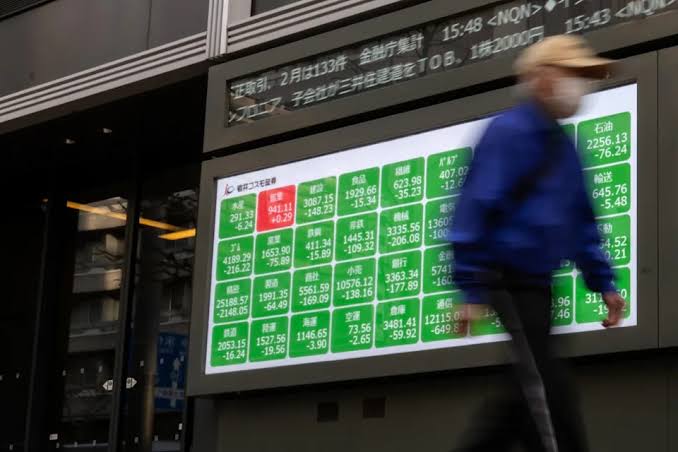
Asian stocks fell as investors reacted to mounting losses in US technology shares and adopted a cautious approach ahead of the US midterm elections.
The decline affected several major markets across the region, with technology stocks recording particularly significant losses. China’s yuan also weakened against the US dollar, ending a remarkable 13-day winning streak.
The MSCI Asia Pacific Index dropped almost 1%, reflecting broad weakness across Asian equities. South Korea’s technology-heavy Kospi Index performed worse, sliding almost 4% as concerns surrounding the global technology sector weighed on investor sentiment.
The market downturn followed a continued selloff in US chipmakers, which extended their losses to three consecutive trading sessions.
The developments highlighted growing uncertainty among investors as they assessed technology valuations, political developments and currency movements.
US Chipmaker Selloff Weighs on Asian Technology Stocks
The decline in Asian equities came after a gauge tracking US chipmakers extended its three-day losing streak, bringing its cumulative losses to 12%.
The weakness in American semiconductor stocks affected investor confidence across Asia, where technology companies represent an important part of several major stock markets.
South Korea was among the hardest-hit markets, with the Kospi Index falling almost 4%.
The country has significant exposure to the global semiconductor industry, making its equity market sensitive to changes in investor sentiment towards technology companies and chip manufacturers.
The selloff also reflected concerns about the sustainability of high valuations across parts of the technology sector.
Investors have increasingly focused on the large sums being committed to artificial intelligence development, semiconductor production and related infrastructure.
Although these investments have supported expectations of future growth, concerns about valuations and the time required to generate returns can create volatility when market sentiment changes.
Nasdaq 100 Enters Technical Correction
In the United States, the Nasdaq 100 had declined 10% from its previous peak, entering what is commonly described as a technical correction.
A correction generally refers to a decline of at least 10% from a recent market high. It is often viewed as an indication that investors are reassessing asset valuations and future growth expectations.
The decline in the Nasdaq 100 is significant because the index includes several major technology and growth companies.
Weakness in the index can influence international markets, particularly countries with strong exposure to technology manufacturing and global investment flows.
The continued losses in US chipmakers also raised concerns about whether weakness in the semiconductor industry could spread to other technology-related businesses.
However, market corrections do not automatically indicate that a prolonged downturn is beginning. Investors will continue to assess corporate earnings, economic conditions and developments in the technology industry.
Chinese Equities Fall Despite Central Bank Support
Chinese equities also declined despite fresh signals from the country’s central bank aimed at supporting market stability.
The People’s Bank of China said it would encourage financial institutions to make greater use of stock-support tools and optimise the terms under which they are used.
The measures form part of broader efforts by Chinese authorities to strengthen confidence in the country’s financial markets.
Stock-support tools are intended to help improve market stability and provide support during periods of pressure on equity prices.
However, the announcement did not prevent Chinese shares from falling during the trading session.
The reaction suggests that investors remain cautious despite government efforts to support the market.
Market participants will continue to monitor the effectiveness of policy measures and whether they can encourage stronger investment confidence.
Yuan Ends 13-Day Winning Streak
China’s yuan weakened against the US dollar after the People’s Bank of China moved to moderate the currency’s recent appreciation.
The currency fell by as much as 0.4% to 6.6728 per dollar, ending 13 consecutive days of gains.
The winning streak was described as the yuan’s longest since 1996.
The central bank’s move involved asking banks to hold more foreign currencies in reserve, a measure aimed at cooling the yuan’s rally.
Currency movements are important for international trade, investment and financial stability.
A stronger yuan can affect the competitiveness of Chinese exports, while a weaker currency can influence import costs and international capital flows.
The end of the winning streak therefore attracted attention from investors monitoring China’s monetary policy and foreign exchange market.
US Midterm Elections Add to Investor Caution
Investors were also reluctant to take major trading positions ahead of the US midterm elections.
Political developments in the United States can influence expectations about government policies, trade relations, taxation and economic regulation.
For international investors, uncertainty surrounding elections can encourage cautious trading as markets assess possible policy changes and their implications for global economic activity.
The combination of political uncertainty, technology-sector losses and currency movements created a difficult environment for Asian equities.
Japanese markets were closed for a public holiday during the trading session, leaving investors without fresh trading signals from one of Asia’s major financial markets.
Outlook for Global Financial Markets
The decline in Asian stocks highlights how closely connected international financial markets have become.
Developments in the US technology industry can quickly influence investor sentiment in Asian markets, particularly where companies depend heavily on semiconductor production and global technology demand.
Similarly, decisions by major central banks can affect currency movements, investment flows and market expectations across the world.
Investors will be watching developments in the US technology sector, China’s economic policy and the outcome of the US midterm elections for further direction.
The performance of semiconductor companies and the ability of major stock indexes to stabilise will also remain important indicators of market sentiment.
For now, the combination of technology-sector weakness, political uncertainty and currency adjustments continues to keep investors cautious across global markets.