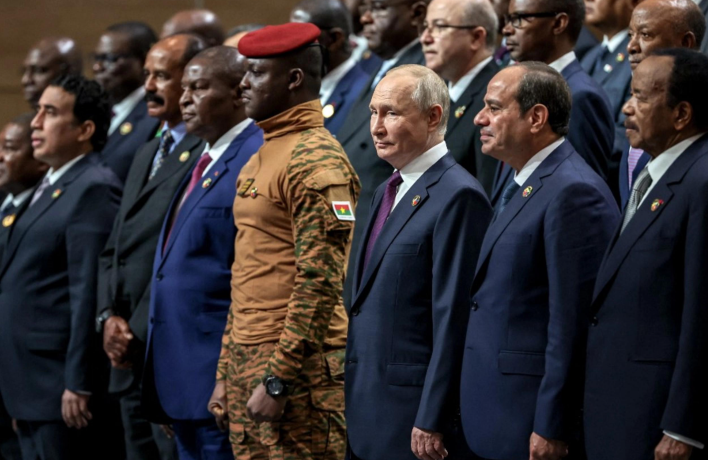
Russian President Vladimir Putin is hosting African leaders and government delegations in Moscow for the third Russia–Africa Summit, a two-day gathering aimed at strengthening diplomatic, economic and security relations between Russia and African countries.
The summit began on October 28 and is scheduled to continue through October 29, bringing together representatives from 48 of Africa’s 54 countries. According to Russian presidential aide Yury Ushakov, 22 participating countries are represented by their heads of state.
The meeting is co-chaired by Putin and Burundi’s President Évariste Ndayishimiye, who currently chairs the African Union.
Discussions cover trade, investment, energy, agriculture, defence, technology, food security, education and healthcare. Participants are also expected to consider a cooperation plan covering 2027–2029 and additional agreements intended to strengthen relations between the two sides.
The gathering comes as Russia seeks to expand its partnerships across Africa while competing with other international powers, including China, the United States and European countries.
Trade and investment take centre stage
Economic cooperation is one of the summit’s principal priorities.
Russia has sought to increase trade with African countries through exports of wheat, fertilisers, energy technology and other goods. African governments, meanwhile, are looking for investment, affordable agricultural inputs, infrastructure development and access to international markets.
According to figures cited by Russian officials and reported by Anadolu Agency, Russia–Africa trade exceeded $27 billion in 2025. This was substantially higher than the approximately $16.8 billion recorded in 2019, when the first Russia–Africa Summit was held.
The summit therefore presents an opportunity for Moscow to promote new commercial arrangements and for African countries to negotiate partnerships that support their individual development priorities.
However, the value of the meeting will depend on whether discussions produce practical investments, completed projects and sustained trade growth.
Energy cooperation and electricity generation
Energy is another major area of interest.
Several African countries face electricity shortages and need additional generating capacity to support industrialisation, population growth and expanding businesses.
Russia has promoted nuclear power technology through its state-owned nuclear corporation, Rosatom. One of its most significant African projects is Egypt’s El Dabaa nuclear power plant.
The project illustrates the potential scale of Russian involvement in African infrastructure, but nuclear developments require substantial financing, specialised skills, regulatory oversight and long-term arrangements for fuel and maintenance.
Summit discussions also cover other forms of energy cooperation, including conventional electricity generation, renewable energy and mining.
African governments will need to evaluate proposed projects according to their costs, technical requirements, environmental implications and long-term economic benefits.
Food security remains a priority
Agriculture and food security are also expected to feature prominently.
Russia is a major supplier of wheat and fertilisers to a number of African markets. These products are important to countries seeking to improve food production, stabilise supply chains and reduce pressure on food prices.
African governments have an interest in diversifying their suppliers and securing dependable access to agricultural inputs. Russian suppliers, in turn, have opportunities to expand their presence in markets where demand for grain and fertilisers remains significant.
The relationship has already included grain deliveries and agricultural cooperation. Russia announced free grain shipments to several African countries after the 2023 summit, including Burkina Faso, Mali, Somalia, Zimbabwe, Eritrea and the Central African Republic.
Nevertheless, trade in agricultural commodities can be affected by shipping costs, export restrictions, conflict and disruptions to ports and transport routes.
For African countries, the central concern is whether international partnerships can translate into reliable supplies at affordable prices.
Security and defence relations
Security cooperation is another important part of Russia’s engagement with Africa.
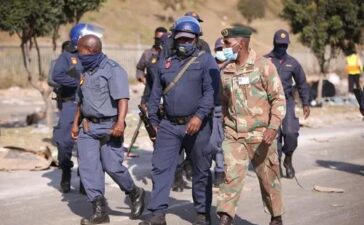
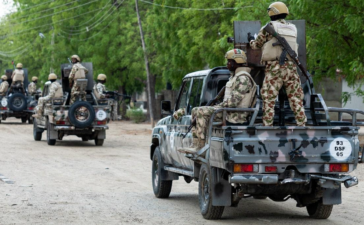
Several countries, particularly in the Sahel, have strengthened relations with Moscow after military governments reduced or ended security partnerships with some Western countries.
Russia has expanded its security presence in parts of the continent, including through military cooperation and deployments associated with its Africa Corps.
Governments seeking security assistance may view these partnerships as an opportunity to obtain equipment, training and operational support. However, security arrangements can also raise concerns about accountability, civilian protection and long-term dependence on external partners.
The summit offers an opportunity for leaders to discuss these arrangements alongside broader diplomatic and economic priorities.
There are also concerns about Africans being recruited to fight in Russia’s war against Ukraine. Amnesty International has urged African leaders to address reports of deceptive or coercive recruitment during their engagement with Moscow. Such concerns form part of the wider debate about protecting citizens while maintaining diplomatic relations.
Africa’s position in global diplomacy
The summit also has political significance because African countries collectively hold substantial voting power at the United Nations.
Russia has presented its engagement with Africa as a partnership based on sovereignty, mutual respect and opposition to colonialism. Moscow has also expressed support for greater African representation in international institutions.
For African governments, however, the challenge is to ensure that relationships with Russia and other powers serve national interests rather than create new dependencies.
African countries have different political systems, economic needs and foreign-policy priorities. Their participation in the summit should not automatically be interpreted as agreement with every Russian position on international affairs.
Many governments seek to maintain relationships with several global partners simultaneously, securing trade, investment and security assistance while retaining the freedom to make independent decisions.
What to expect from the summit
Participants are expected to consider a final declaration and a Russia–Africa Partnership Forum action plan covering 2027–2029. Additional agreements are also planned in areas such as technology and economic cooperation.
The effectiveness of these commitments will ultimately depend on implementation.
African governments will be looking for measurable outcomes, including new investment, improved access to markets, technology transfers, dependable food supplies and progress on infrastructure projects.
Russia, meanwhile, will be seeking stronger diplomatic relationships and greater economic engagement across the continent.
The summit demonstrates Africa’s growing importance in international competition for markets, resources and diplomatic influence. Its lasting significance, however, will depend less on speeches and declarations than on whether the agreements improve living standards and create tangible opportunities for African citizens.