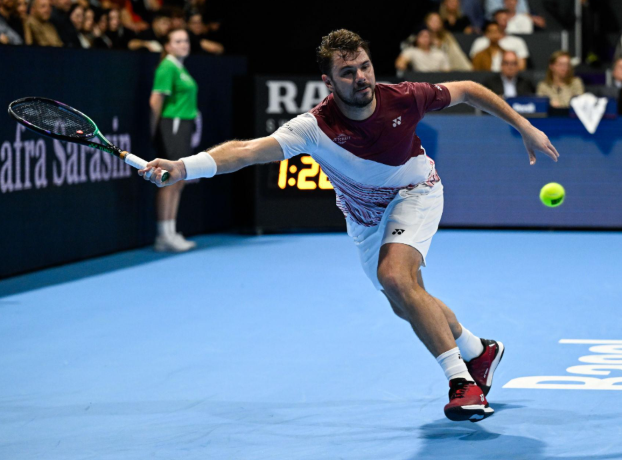
Swiss tennis star Stan Wawrinka has brought his professional career to a close following a first-round defeat to Czech player Jiri Lehecka at the Swiss Indoors tournament in Basel.
The 41-year-old lost 7–5, 7–6(2) on Tuesday, October 27, in front of his home supporters, ending a career that lasted approximately 24 years and established him as one of the most accomplished players of his generation.
Wawrinka had announced that the 2026 season would be his last in professional tennis. His final appearance in Basel therefore carried significance beyond the result, providing an opportunity for supporters to celebrate his achievements.
Although he could not finish his career with a victory, his record includes three Grand Slam singles titles, 16 ATP singles titles and a career-high world ranking of No. 3.
His departure marks the end of a remarkable period for Swiss tennis, during which he established himself alongside other leading players of his era.
A Three-Time Grand Slam Champion
Wawrinka’s greatest achievements came at the Australian Open, French Open and US Open.
He won his first Grand Slam singles title at the 2014 Australian Open, defeating Rafael Nadal in the final. The victory was a major breakthrough for a player who had spent years competing against the world’s leading tennis stars.
His success continued at the 2015 French Open, where he defeated Novak Djokovic in the final to win the Roland Garros title.
That victory demonstrated his ability to perform under pressure against elite opposition, particularly on clay courts, where his powerful groundstrokes and aggressive baseline game proved effective.
In 2016, Wawrinka added a third Grand Slam title by winning the US Open. He defeated Djokovic in the final, becoming champion in New York after another impressive run through the tournament.
Winning three major singles championships during an era dominated by several all-time greats established Wawrinka’s place among the leading players of modern tennis.
His Grand Slam victories were particularly notable because he repeatedly defeated opponents who had won numerous major titles themselves.
Olympic Gold and Davis Cup Success
Wawrinka’s achievements extended beyond Grand Slam singles tournaments.
In 2008, he won Olympic doubles gold at the Beijing Games alongside fellow Swiss player Roger Federer.
The pair’s victory was an important moment for Swiss tennis, giving the country an Olympic title in a sport where international team events often require players to balance individual careers with national representation.
Wawrinka also helped Switzerland win its first Davis Cup title in 2014.
The Davis Cup triumph was another major milestone for Swiss tennis, bringing together players who had spent much of their careers competing individually on the ATP Tour.
These achievements demonstrated Wawrinka’s ability to contribute to his country’s success in both individual and team competitions.
His career also included years of competing at the highest level against players such as Federer, Djokovic and Nadal, creating memorable contests for tennis fans around the world.
A Career Built on Determination
Wawrinka became known for his powerful one-handed backhand, aggressive baseline play and willingness to take risks against top-ranked opponents.
His game allowed him to challenge players who often entered matches as favourites, and his major victories showed that he could produce his best tennis on the biggest stages.
However, maintaining a long professional career required more than technical ability. Players on the ATP Tour must manage demanding travel schedules, repeated matches and the physical effects of competing at elite level.
Wawrinka’s career extended across more than two decades, during which he experienced periods of major success as well as difficult stretches.
His ability to win Grand Slam titles after years of competing against established champions became a defining feature of his sporting story.
He reached a career-high ranking of world No. 3 in 2014 and won 16 ATP singles titles, achievements that reflect both his consistency and his capacity to peak during important tournaments.
The Final Match in Basel
The Swiss Indoors in Basel provided an appropriate setting for Wawrinka’s farewell because it allowed him to conclude his career in front of supporters in his home country.
His final opponent, Lehecka, won the match in straight sets. Wawrinka fought through both sets but was unable to force a deciding set, losing the second-set tiebreak 7–2.
The result ended his participation in the tournament and brought his professional playing career to a close.
The farewell was a moment for supporters to reflect on his achievements rather than focus only on the final score.
Wawrinka’s decision to retire at the end of the 2026 season had already established that this would be his final year, and his appearance in Basel gave local fans an opportunity to acknowledge his contribution to tennis.
What Wawrinka Leaves Behind
Wawrinka retires with a record that includes three Grand Slam singles titles, 16 ATP singles championships, Olympic doubles gold and a Davis Cup victory.
His accomplishments demonstrate that success in professional tennis can take different forms. While some players dominate rankings for extended periods, others build their legacies through major victories, resilience and performances against the strongest opponents.
Wawrinka’s three Grand Slam titles are particularly significant because they came during an era in which Federer, Nadal and Djokovic set extraordinary standards.
He proved capable of defeating the leading players in the sport and winning the biggest tournaments on the calendar.
His retirement also closes an important chapter in Swiss tennis history, following years in which he and Federer helped bring international attention to the country’s achievements in the game.
For younger players, Wawrinka’s career offers an example of persistence, technical development and the importance of continuing to compete even when the path to major success is difficult.
Although his professional playing days are over, his Grand Slam victories and contribution to Swiss tennis will remain central to his sporting legacy.