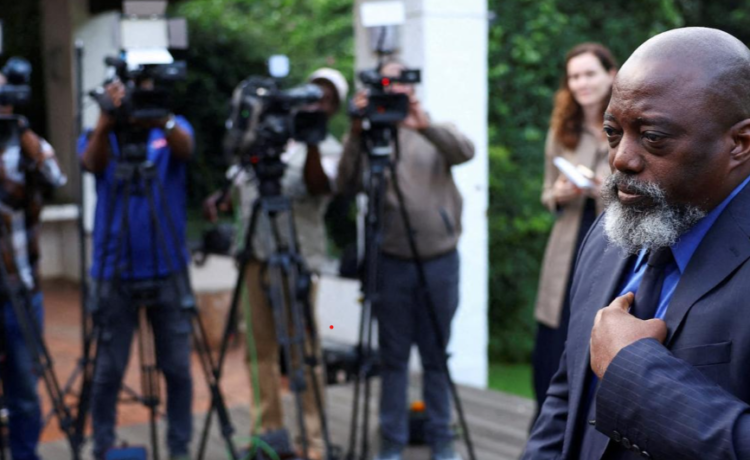
The Democratic Republic of the Congo is facing renewed political uncertainty following former president Joseph Kabila’s announcement of a new coalition involving armed opposition groups, including the M23 rebel movement.
The coalition, known as the Front for the Refoundation of the Nation (FRN), was introduced in Goma, a major city in eastern DR Congo that has been under M23 control since January 2025.
The development is significant because the conflict in eastern Congo has already displaced communities, disrupted economic activity and created a serious humanitarian crisis.
Kabila’s decision to lead the coalition could reshape the political opposition to President Félix Tshisekedi’s government and complicate efforts to reach a lasting settlement.
Why the M23 movement matters
M23 has been at the centre of the conflict in eastern DR Congo, where it has captured territory and fought government forces. The movement’s advances have increased insecurity in areas that are important for trade, agriculture and mineral production.
The Congolese government and international observers have accused Rwanda of supporting M23, an allegation that has been a major source of tension between Kinshasa and Kigali. Rwanda has disputed aspects of accusations made against it.
The fighting has created difficulties for residents who depend on farming, small businesses and cross-border trade. Displacement also places pressure on schools, hospitals, shelters and humanitarian organisations.
The emergence of a coalition that brings together political figures and armed groups raises questions about whether the conflict will become more difficult to resolve through negotiations.
Kabila’s role and the government response
Kabila served as president of DR Congo from 2001 to 2019. His return to a prominent opposition role is politically important because of his former position and the influence he retains among some political networks.
Reports say the new coalition intends to challenge what it describes as the current government’s approach to national governance.
However, the alliance’s inclusion of armed groups makes its objectives especially contentious. Critics are concerned that the coalition could provide political cover for continued military operations rather than create a path towards peaceful political competition.
Kabila has faced serious legal and political accusations from the Congolese authorities. Reports have also noted that he was sentenced to death in absentia in 2025 in a case involving alleged support for rebel forces. Such proceedings and accusations remain part of the wider political dispute.
Peace negotiations face new challenges
The conflict in eastern Congo has drawn diplomatic involvement from regional governments and international partners. Negotiations have sought to reduce violence, restore security and address tensions involving DR Congo and Rwanda.
The launch of the FRN could make those efforts more complicated by introducing another political structure with connections to armed groups.
Peace agreements often require more than a ceasefire. They also need credible monitoring, arrangements for the withdrawal or integration of armed forces, protection for civilians and mechanisms to address disputes.
For communities affected by the conflict, the immediate priorities remain security, access to food and healthcare, and the ability to return home safely.
Economic and humanitarian consequences
Eastern Congo contains valuable mineral resources used in international supply chains. Continued fighting can disrupt mining, transport and exports, while insecurity discourages investment and makes it more difficult for businesses to operate.
The conflict also creates wider regional consequences. Refugee movements and humanitarian needs can place pressure on neighbouring countries, while insecurity along trade routes affects local markets.
Conclusion
Kabila’s new alliance represents a significant development in DR Congo’s political crisis. Its impact will depend on whether it becomes a platform for political negotiation or contributes to further armed confrontation. For civilians in eastern Congo, reducing violence and restoring dependable public services remain urgent priorities.