The World Bank has projected that Nigeria’s economy could grow by an average of 4.4 per cent annually through 2028, provided the government sustains economic reforms and improves public service delivery.
The projection was included in the bank’s October 2026 Nigeria Development Update, titled Beyond the Federal Purse: How Higher Revenues Reshaped State Priorities.
According to Reuters, the report was presented in Abuja on October 8 and highlighted improvements in economic activity, government revenues and the country’s medium-term outlook.
Nigeria’s economy grew by 4.2 per cent in the first half of 2026, compared with 3.9 per cent in 2025, according to the report.
The services and agriculture sectors were among the main contributors to growth.
The World Bank said the outlook could improve further if reforms are sustained and governments use available resources more effectively.
Economic reforms contribute to growth
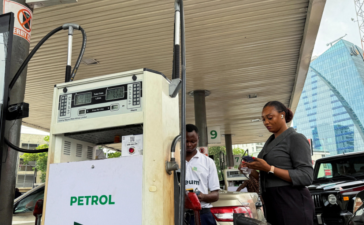
Nigeria has implemented major economic changes, including the removal of petrol subsidies and adjustments to foreign exchange management.
These reforms have changed government finances and the operation of the currency market.
The removal of petrol subsidies reduced a major direct government expenditure, while changes to foreign exchange management have aimed to create a more flexible market.
However, these measures have also created challenges for households and businesses, particularly through higher fuel and transportation costs.
The World Bank’s assessment suggests that economic growth has strengthened despite these difficulties.
The bank has also noted that increased revenue available to state governments could create opportunities for additional spending on infrastructure, education and healthcare.
State revenues rise
One important finding in the report concerns the increase in revenue available to state governments.
According to the World Bank, state revenues increased by approximately 93 per cent in real terms between 2023 and 2025.
Higher revenues can give states more resources to improve roads, schools, hospitals, water supply and other public services.
However, the bank has warned that increased revenue does not automatically guarantee better living conditions.
State governments must ensure that public funds are spent efficiently and directed towards projects that deliver measurable benefits.
Investments in education and healthcare are particularly important because they can improve productivity and expand economic opportunities over time.
Inflation and poverty remain major concerns
The World Bank expects inflation to ease gradually, potentially reaching around 12 per cent by 2028.
However, global energy-price increases linked to the Middle East conflict have slowed the decline in inflation.
Even when inflation falls, prices do not necessarily return to previous levels. Instead, goods and services may continue to become more expensive, but at a slower rate.
For households, the key issue is whether incomes rise sufficiently to keep pace with the cost of living.
The World Bank has also indicated that poverty could gradually decline if economic growth remains stronger than population growth.
However, the impact will depend on whether growth creates jobs, improves earnings and expands access to essential services.
An economy can grow without all households benefiting equally, particularly when opportunities are concentrated in a limited number of sectors or locations.
Opportunities for businesses
Sustained economic growth could create opportunities for companies in agriculture, transport, construction, retail, technology and professional services.
Businesses may benefit from improved infrastructure and a more predictable economic environment.
However, companies still face challenges such as high operating costs, access to financing, electricity expenses and exchange-rate uncertainty.
Small and medium-sized enterprises are particularly important because they employ many Nigerians and support local economic activity.
Policies that improve access to finance, skills development, reliable electricity and market access could help businesses expand and employ more workers.
What Nigeria needs to sustain growth
The World Bank has urged governments to improve spending efficiency and invest in human capital.
Sustained growth will also depend on stronger revenue mobilisation, economic diversification, private-sector investment and improved public institutions.
The government must balance macroeconomic reforms with measures that help vulnerable households manage short-term economic pressures.
For ordinary Nigerians, the real value of growth will be measured not only by national economic figures but also by employment opportunities, purchasing power, access to healthcare and the quality of public services.
The 4.4 per cent projection provides an encouraging medium-term outlook, but achieving it will require consistent implementation of reforms and broader participation in economic activity.