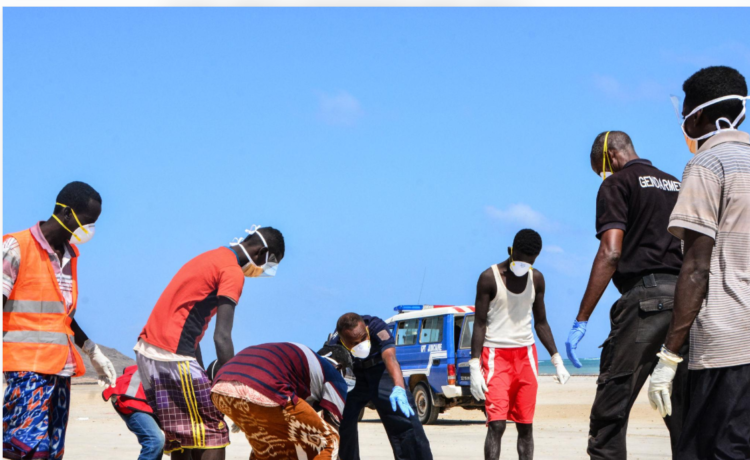
At least 139 migrants, including children, have died after an overcrowded boat capsized off the coast of Djibouti while carrying more than 300 people towards Yemen, according to reports published on Sunday, October 11.
The International Organization for Migration (IOM), the United Nations agency responsible for migration, said the incident occurred near Guhere on Djibouti’s eastern coast, along a dangerous migration route across the Gulf of Aden.
At least 84 people remain missing, while more than 80 survivors have received medical and psychological assistance. Rescue and recovery operations have continued as authorities and humanitarian workers attempt to establish the full number of people affected.
The tragedy occurred between Thursday night and the early hours of Friday, October 9, according to accounts reported by survivors.
Overcrowded vessel raises safety concerns
The boat was carrying more than 300 people when it capsized. The number of passengers aboard the vessel has renewed concerns about the dangers faced by migrants travelling through the Horn of Africa towards the Arabian Peninsula.
Many people use the eastern migration route in search of employment, better living conditions and opportunities to support their families. However, the journey exposes travellers to overcrowded boats, unsafe vessels, unpredictable sea conditions and exploitation by smugglers.
Djibouti is an important transit point for migrants travelling from Ethiopia and other parts of the Horn of Africa towards Yemen and the Gulf states.
Although some migrants hope to find work abroad, the journey can become deadly when transport operators overload vessels or fail to provide adequate safety equipment.
The IOM has continued to call for stronger international cooperation to prevent further deaths and ensure that migrants have access to safer, legal migration pathways.
Humanitarian response continues
Survivors are receiving assistance while authorities continue efforts to locate missing passengers and recover bodies. The final death toll could change as the operation progresses.
The disaster also places additional pressure on humanitarian organisations that provide emergency assistance, shelter, healthcare and protection to migrants in transit.
Children and other vulnerable passengers are particularly exposed during dangerous sea crossings. Survivors may also require longer-term psychological support after witnessing the deaths of fellow travellers.
Humanitarian agencies have repeatedly warned that restrictive migration options and a lack of safe travel routes can push people towards dangerous journeys organised by criminal networks.
Calls for international action
The latest incident highlights the need for countries of origin, transit and destination to work together to address irregular migration.
Possible responses include improving access to legal migration channels, strengthening rescue services, investigating smuggling networks and providing information about the risks associated with dangerous sea crossings.
Development programmes that expand employment opportunities in migrants’ home communities may also help reduce the pressure to undertake hazardous journeys.
However, humanitarian organisations stress that preventing irregular migration must not come at the expense of protecting human life.
The Djibouti tragedy is another reminder of the human cost of unsafe migration. As search efforts continue, the immediate priorities remain locating missing people, supporting survivors and identifying measures to prevent similar disasters.