Savannah Energy PLC has reported a stronger financial performance across its operations in the first seven months of 2026, with revenue increasing by 10 per cent year-on-year to US$160.6 million, while cash collections from its Nigerian business rose by 13 per cent.
The British independent energy company, which operates across hydrocarbons and power projects in Africa, disclosed the figures in its latest operational and financial update covering the seven months ended July 31, 2026.
The results highlight continued improvement in the company’s Nigerian cash-generation performance, alongside increased production at its Stubb Creek operations and the successful commencement of gas production from the Uquo 13 well.
Savannah’s revenue during the period increased from US$146 million in the first seven months of 2025 to US$160.6 million in 2026, representing a year-on-year increase of 10 per cent.
The company also reported stronger liquidity, with cash balances reaching US$62 million at the end of July 2026, compared with US$42.7 million at the end of December 2025.
Nigeria Cash Collections Strengthen
One of the key highlights of the update was the performance of Savannah’s Nigerian operations.
Cash collections in Nigeria increased by 13 per cent year-on-year to US$247.9 million during the first seven months of 2026.
This compares with US$219.2 million collected during the corresponding period in 2025.
The improvement is significant because stronger cash collections can support the company’s ability to meet financial obligations, fund operations and continue investing in its Nigerian assets.
Savannah has previously identified improved cash collection as an important component of strengthening its financial position in Nigeria.
The latest figures suggest that the company has continued to make progress in this area.
The increase also comes as Savannah continues efforts to refinance its debt facilities and improve the overall financial structure of its business.
Cash Position Improves Despite Higher Net Debt
Savannah’s cash position also strengthened considerably during the reporting period.
Its cash balances rose to US$62 million as of July 31, compared with US$42.7 million at the end of 2025.
However, the company also reported an increase in net debt.
Net debt stood at US$672 million, compared with US$658.8 million at the end of December 2025.
At the same time, trade receivables declined substantially.
Savannah’s trade receivables fell to US$394.6 million, representing a 22 per cent reduction from US$508.5 million at the end of 2025.
The reduction in receivables could provide additional support for the company’s working capital position as it continues to focus on cash generation.
Stubb Creek Production Jumps 29%
Production performance at Savannah’s Stubb Creek operations also recorded significant growth.
Following the completion of the company’s SIPEC acquisition in March 2025, Savannah began implementing an expansion programme at Stubb Creek.
The programme contributed to a 29 per cent year-on-year increase in average gross daily production, which reached 3.7 thousand barrels of oil per day (Kbopd) during the first seven months of 2026.
This compares with an average of 2.8 Kbopd during the same period in 2025.
Production momentum accelerated further in July, when average output exceeded 5.0 Kbopd.
The increase demonstrates the impact of Savannah’s ongoing investment in its Nigerian hydrocarbon assets.
The company expects further production opportunities as its development programme progresses.
Uquo 13 Begins Gas Production
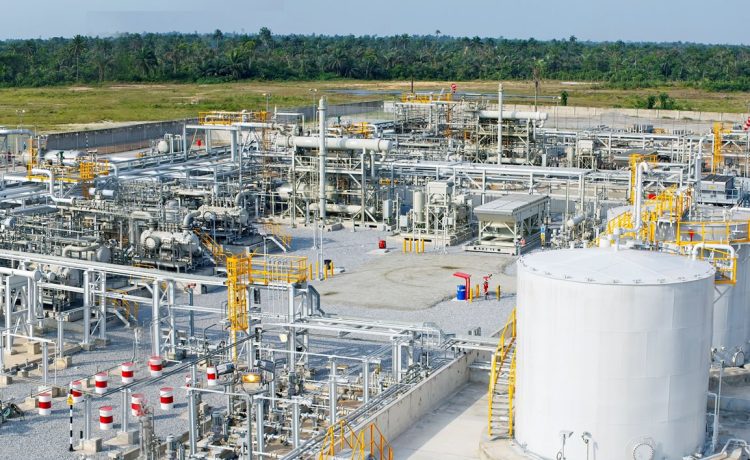
Another significant milestone for Savannah was the successful completion and commissioning of the Uquo 13 well.
The well, previously known as Uquo NE, was drilled and completed before being tied back to the Uquo Central Processing Facility.
Savannah reported that the well achieved first gas in July 2026 and is now producing.
Before coming on stream, the well was successfully tested at approximately 50 million standard cubic feet per day (MMscfd).
The development is expected to contribute to Savannah’s production profile during the remainder of the year.
The company said the addition of Uquo 13 strengthens its ability to increase production in the second half of 2026.
Production Expected to Exceed 20 Kboepd
Savannah’s group daily gross production averaged 16.3 thousand barrels of oil equivalent per day (Kboepd) during the first seven months of 2026.
This was lower than the 18.8 Kboepd recorded during the corresponding period of 2025.
However, the company expects production to accelerate during the remainder of the year.
With Uquo 13 now producing, Savannah expects average gross daily production to exceed 20 Kboepd during the remaining five months of 2026.
For the full year, the company expects average gross daily production to fall within a range of 18-20 Kboepd, with additional upside potentially coming from the Uquo South exploration well.
Uquo South Well Shows Encouraging Signs
Savannah has also provided an update on the Uquo South exploration well.
The well was spudded in early August 2026 and is currently being completed.
The company said gas has been confirmed in most of the targeted reservoirs through pressure measurements, fluid sampling and logging.
The discovery is expected to undergo further evaluation following completion of the well and the planned testing programme.
If the results support commercial development, the discovery could provide additional growth opportunities for Savannah’s Nigerian operations.
The development comes at a time when Nigeria is seeking to increase domestic gas production and expand the use of natural gas across power generation and industrial applications.
Nigeria Remains Central to Growth Strategy
The latest performance reinforces the importance of Nigeria to Savannah’s African operations.
The company has invested significantly in Nigerian oil and gas assets and continues to pursue production growth through infrastructure development, acquisitions and exploration.
Improved cash collections are particularly important because the Nigerian energy market has historically presented challenges around receivables and payment cycles.
The 13 per cent increase recorded during the first seven months of 2026 therefore represents an important development for the company.
Combined with the decline in trade receivables, it suggests a stronger focus on converting revenue into actual cash.
Niger Operations Remain Under Discussion
While Nigeria recorded positive developments, Savannah continues to face uncertainty around its operations in Niger.
The company said it remains engaged with the Nigerien Government regarding the R1234 Production Sharing Contract (PSC) and its future work programme.
The discussions are focused on resolving disputed issues under the contract and establishing the contractual and operational conditions necessary for activities to resume.
Savannah said it continues to reserve its rights under the PSC while seeking a mutually acceptable agreement with the Nigerien Government.
The company made clear that operations will only recommence if an acceptable agreement is reached.
Chad Arbitration Proceedings Continue
Savannah also provided an update on its ongoing legal disputes in Chad.
Its wholly owned subsidiaries, Savannah Chad Inc. and Savannah Midstream Investment Limited, commenced arbitration proceedings against the Government of Chad in 2023.
The proceedings relate to the nationalisation of Savannah’s rights in the Doba oil fields and its interests connected to pipeline infrastructure.
The company said it expects the relevant arbitration proceedings to be concluded in the second half of 2026.
A separate arbitration involving claims against Savannah relating to the Doba fields joint operating agreement remains ongoing.
Savannah expects that proceeding to conclude in the first half of 2027.
CEO Highlights Progress Across the Business
Savannah Energy Chief Executive Officer Andrew Knott said the company’s progress provides a strong foundation for continued growth.
He highlighted developments across the company’s Nigerian hydrocarbons business, including increased production at Stubb Creek and the development of the Uquo field.
Knott also pointed to progress in the company’s power business and its broader strategy of pursuing opportunities across hydrocarbons and renewable energy.
According to the CEO, the company is continuing to assess value-accretive acquisition opportunities across both sectors.
Looking Beyond Oil and Gas
Although hydrocarbons remain a major component of Savannah’s business, the company is also developing opportunities in the power sector.
The company said it has continued to advance wind, solar and hydro projects while pursuing potential acquisitions in East African hydropower.
This diversification strategy reflects the changing energy landscape across Africa, where demand for reliable electricity continues to grow alongside investment in traditional oil and gas resources.
For Savannah, expanding into power could provide additional long-term growth opportunities while complementing its existing energy portfolio.
Stronger Second-Half Outlook
Savannah enters the second half of 2026 with several developments potentially capable of supporting its performance.
The successful start-up of Uquo 13, rising Stubb Creek production and the potential outcome of the Uquo South exploration well provide opportunities for increased Nigerian production.
At the same time, stronger cash collections and lower trade receivables could improve the company’s financial flexibility.
However, challenges remain, particularly around debt levels, its Niger operations and ongoing arbitration proceedings in Chad.
The company’s ability to manage those challenges while converting its production growth into stronger cash flows will be important for its financial performance over the remainder of the year.
Nigeria Operations Offer Growth Potential
Savannah’s latest update points to a Nigerian business that is becoming increasingly important to its broader growth strategy.
Higher cash collections, stronger Stubb Creek production and the addition of Uquo 13 provide tangible evidence of activity across its Nigerian portfolio.
The potential contribution from Uquo South could provide another boost if the exploration results ultimately support commercial development.
For Nigeria’s energy industry, increased production from existing fields and new discoveries could also contribute to domestic energy supply and government revenue.
As Savannah continues to invest in its Nigerian assets, the company’s performance will remain closely watched by investors and industry stakeholders.
With five months of the year remaining, the company’s immediate focus will be on maintaining production growth, strengthening cash generation and advancing its development projects.
The latest results suggest that Nigeria will remain a significant part of that strategy.