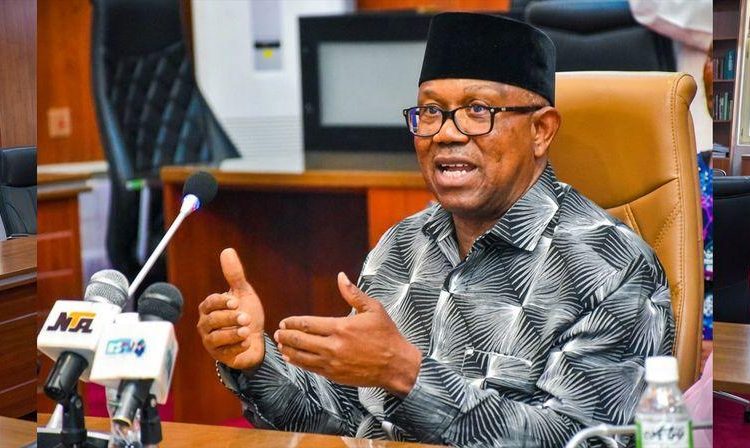
Peter Obi has disagreed with former Vice-President Atiku Abubakar over the future of Nigeria’s fuel subsidy, adding a new dimension to the growing political debate ahead of the 2027 general election.
The disagreement emerged during discussions involving major opposition figures at the Nigerian Bar Association’s Annual General Conference in Port Harcourt, Rivers State.
Atiku had reportedly proposed restoring the petrol subsidy if elected president in 2027. However, Obi maintained that removing the subsidy was still necessary, arguing that the major problem was not the policy itself but the way the government had handled the money saved from its removal.
Obi said Nigeria should have used the savings from subsidy removal to provide alternative benefits and improve the lives of citizens.
According to him, removing the subsidy should have been followed by careful investment in important areas that would reduce the burden on Nigerians.
He argued that poor management of the proceeds should not automatically become a reason to return to the previous subsidy system.
The former Anambra State governor said his position had remained consistent and that he had previously supported a more organised and structured approach to subsidy removal.
Obi criticised what he described as the mismanagement of resources generated after the policy was removed, arguing that Nigerians needed to see clear benefits from the money saved.
The debate over fuel subsidy remains one of the most sensitive political and economic issues in Nigeria.
President Bola Tinubu announced the removal of the petrol subsidy shortly after taking office in May 2023. The decision led to a sharp increase in petrol prices and contributed to a wider rise in transportation and living costs.
While the government has argued that the policy was necessary to reduce public spending and improve the economy, many Nigerians have continued to express concerns about the hardship caused by higher fuel prices and inflation.
Atiku’s proposal to restore the subsidy has therefore created a major political debate.
Supporters of restoring the subsidy argue that ordinary Nigerians need immediate relief from the high cost of fuel and transportation. Critics, however, believe that the previous subsidy system placed a heavy financial burden on the government and was vulnerable to corruption and abuse.
The disagreement also highlights the different approaches political leaders are likely to present as the 2027 election approaches.
At the NBA conference, discussions also focused on insecurity, poverty, unemployment and the possible introduction of state police.
Obi argued that Nigeria’s security challenges could not be solved through military action alone. He said poverty, unemployment, corruption and weaknesses in the country’s security structure must also be addressed.
Other political figures, including Rotimi Amaechi and Omoyele Sowore, also expressed different opinions on economic reforms, security and the direction of the country.
The debate showed that although many opposition figures agree that Nigeria faces serious economic and security challenges, they do not necessarily agree on how those problems should be solved.
As political activities continue to increase ahead of the 2027 election, fuel subsidy is likely to remain a major campaign issue.
For many Nigerians, the debate is not only about economic policy. It is also about the daily cost of transportation, food and other essential needs.
The disagreement between Obi and Atiku could therefore become one of the important policy debates shaping the political conversation in the months ahead.