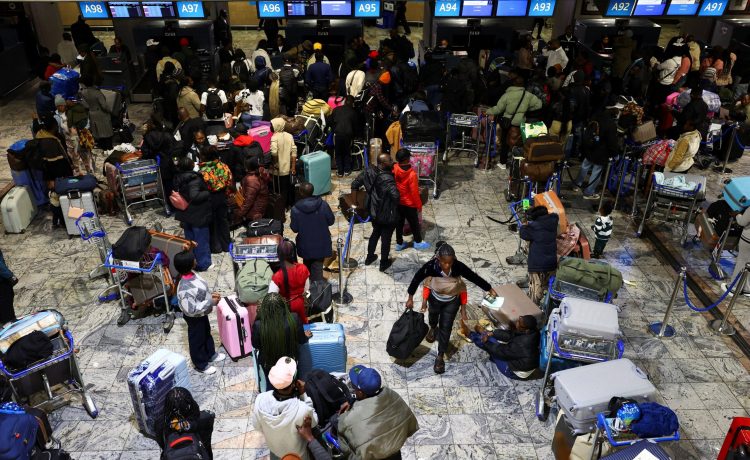
Nigeria is facilitating the return of another 65 citizens from South Africa amid continuing concerns over anti-immigrant sentiment and attacks involving foreign nationals.
The Nigerian government said the group was scheduled to arrive in Nigeria on Wednesday, August 26.
The latest repatriation comes after previous groups of Nigerians were brought home under voluntary return arrangements.
Growing concern over Nigerians abroad
The return programme highlights the continuing concern over the safety of Nigerians living in South Africa.
South Africa has experienced recurring waves of anti-immigrant sentiment.
Foreign nationals have sometimes been blamed for unemployment, crime and pressure on public services.
Nigerians have been among the communities affected.
Voluntary return
The latest return is being described as a voluntary repatriation.
That distinction is important.
The government is facilitating the return of Nigerians who have chosen to leave rather than conducting a forced deportation programme.
Diplomatic implications
The situation has implications for relations between Nigeria and South Africa.
The two countries are among Africa’s largest economies and maintain significant diplomatic, commercial and cultural ties.
Large Nigerian and South African business communities operate across both countries.
Consequently, security concerns involving citizens can affect broader bilateral relations.
The economic dimension
Many Nigerians in South Africa work in business, technology, education, entertainment and other sectors.
Their departure can therefore have economic implications.
At the same time, Nigerians who feel unsafe may have little choice but to leave.
The challenge for both governments is balancing immigration management with the protection of foreign nationals.
South Africa’s responsibility
South African authorities have repeatedly condemned xenophobic violence.
However, critics argue that stronger enforcement is necessary to prevent attacks.
Effective policing is essential.
Those responsible for violence must face legal consequences.
Nigeria’s response
Nigeria’s decision to facilitate voluntary returns demonstrates that the government is willing to assist citizens who no longer feel safe.
However, evacuation is only one part of the solution.
Diplomatic engagement remains important.
Nigeria must continue engaging South African authorities over the protection of its citizens.
What happens next
The latest repatriation is unlikely to end the wider debate about migration in South Africa.
The country continues to face high unemployment and economic pressure.
Foreign nationals often become convenient targets during periods of social frustration.
Addressing those underlying problems will require economic and social policies rather than security measures alone.
For Nigeria, protecting its citizens abroad remains an important foreign-policy responsibility.