
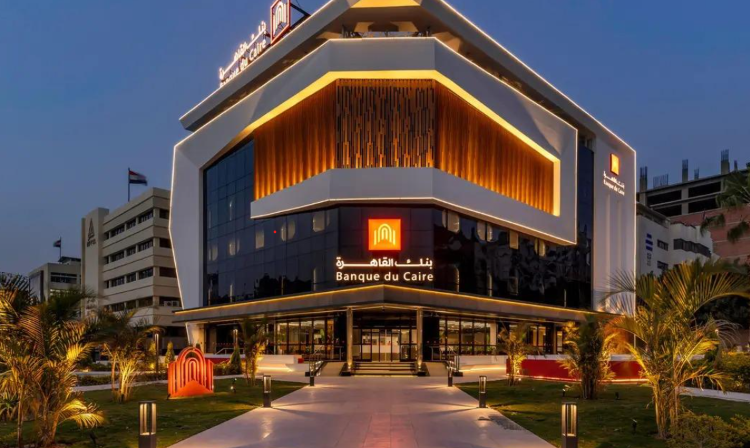
Egyptian lender Banque du Caire has reported consolidated net profit of EGP13.1 billion for the first nine months of 2026, reflecting growth in its core banking operations and an increase in customer deposits.
The financial results, covering the period ended September 30, 2026, showed that the bank recorded net profit after tax of EGP13.111 billion, compared with EGP12.523 billion during the corresponding period of 2025.
This represents an increase of approximately 4.7 per cent on the reported figures.
However, the bank said its net profit growth would have been approximately 19 per cent after excluding three non-recurring income items recognised in the comparative period.
These items included income from an interest-free subordinated loan that was repaid in December 2025, dividend income from its investment in the African Export-Import Bank (Afreximbank), which was subsequently sold, and foreign exchange gains associated with that investment.
The results indicate that the lender maintained positive growth in its core banking activities despite changes in some non-recurring sources of income.
Profit before tax reached EGP19.189 billion during the nine-month period, compared with EGP17.756 billion in the same period of 2025.
This represented an increase of approximately 8.1 per cent.
The bank’s total operating income also increased by 10.5 per cent to EGP34.557 billion from EGP31.276 billion recorded a year earlier.
Net interest income, one of the main sources of revenue for commercial banks, increased by 10.4 per cent to EGP28.453 billion.
Net fee and commission income also rose by 13 per cent to EGP5.263 billion, reflecting growth in services and transactions that generate income outside traditional lending activities.
Combined core revenues, consisting of net interest income and net fee and commission income, increased by 10.8 per cent to EGP33.716 billion.
The performance demonstrates the contribution of lending activities, customer transactions and banking services to the institution’s overall revenue.
Another important development was the growth in Banque du Caire’s total assets.
The bank’s consolidated assets increased by 11.2 per cent to EGP600.9 billion as of September 30, 2026, compared with EGP540.4 billion at the end of December 2025.
Customer deposits also recorded strong growth, rising by 17 per cent to EGP473.5 billion.
The increase represents approximately EGP69 billion in additional deposits.
Retail customers accounted for 74 per cent of the bank’s deposit base, indicating the importance of individual customers to its funding structure.
The bank also reported improvements in its current account and savings account ratio, commonly referred to as CASA.
The ratio increased by 130 basis points to 52.7 per cent, indicating a stronger contribution from lower-cost customer deposits.
However, the financial results also showed some areas requiring attention.
Administrative expenses increased by 18 per cent to EGP12.436 billion during the first nine months of 2026.
The bank attributed the increase partly to continued investment in core banking modernisation and digital transformation.
The cost-to-income ratio consequently increased to 36 per cent from 33.7 per cent in the comparable period.
Another notable development was the movement in quarterly profitability.
Consolidated net profit for the third quarter stood at EGP4.169 billion, compared with EGP4.797 billion in the second quarter, representing a decline of 13.1 per cent.
The bank’s expected credit loss charge also increased to EGP1.087 billion in the third quarter from EGP489 million in the second quarter.
Despite these quarterly pressures, Banque du Caire maintained positive year-to-date profitability and growth in its balance sheet.
Its reported capital adequacy ratio stood at 22.15 per cent, while its non-performing loan ratio remained at 3.70 per cent.
The results highlight the bank’s continued expansion in Egypt’s financial services industry, supported by stronger deposits, lending income and customer activity.
Going forward, its ability to maintain profitability will depend on revenue growth, cost management, credit quality and the performance of the wider Egyptian economy.