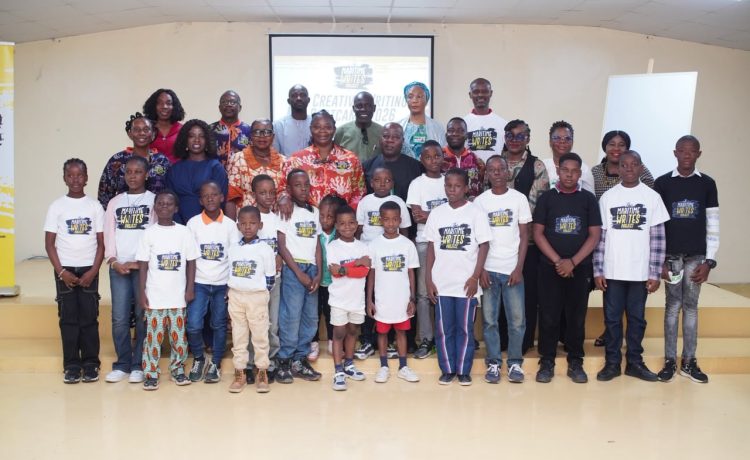
The Nigerian Ports Authority has called on writers and young creatives to use storytelling to promote the growing participation of women in Nigeria’s maritime industry.
The call was made by the Port Manager of the Lagos Ports Complex, Mr. Debo Lawal, during the opening of the 6th annual Maritime Writes Project Creative Writing Bootcamp held at the Multi-Purpose Hall of Apapa Port in Lagos.
Lawal, who attended the opening as the Special Guest of Honour, encouraged participants to use their writing skills to present Nigeria’s maritime and port industry as a sector where women are increasingly finding opportunities and breaking into roles traditionally dominated by men.
According to him, the presence of women in the sector is becoming more visible, particularly in operational and technical positions. He noted that Lagos Port now has more than 10 female crane operators, as well as female tugboat pilots and other women working across different areas of port operations.
The development, he said, shows that the maritime sector is gradually becoming more inclusive and offers opportunities for women who are interested in building careers in the industry. Lawal therefore urged writers to help tell these stories and bring greater attention to the contributions of women within the maritime space.
The 2026 Maritime Writes Project bootcamp brought together young writers, maritime stakeholders, academics and mentors for a programme designed to connect creative writing with maritime awareness.
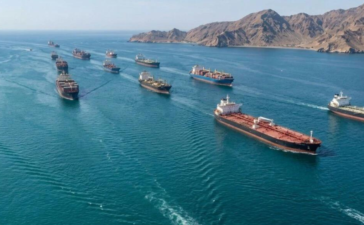
The theme for this year’s edition is “Voyages Through Chokepoints: Power, Passage and Life at Sea.” The theme focuses attention on the importance of maritime chokepoints and their relationship with global trade, economics, diplomacy and human activity.
Participants are expected to take part in mentorship sessions, discussions and facility tours, giving them opportunities to learn directly about the maritime industry and develop stories based on real experiences.
Lawal’s message to the writers reflects the growing need for better public awareness of the people working behind Nigeria’s maritime operations. While ships, ports and cargo are often the most visible parts of the industry, thousands of people perform important roles that help keep the sector running.
For many years, technical and operational maritime positions have largely been associated with men. However, the increasing number of women working as crane operators, tugboat pilots and in other specialised roles is changing that perception.
By encouraging writers to tell these stories, the NPA is drawing attention to the importance of representation. Stories about women succeeding in maritime careers could inspire more young women and girls to consider opportunities in the blue economy and other areas of the maritime sector.
The Head of Faculty for the 2026 edition of the bootcamp and Dean of the Faculty of Arts at Adeleke University, Professor Adegbite Tobalase, also encouraged participants to develop their individual voices.
He urged them to understand the discipline needed to create original work and described the bootcamp as more than just a training programme. According to him, the initiative aims to grow literary talent while also increasing Nigeria’s maritime consciousness through the power of storytelling.
Also speaking at the event, the Director of the International Ocean Institute-Nigeria Centre, Mr. Akanbi Williams, commended the Maritime Writes Project for combining creative writing with practical exposure to the maritime sector.
The institute has partnered with the project for five years. Williams encouraged participants to observe, listen, question, learn and write.
He stressed that maritime stories should go beyond ships, ports and waterways. Writers, he said, should also pay attention to the people, communities and livelihoods connected to the ocean and the maritime environment.
This approach could help young Nigerians better understand the maritime industry and the growing importance of the blue economy. Storytelling can also make complex maritime issues easier for the public to understand by connecting industry developments with the lives of ordinary people.
Earlier, the Project Coordinator of the Maritime Writes Project, Ezinne Azunna, explained that the initiative was created to bridge the gap between creative writing and maritime awareness.
She said participants would have opportunities to interact with maritime professionals, visit facilities and engage with communities connected to the sector. These experiences are expected to help them produce stories based on authentic industry experiences rather than relying only on imagination.
The impact of the project has also been felt by previous participants. One of the programme’s alumni, Uche Ohiaeri, said her participation in the bootcamp in 2022 helped transform her confidence and expand her interests beyond creative writing.
According to her, she initially joined the programme because she enjoyed writing. However, the experience encouraged her to ask deeper questions about the ocean, the environment and communities connected to maritime activities.
She later became involved in conservation activities at her school, where she taught younger students, and eventually wrote her first book.
Her experience demonstrates how creative writing can become a pathway to wider education, environmental awareness and community engagement.
The Maritime Writes Project has previously organised sessions in Lagos, Osun and Rivers states. It has also produced three published anthologies containing 17 stories written by previous participants.
The organisers noted that African writers remain under-represented in maritime fiction. Through the initiative, the project hopes to encourage a new generation of Nigerian writers to explore stories about the ocean, shipping, ports, coastal communities and the blue economy.
As the 2026 bootcamp continues, the message from the NPA remains clear: Nigeria’s maritime industry has many stories waiting to be told. Among the most important are the stories of women who are challenging old barriers and proving that technical and operational maritime careers are not limited by gender.
By bringing these stories to a wider audience, writers could help reshape public perception of the industry while inspiring more young people, especially women, to explore opportunities within Nigeria’s growing maritime and blue economy sectors.