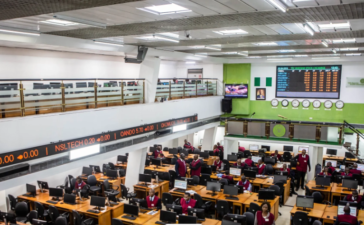
Nigerian Investors Drive Record NGX Market Activity
Domestic investors have strengthened their grip on Nigeria’s equities market after total transactions on the Nigerian Exchange rose to an all-time high of N2.37 trillion in July.
The increase represents a 38.2 per cent rise from the N1.71 trillion recorded in June.
The growth was driven largely by Nigerian investors, who accounted for 94.4 per cent of total transactions during the month.
The figures highlight the increasing importance of domestic investors in sustaining activity on the Nigerian capital market.
While foreign investors remain an important part of the market, local institutional and retail investors are increasingly accounting for the bulk of trading activity.
Domestic Transactions Rise to N2.24 Trillion
Domestic investor transactions rose by 46.4 per cent month-on-month to N2.24 trillion in July.
The increase reflected stronger activity among both institutional and retail investors.
Institutional transactions increased by 66.2 per cent during the month.
Retail investor participation also rose by 9.4 per cent.
The figures suggest that local investors are continuing to find opportunities in Nigerian equities despite competition from other investment instruments.
Nigeria’s fixed-income market has continued to offer relatively high yields.
However, equity investments remain attractive to investors seeking capital appreciation and long-term returns.
Foreign Investor Activity Declines
Foreign investor participation moved in the opposite direction.
Transactions by foreign investors declined by 29 per cent to N132.62 billion in July.
This was lower than the N186.79 billion recorded in June.
The decline indicates that foreign investors remain cautious despite improving activity in the domestic market.
International investors often consider several factors before committing capital to emerging markets.
These include exchange-rate stability, interest rates, inflation, political conditions and global investment sentiment.
Changes in any of these areas can influence foreign portfolio flows.
Market Records Net Inflow
Despite the decline in foreign investor activity, the Nigerian equities market recorded net inflows of N24.95 billion in July.
The result represented a significant improvement from the N48.99 billion net outflow recorded in June.
The positive outcome was largely driven by domestic investors.
Domestic investors generated net inflows of N74.39 billion.
This was sufficient to offset net foreign outflows of N49.44 billion.
The development further demonstrates the role of domestic capital in supporting the Nigerian equities market.
FTSE Russell Decision Boosts Market Sentiment
The equities market also closed the latest trading week on a positive note.
Investor sentiment improved following FTSE Russell’s announcement that Nigeria would be reclassified to Frontier Market status from September 21, 2026.
The development helped support a late-week rally.
The NGX All-Share Index rose by 0.8 per cent during the week to close at 241,298.47 points.
The market’s year-to-date return stood at 55.1 per cent.
However, the month-to-date performance remained negative at 1.6 per cent.
Banking and Oil Stocks Lead Weekly Gains
The weekly market rally was supported by gains in several major companies.
FIRSTHOLDCO, SEPLAT and ACCESSCORP were among the leading gainers.
The Oil and Gas Index rose by 4.5 per cent.
The Banking Index also gained 2.9 per cent.
However, the Consumer Goods and Insurance indices closed lower.
The Industrial Goods Index finished the week flat.
The mixed sectoral performance reflects the selective approach investors are taking in the market.
Fixed-Income Yields Remain a Major Challenge
Despite the strong market activity, analysts expect high fixed-income yields to remain a major challenge for equities.
Government securities and other fixed-income instruments continue to offer attractive returns.
This creates competition for investor capital.
Investors may therefore decide to allocate a larger share of their portfolios to fixed-income securities rather than equities.
The cautious monetary policy environment could also keep interest rates elevated.
High interest rates can reduce risk appetite and limit the amount of capital moving into equities.
Domestic Investors Take Centre Stage
The record N2.37 trillion market transaction level demonstrates the increasing depth of domestic participation in Nigeria’s capital market.
The market is becoming less dependent on foreign investors for day-to-day liquidity.
However, sustained foreign participation will remain important to the long-term development of the market.
Foreign capital can provide additional liquidity and improve access to international investment networks.
For now, domestic investors are expected to remain the dominant force in Nigerian equities trading.
The combination of strong local participation and improving market sentiment could support further activity.
However, the direction of interest rates and the continued attractiveness of fixed-income investments will remain important factors for investors in the months ahead.