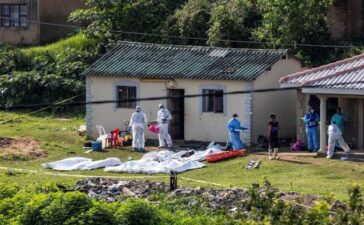
More than 100 people were reported killed after an artisanal gold mine collapsed in Zamboye village, in the western Central African Republic near the border with Cameroon. The disaster occurred on Tuesday, August 18, and rescue teams were still recovering bodies on Thursday, August 20.
The collapse involved several underground tunnels where miners were working. Authorities said the tunnel failures triggered a landslide that buried workers beneath sand and debris. Local officials and Red Cross volunteers reported that more than 100 people had died, while others remained missing or trapped.
However, the official death toll remained disputed. The Central African Republic’s mines minister reported 49 confirmed deaths, while local officials, witnesses and Red Cross workers gave a much higher figure of more than 100. Authorities said search and recovery operations were continuing, meaning the final number of victims could still change.
The government has ordered the mining site to be closed as investigations begin into the cause of the disaster and the people responsible for operating the site. Heavy rainfall and unsafe mining conditions have been identified as possible factors, although the official investigation is still ongoing.
Artisanal mining provides a source of income for many people in the Central African Republic, but the work is often carried out with limited safety equipment and in poorly supported underground pits. The Zamboye tragedy has once again raised serious concerns about mining safety and the risks faced by workers searching for a livelihood in informal mining sites.