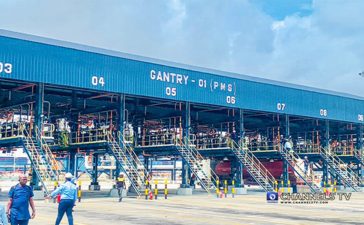
Locally refined petrol continues to maintain a price advantage over imported alternatives, with a new market report indicating that Dangote Refinery’s products remain cheaper than fuel sourced from abroad.
The development has renewed attention on the economic benefits of domestic refining and the potential impact of local production on Nigeria’s fuel market.
According to the report, the implied offshore price of petroleum products is higher than Dangote Refinery’s prices.
The findings have raised questions about the continued economic case for importing petrol when locally refined products are available at a lower cost.
One marketer, speaking anonymously, said it made little economic sense to purchase a product that was more expensive than the locally available alternative.
The report also quoted a market participant who questioned the rationale for importing products from Lomé when they were more expensive than Dangote’s.
“The implied offshore price of petroleum products is higher than Dangote’s prices. So, what is the essence of importing products from Lomé when they are more expensive than Dangote’s? It does not make any sense. It is putting unnecessary pressure on the dollar and the naira.”
The development comes as Nigeria continues to seek ways to reduce its dependence on imported petroleum products and strengthen domestic refining capacity.
For consumers and businesses, the price difference between locally refined and imported petrol remains an important factor in determining the cost of fuel distribution.
The report also showed that crude oil prices rose during the trading session, with Nigeria’s Brass River opening at $99.22 per barrel and closing at $101.19, representing a 1.99 per cent increase.
The latest findings suggest that the relationship between domestic refining, international crude prices and fuel import costs will remain important to the outlook for Nigeria’s downstream petroleum sector.
As local refining capacity expands, the economic case for importing petrol may increasingly depend on factors such as supply availability, product quality, distribution costs and pricing.
The report’s findings therefore highlight the importance of continued investment in domestic refining and the need for market participants to assess the most cost-effective sources of petroleum products.