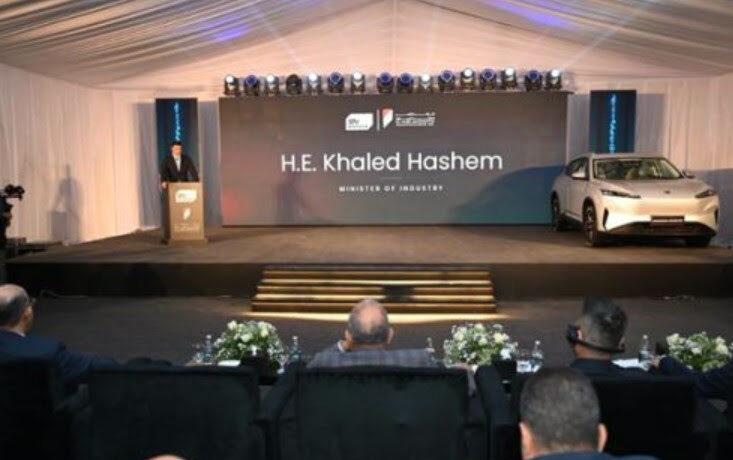
Egypt has begun local assembly of the MAGE electric passenger vehicle, marking another step in the country’s efforts to develop its automotive manufacturing industry and expand electric vehicle adoption.
The Chinese-designed electric car is being assembled at the state-owned El Nasr Automotive Manufacturing Company in partnership with Chinese automaker Dongfeng, its local representative SN Automotive and Al-Safy Group.
The project is expected to support Egypt’s ambition to increase domestic vehicle production, attract foreign investment and reduce dependence on imported cars.
Egyptian officials announced the start of production in October, describing the initiative as an important development for the country’s automotive sector.
The locally assembled MAGE EV is expected to reach showrooms in the first quarter of 2027, with El Nasr planning to manufacture approximately 3,000 units during its first year of production.
Local Components Expected to Reach 45 Per Cent
One of the most significant features of the project is its local content target. Officials say components sourced within Egypt could account for up to 45 per cent of the vehicle.
This is expected to encourage the development of local suppliers and create opportunities for Egyptian companies involved in automotive parts, engineering and manufacturing.
Industry Minister Khaled Hashem said the government intends to build on the project by increasing domestic production of vehicle components and strengthening the country’s position in international automotive supply chains.
The government is also working to improve incentives for manufacturers through its Automotive Industry Development Programme. The programme is designed to encourage investment, increase local value addition and support the growth of automotive component producers.
The production launch also represents an important step in the revival of El Nasr Automotive. According to Egypt’s state information service, approximately EGP900 million has been invested in restoring the company’s facilities, including the establishment of a paint shop and preparation of its production infrastructure.
Egypt Strengthens Its Position in Africa’s EV Market
The launch comes as Egypt consolidates its position as one of Africa’s leading electric vehicle markets.
Data from the International Energy Agency shows that approximately 7,900 electric cars were sold in Egypt in 2025, making it the continent’s largest market for electric cars during the year.
Egypt’s sales were ahead of Morocco, which recorded approximately 5,500 electric car sales, and South Africa, with about 3,800.
Across Africa, electric car sales reached approximately 25,000 units in 2025, compared with around 4,000 in 2023. Egypt, Morocco and South Africa accounted for nearly 70 per cent of the continent’s total sales.
The figures indicate growing interest in electric mobility, although adoption remains relatively small compared with conventional petrol and diesel vehicles.
Egypt’s growing market provides an opportunity for manufacturers to expand local production while serving consumers who are increasingly considering alternatives to traditional vehicles.
Government Targets Wider Electric Vehicle Manufacturing
Egypt’s electric vehicle strategy extends beyond assembling the MAGE EV. The government is seeking to establish a more integrated automotive industry capable of producing vehicles, batteries, motors and other essential components locally.
Prime Minister Mostafa Madbouly has reaffirmed the government’s commitment to expanding automotive manufacturing and reducing dependence on imported products.
At a November 4 meeting reviewing the country’s automotive localisation programme, officials discussed plans involving local production of automotive components, battery supply partnerships and the development of electric vehicle charging infrastructure.
The government is also exploring partnerships with international manufacturers to introduce additional electric vehicle models and expand production capacity.
These initiatives are intended to attract foreign investment, transfer technology to local companies and create employment opportunities for Egyptian workers.
The development of charging infrastructure is particularly important because wider electric vehicle adoption depends on consumers having convenient access to reliable charging facilities.
Without sufficient charging stations and maintenance services, the expansion of electric vehicle sales could face limitations even as locally assembled models become available.
ArabFinance+2
New Production Project Could Create Jobs and Investment Opportunities
The MAGE EV project could provide opportunities for employment across several areas of Egypt’s automotive industry.
These include vehicle assembly, engineering, component manufacturing, quality control, logistics and after-sales services.
The partnership between Dongfeng, SN Automotive, Al-Safy Group and El Nasr also demonstrates the importance of cooperation between international manufacturers, private investors and government-owned industrial facilities.
For Egypt, the objective is not simply to assemble imported vehicle components but gradually develop the technical capacity to manufacture more parts locally.
Increasing local content could help reduce the country’s import bill while allowing domestic businesses to participate in the supply chains of international automotive companies.
The government also hopes that stronger manufacturing capacity will eventually support exports to other African and international markets.
However, achieving these ambitions will depend on consistent investment, competitive production costs, reliable electricity supply, skilled workers and adequate infrastructure.
Outlook for Egypt’s Electric Vehicle Industry
The start of MAGE EV production represents an important development in Egypt’s efforts to establish itself as a major automotive manufacturing centre in Africa.
With local components expected to account for up to 45 per cent of the vehicle, the project provides a foundation for expanding domestic industrial participation and strengthening cooperation with international manufacturers.
The planned commercial launch in the first quarter of 2027 will be an important test of consumer demand and the competitiveness of locally assembled electric cars.
Egypt’s position as Africa’s leading electric car market also provides an opportunity to attract additional investment into vehicle production, battery technology and charging infrastructure.
Nevertheless, the country’s long-term ambitions will depend on its ability to move beyond assembly towards deeper local manufacturing and a sustainable automotive supply chain.
If successfully expanded, the initiative could support job creation, technology transfer, industrial growth and wider adoption of cleaner transportation across Egypt.